As seas rise and fish decline, a Fijian Village adapts through women’s leadership


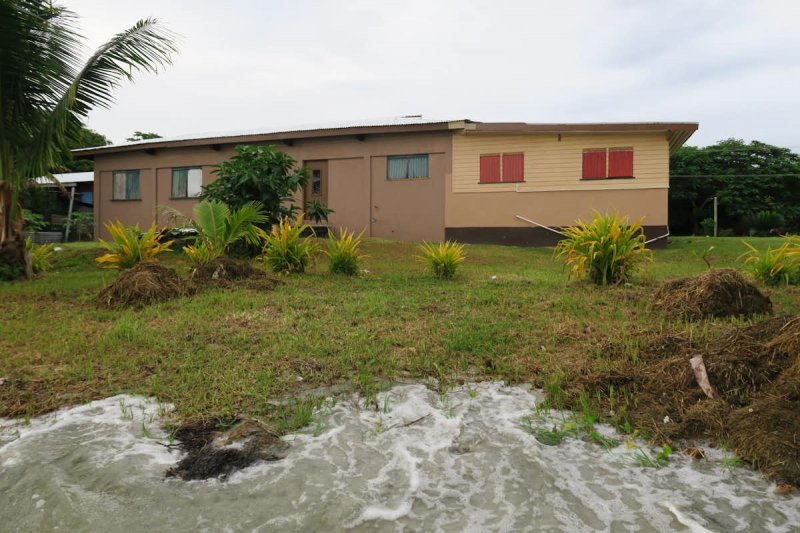
In the coastal village of Nagigi in Fiji, the ocean is more than a food source — it’s a deep part of identity, culture, and daily life. But in recent years, villagers have watched the sea transform. Tides are pushing further inland, fish are becoming harder to find, and the coastline is retreating, taking with it coconut trees and sandy beaches. These shifts are stark reminders of the growing threat of climate change to Pacific Island communities.
Like many coastal settlements across the Pacific, Nagigi is experiencing the dual pressures of rising seas and declining fish stocks, News.Az reports, citing foreign media.
Traditional fishing practices are no longer reliable, while extreme weather events and coastal erosion are increasingly threatening homes, plantations, and local infrastructure. As one villager put it, “We can’t find fish easily, not compared to previous times. Some fish species we used to see before are no longer around.”
Although stories like this are often framed as tales of loss, vulnerability, and climate injustice, Nagigi’s experience also reflects resilience, leadership, and adaptation. Rather than accepting decline, the community is taking action — finding innovative ways to sustain itself and preserve its identity.
In response to falling fish stocks, women in the nearby Bia-I-Cake settlement have taken the lead. The Bia-I-Cake Women’s Cooperative has launched a small-scale aquaculture project, farming tilapia and carp to ease food insecurity and support livelihoods. With the help of funding from the United Nations Development Programme and the Women’s Fund Fiji, the women have built and managed fish ponds, learned aquaculture techniques, and even used livestreams to market and sell their harvest.
The cooperative has since expanded its efforts. Members have begun replanting mangroves to reduce coastal erosion and constructed a greenhouse to grow alternative crops. These projects are more than survival strategies; they demonstrate what one participant described as the women’s “capacity to build a sustainable, secure and thriving community.”
Nagigi’s adaptation efforts are deeply rooted in traditional values and communal practices. The concept of Vanua — which encompasses land, sea, people, customs, and spiritual beliefs — informs their approach to stewardship. Decisions are made collectively, through elders and clan structures that include both women and men. In recent years, the village has voluntarily closed certain customary fishing areas to allow marine life to recover. They are now considering the declaration of a locally managed marine area, or tabu, as a formal conservation measure.
While some residents have relocated further inland to family-owned mataqali land following disasters such as 2016’s Cyclone Winston, not everyone has that option. Land access and relocation capacity vary, and some residents are unwilling to leave the coast despite the risks. As one man put it, “Leave us here. I think if I don’t smell or hear the ocean for one day I would be devastated.”
Adaptation, while crucial, is uneven. Not every household can afford to rebuild after cyclones or invest in alternative livelihoods. Yet the village as a whole offers a powerful example of local resilience in action. Nagigi shows that small communities, often portrayed as passive victims, are in fact dynamic spaces of innovation, agency, and strength.
As climate change continues to escalate, stories like Nagigi’s remind us that local adaptation matters. Community-led solutions offer practical, grounded ways to respond to growing environmental threats — and they deserve greater recognition and support, particularly given the limited access Pacific nations have to global climate finance.
Nagigi is already living the reality of climate change. But it is also demonstrating what it means to live well in the face of uncertainty, by drawing on tradition, place-based knowledge, and collective determination.


Similar news