Cuba slams new US sanctions as “collective punishment”


Cuba has sharply criticized fresh sanctions imposed by Donald Trump, calling them “collective punishment” that will deepen economic hardship across the island.
The measures, announced via executive order, target individuals linked to key sectors of the Cuban economy—including energy, defense, mining, and financial services. Washington says the move is aimed at increasing pressure on Havana following the reported ousting of Nicolás Maduro earlier this year, News.Az reports, citing foreign media.
Cuba’s foreign minister, Bruno Rodríguez, rejected the sanctions outright, describing them as “unilateral coercive measures” imposed by the United States. In a public statement, he warned the restrictions would harm ordinary citizens rather than political leaders.
RECOMMENDED STORIES
The announcement comes amid renewed tensions between the two countries. Speaking in Florida, Trump suggested the possibility of military pressure, even referencing the deployment of the USS Abraham Lincoln near Cuban shores.
Cuba, located just 145 km from the US mainland, has been under a US trade embargo since the 1959 revolution led by Fidel Castro. Relations have fluctuated for decades, but the latest measures mark a significant escalation.
The sanctions arrive at a difficult time for Cuba’s economy. Fuel shortages, power outages, and declining tourism have already placed pressure on daily life. Since a US fuel blockade earlier this year, only limited oil shipments—primarily from Russia—have reached the island.
Experts say the new rules could have far-reaching consequences. According to a former US Treasury sanctions investigator, companies outside the US that previously insulated their Cuba operations may now face penalties.
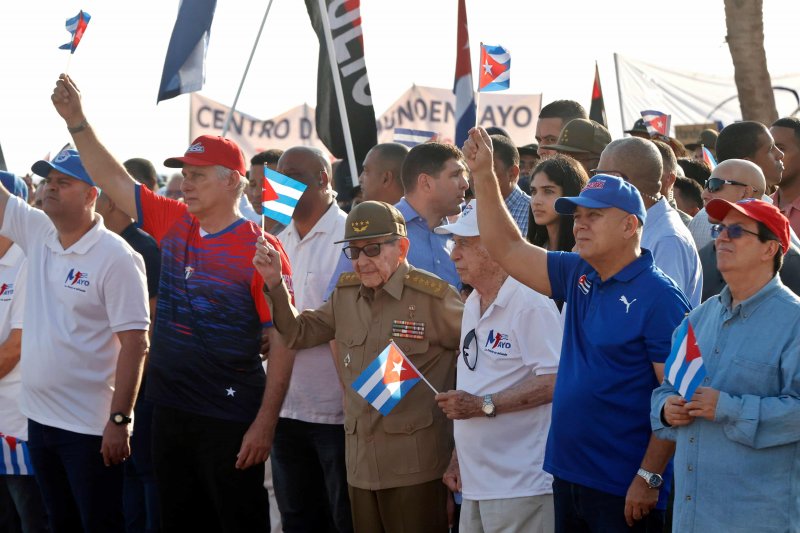
The sanctions took effect during International Workers' Day celebrations, as tens of thousands marched in Havana toward the US embassy under the slogan “Defend the Homeland.”
The demonstration was led by President Miguel Díaz-Canel and former leader Raúl Castro, signaling unity within Cuba’s leadership.
A day earlier, Díaz-Canel had urged citizens to mobilize against what he described as a “genocidal blockade” and increasing external threats.
The latest measures come despite recent diplomatic engagement, including visits by senior US officials to Havana in April. However, long-standing disagreements remain unresolved.
Washington continues to demand political and economic reforms, including free elections and compensation for expropriated property. Cuba maintains that its socialist system is non-negotiable.
By Aysel Mammadzada


Similar news