EU defers LGBTQ+ conversion therapy ban to individual member states


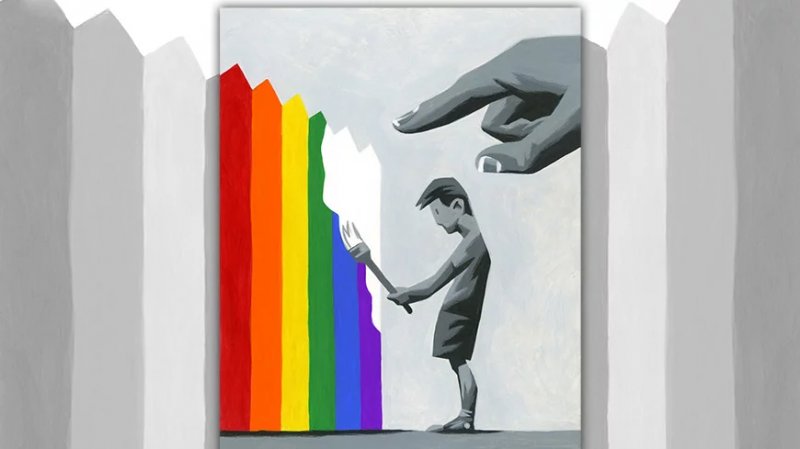
The European Commission will not impose an EU-wide ban on conversion therapy targeting LGBTQ+ individuals but will encourage member states to prohibit it nationally, following a significant citizens' petition.
"The European Commission is sending a very clear message, without ambiguity, to every member state in this union: ban conversion practices now," said Equality Commissioner Hadja Lahbib on Wednesday while presenting Brussels' response to the campaign. "This sends a powerful signal that these practices are harmful but also must be illegal," News.Az reports, citing Politico.
RECOMMENDED STORIES
The European Citizens’ Initiative, which collected more than 1.1 million signatures, called for a binding legal ban on conversion practices, defined as interventions aimed at “changing, repressing or suppressing the sexual orientation, gender identity and/or gender expression of LGBTQ+ persons.”
These practices can include verbal abuse, coercion, isolation, forced medication, electric shocks, and physical and sexual abuse, writes the Commission, and have "no therapeutic value."
But the Commission said Wednesday it plans instead to adopt a recommendation in 2027 calling on countries to enact a ban on conversion practices — a decision that campaign organizers saw as a "missed opportunity."
Through the recommendation, “the Commission will recognise the critical role that Member States play in this area and focus on supporting them in banning conversion practices, encouraging national action to extend the legal ban across the EU,” it said in its communication.
“The responsibility lies mostly at the level of the member states, and if we wanted to adopt a binding legislation, unanimity would have been necessary,” Lahbib told reporters.
Currently, only eight EU countries have banned conversion practices. "They have shown it can be done," Lahbib said. "We are building on that momentum, on calling on the rest to follow, and with this recommendation in hand, I will personally advocate with ministers across our union to end these barbaric practices."
The petition also asked the Commission to add these practices to the list of “eurocrimes,” which are serious crimes with a cross-border dimension, and possibly amend the 2008 directive on equality to include a ban on these practices.
It also wanted the executive to amend the Victims’ Rights Directive to establish minimum standards on the rights, support and protection of victims of conversion practices.
The Commission said Wednesday that extending the list of EU crimes would require a unanimous decision from countries, and for conversion practice to meet the criteria set out by the provision. And “although it cannot be excluded that certain forced conversion practices fulfill the criterion … only a small proportion of such practices are likely to do so,” it said.
The organizers of the campaign see this as a “missed opportunity.”
Mattéo Garguilo, co-president of the European Association Against Conversion Therapy and representative of the European Citizens' Initiative, also criticized the Commission's argument that a legal ban would have taken too long.
“It's going to take the same time with nonbinding resolution, because at the end of the day, if the state wants to ban, it bans; if it doesn't, then it doesn't,” Garguilo told POLITICO.
By Ulviyya Salmanli


Similar news