Georgian expert warns EU is now a source of manipulation, not democratic support


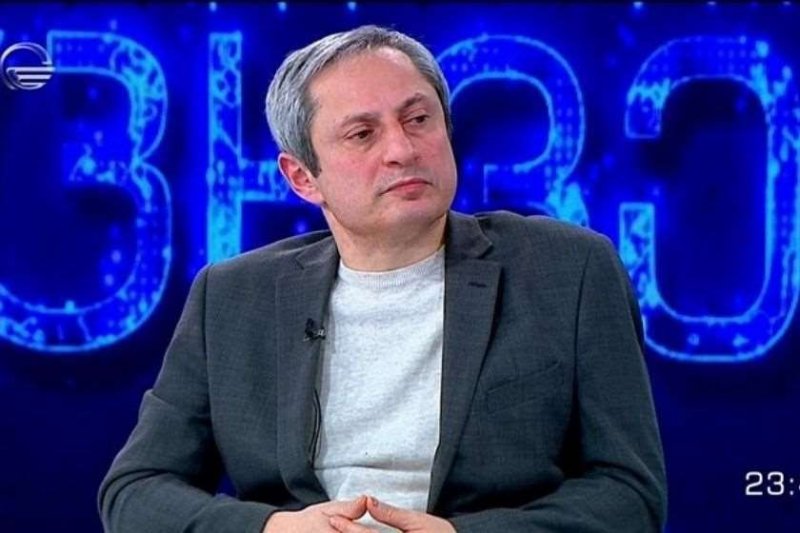
After the recent elections in Georgia, the country’s political landscape has taken on new contours, reaffirming the stability of the ruling Georgian Dream party and demonstrating the maturity of a society that has chosen stability over turmoil. Against the backdrop of attempts at destabilization and external pressure, Georgia has once again proven its ability to maintain internal balance and political independence. We discussed the reasons behind this resilience, the growing ideological divide between Tbilisi and Brussels, and the influence of foreign foundations on Georgia’s sociopolitical environment with well-known Georgian expert, Doctor of Political Science Soso Manjavidze.
- Mr. Manjavidze, the results of the recent elections in Georgia show that the Georgian Dream continues to enjoy strong public support. In your opinion, what has been the key factor behind this stability?
- Indeed, the election results confirmed that the Georgian Dream retains solid support among the population. In my view, the key factor is the public’s trust in the current government and its understanding that, despite external pressure and attempts at destabilization, the country continues to enjoy relative calm and predictability in its political course.

Source: CEPA
The ruling party has managed to convince both society and international observers that its previous victories were not accidental. The elections were conducted peacefully, without major violations, and all participants were able to express their positions. This gave the process legitimacy and reaffirmed that Georgian society prefers stability to chaos.
Meanwhile, the opposition has split — some factions tried to discredit the elections and resorted to aggressive tactics, while most citizens chose the path of gradual evolution rather than revolutionary upheaval. I believe this has been the main source of Georgian Dream’s stability and proof of its enduring political strength.
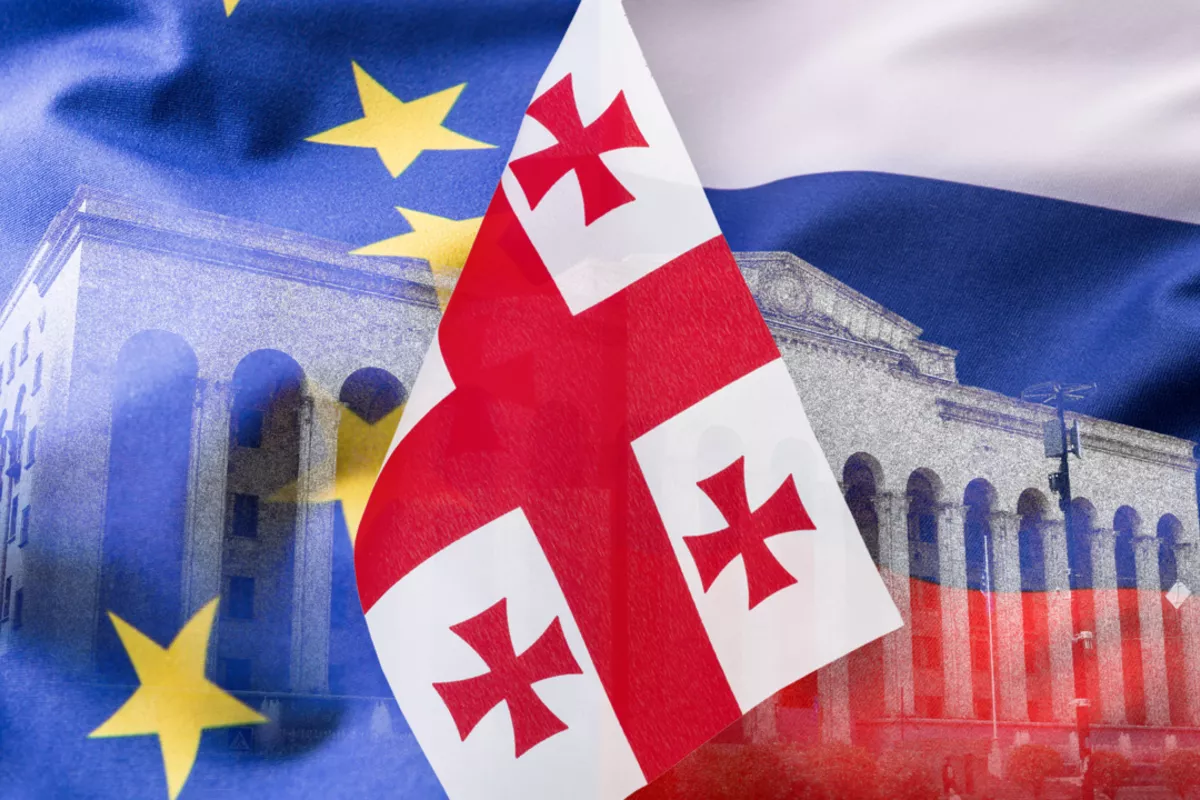
- You have repeatedly spoken about the degradation of the European political elite and the inadequate response from Brussels to Georgia’s internal political developments. Can we now say that there is a deep ideological divide between the EU and Georgia, where the European Union is no longer seen as a guarantor of democratic values, but rather as a source of pressure and manipulation?
- Absolutely. The recent events in Georgia have become a litmus test showing that the rift between Brussels and Tbilisi is no longer just political but ideological. Their actions were entirely predictable — they had no other choice. Having received massive grants and subsidies from the EU and serving the political agendas of their foreign sponsors, they were obliged to “show results,” to simulate activism and create the illusion of struggle. Hence this absurd staging of the “storming” of the presidential palace, the arson of cafés, and acts of vandalism — all of which were quickly suppressed.
Source: Caspianpost
The opposition, already divided and internally conflicted, has found itself demoralized. Yet, even more revealing was the EU’s reaction: just hours later, another statement was released—strikingly similar to Brussels’ previous resolutions. As before, the document was completely detached from reality—a pure fabrication devoid of truth. This only confirms that the European political elite has deteriorated to the point of losing the ability to assess events objectively.
Today, the European Union is no longer perceived as a guarantor of democratic values. Rather, it acts as an instrument of pressure and manipulation, not as a source of moral authority. This realization is gradually becoming a defining shift in how the EU is perceived — not only in Georgia, but across the region.
- In recent years, Georgian society has actively debated the influence of foreign foundations, particularly those linked to the Soros network, on youth and the education system. How significant is this influence, and could it reshape Georgia’s political landscape? Do you see ways to strengthen national sovereignty in the country’s informational and ideological space?
- Undoubtedly, the influence of foreign foundations—especially the so-called “Soros-affiliated” structures—has become increasingly visible in Georgia, particularly among young people and within the education system. The mechanism of this influence is quite clear. Funds provided from abroad support a wide network of NGOs and semi-political organizations that, seeking to maintain this financial flow, send distorted and biased reports about domestic processes to decision-making centers in the West. As a result, foreign “planners” form a completely misleading, sometimes absurd understanding of what is really happening in Georgia. They genuinely believed that a “revolution” could be organized here—without realizing that the country neither has the conditions nor the public demand for it.

Source: Europarl
Yes, there is a small but loud group of young people who have undergone ideological indoctrination in grant-funded institutions and universities. They create the illusion of a society supposedly ready for upheaval, labeling the current government as “pro-Russian”—merely echoing the clichés imposed on them. But reality turned out differently: recent events have shown that the majority of citizens stand for stability and reject destructive scenarios. Those who resorted to violence faced the law, and it is evident that serious consequences await them.
As for strengthening national sovereignty, the first and foremost step is to restore ideological and informational independence. The state must closely monitor the financing of public organizations, protect the education system from external manipulation, and promote its own value system based on national identity, culture, and historical memory. Only by doing so can Georgia overcome the effects of ideological dependency and safeguard its sovereignty in an era of global competition for meaning.


Similar news