Ghana says France open to slavery reparations talks


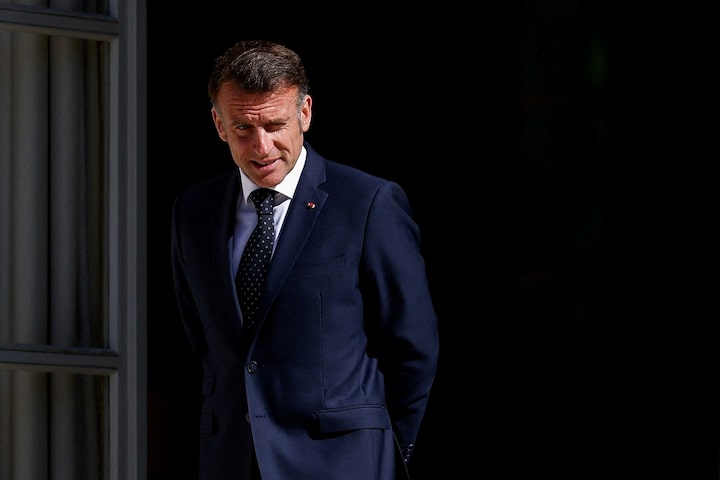
Ghana has said that France has expressed openness to discussions on slavery reparations and related historical issues following high-level talks between the two countries in Paris last week.
The announcement was made after Ghanaian President John Dramani Mahama met French President Emmanuel Macron, accompanied by senior government officials, including Foreign Minister Samuel Okudzeto Ablakwa, News.Az reports, citing Reuters.
According to Ghana’s foreign minister, France indicated willingness to engage in dialogue covering reparations linked to transatlantic slavery, the return of looted cultural artefacts, and broader discussions on global economic inequalities and structural racism.
RECOMMENDED STORIES
An official from the Élysée Palace confirmed that the meeting included discussions on the return of culturally significant objects and human remains, as well as the legal frameworks governing restitution. However, the French statement did not explicitly mention reparations.
The talks come shortly after the United Nations adopted a Ghana-led resolution describing slavery as the “gravest crime against humanity” and calling for reparations. France, along with several other European countries, abstained from the vote.
France’s UN representatives said the abstention was due to concerns that the resolution could be interpreted as creating a hierarchy among crimes against humanity.
Despite this, Ghanaian officials said President Macron signaled support for continued “open and honest dialogue” on the issue.
France formally recognised transatlantic slavery as a crime against humanity in 2001 but has not issued a formal apology or agreed to reparations, a position shared by most European countries.
Historical records show that millions of Africans were forcibly transported during the transatlantic slave trade, including an estimated 1.3 million people linked to French involvement, according to the Slave Voyages database.
While momentum for reparations has increased in recent years, the issue remains controversial, with critics arguing that modern governments should not be held financially responsible for historical injustices.
The latest discussions signal a potential shift toward more structured diplomatic engagement on historical accountability, even as divisions remain over legal, moral, and financial implications.
By Aysel Mammadzada


Similar news