Hamza Sadykhov: The name of an Azerbaijani hero deserves to be heard more widely


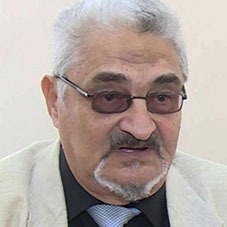
Editor’s note: Moses Becker is a special political commentator for News.Az. He holds a PhD in political science and specialises in inter-ethnic and inter-religious relations. The views expressed in this article are those of the author and do not necessarily reflect the position of News.Az.
In the history of the Second World War, there are names that are widely known and officially celebrated, and there are others that remained in the shadows for decades, despite being associated with deeds worthy of eternal remembrance.
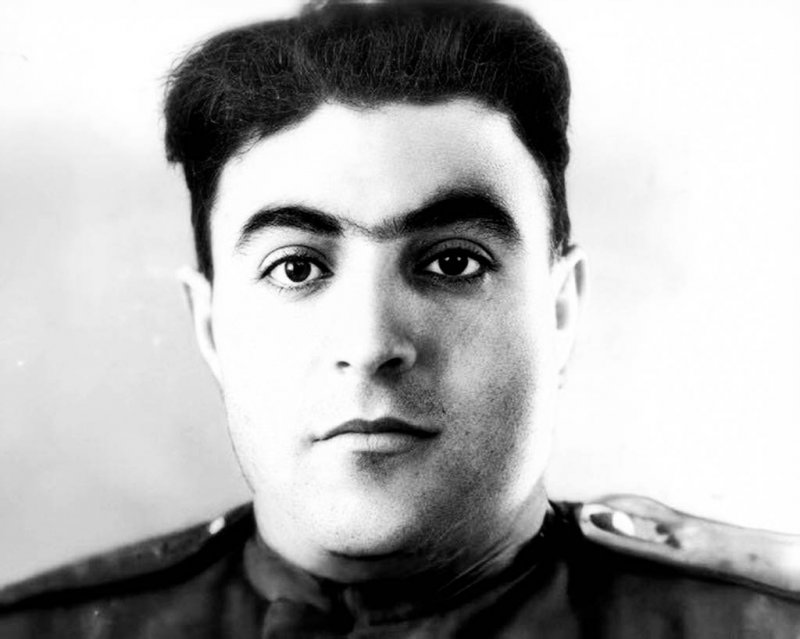
One such name is Hamza Jumshud oglu Sadykhov, an Azerbaijani intelligence officer from Aghdam who performed an extraordinary act of heroism during the darkest days of the war. Risking his own life, he saved Jewish children and families from the Nazis during the Battle of Stalingrad. His story is not only one of military courage, but also proof that even in the most brutal times, a person can remain truly human.
The wider public learned about Hamza Sadykhov relatively late. During the Soviet period, his name did not become part of the official military pantheon, although several publications state that he had been nominated for the highest award — the title of Hero of the Soviet Union. In 2021, a book titled “The Azerbaijani Intelligence Officer Who Saved Jewish Children: Forgotten Pages of the Battle of Stalingrad” was published in Baku. Its author was Firdovsi Hamza oglu Sadygov, the son of the hero. The bibliographic description of the book in the Presidential Library of Azerbaijan gives the hero’s full name as Sadygov Hamza Jumshud oglu.
According to published materials, Hamza Sadykhov served as an intelligence officer during the Great Patriotic War and took part in operations in the Stalingrad area. His code name, according to several sources, was “Sadygashvili”. A number of publications also state that Sadykhov participated in an operation against German General Johann Karl von Rodenburg, who was stationed in the Stalingrad area and, according to these accounts, was linked to plans for the mass extermination of Jews in occupied territories.
The central episode of his life was connected to an operation that was supposed to be a routine military assignment, but instead became an act of immense human courage. Sadykhov’s unit was tasked with gathering intelligence on German generals and carrying out an operation against Rodenburg’s headquarters.
However, next to the headquarters stood a building where Jewish prisoners, including children and families, were being held. On 31 January 1943, when the tide of the Battle of Stalingrad was already turning in favour of the Red Army, Sadykhov and his comrades managed to free dozens of Jewish families. Afterward, he entered the German general’s headquarters and captured him.
This act was not merely a military success. It was the choice of a man who, amid war, mortal danger and strict orders, placed the salvation of innocent people above his own safety. He faced a choice: to act solely according to military logic or to try to save those who had been condemned. He chose the latter. That is why Hamza Sadykhov’s deed carries such profound meaning: he was not saving abstract “civilians”, but real children and real families — people for whom his appearance became the line between life and death.
During the operation, Sadykhov displayed exceptional personal bravery. Materials based on recollections and publications about his feat state that he freed more than one hundred Jewish children from a basement, then went upstairs and personally captured the German general. During the operation, Sadykhov was seriously wounded, yet still managed to complete the mission.
His son, Firdovsi Sadykhov, later emphasised in published accounts that during the operation his father thought first and foremost about saving the children. According to him, Hamza Sadykhov did not think about himself or about the possibility of dying; his main goal was to get the children out of danger. This detail makes the story especially powerful. War often depersonalises people, turning them into figures, units, formations and reports. But Sadykhov saw before him not an “object of an operation”, but children who had to be saved at any cost.
After the war, his fate was difficult. One of his wounds led to severe consequences: Sadykhov became partially paralysed and lost the ability to move and speak normally. He returned to his native Aghdam, where he spent the rest of his life. He died on 9 May 1964 at the age of 49 — on the very day that, for millions of people, became a symbol of Victory.
Yet even after the war, his deed did not receive the recognition it deserved. According to published reports, he was recommended for the title of Hero of the Soviet Union, but the award was never approved. Moreover, doubts and investigations later arose regarding his role in the capture of the German general. Sadykhov’s account was eventually confirmed. In particular, materials about him state that during a medical examination, a bullet was removed from his body and linked to Rodenburg’s weapon.
A special role in restoring the memory of Hamza Sadykhov was played by his family. Firdovsi Sadykhov spent many years collecting documents, testimonies, recollections and materials about his father. During the Soviet era, as he later recalled, he himself did not know the full scale of Hamza Sadykhov’s feat. Only years later did it become clear that his father had been not merely a front-line soldier, but a man who saved Jewish children and families from extermination.
An important testimony is also linked to the Israeli press. According to published materials, on 22 October 1949, the Israeli newspaper Maariv published an article by military journalist Yosef Feldman titled “The Debt”, which described Hamza Sadykhov’s actions during the Battle of Stalingrad. The article emphasised that the Azerbaijani officer had saved Jewish children from Nazi captivity and called on historians to study and tell the story of his deed.
Sadykhov’s story is also important for Azerbaijani-Jewish historical memory. It shows that ties between the Azerbaijani and Jewish peoples are based not only on modern diplomatic relations, but also on a deep human experience in which mutual respect, solidarity and rescue hold a special place. Hamza Sadykhov was an Azerbaijani, a Muslim and a Soviet officer, but at the decisive moment he acted first and foremost as a human being. He did not ask what nationality or religion the children he was saving belonged to. He saw innocent people before him and did everything he could to help them survive.
That is why a number of publications have repeatedly argued that Hamza Sadykhov deserves the title of Righteous Among the Nations — the honorary status awarded in Israel to those who saved Jews during the Holocaust. His act, carried out at enormous personal risk, saved dozens of Jewish families and, according to various accounts, more than one hundred children. It is a story of courage, humanity and solidarity that deserves a worthy place in the memory of nations.
Today, the name of Hamza Sadykhov deserves to be heard more widely. His feat is part of Azerbaijan’s history, part of the history of the Second World War, and part of humanity’s shared memory of resistance to evil. He was not a politician, he did not deliver grand speeches, and he did not seek fame. He was an intelligence officer, a soldier and a man of duty. At the moment when children’s lives depended on his decision, he chose rescue. And it is precisely this choice that makes him a true hero.
(If you possess specialized knowledge and wish to contribute, please reach out to us at opinions@news.az).


Similar news