“He should become a Righteous Among the Nations”: how Azerbaijani Hamza Sadykhov saved Jews


Contrary to common stereotypes, in many countries Muslims and Jews lived in peace and harmony for centuries. In Azerbaijan, Azerbaijanis coexisted with Jews without conflict, cooperating and building friendships. During World War II, they fought side by side against a common enemy, and Jewish refugees from western regions found shelter in Azerbaijan. Even today, the country is home to the largest compact settlement of Mountain Jews, with active communities, functioning organizations, and ongoing publication of Jewish literature.
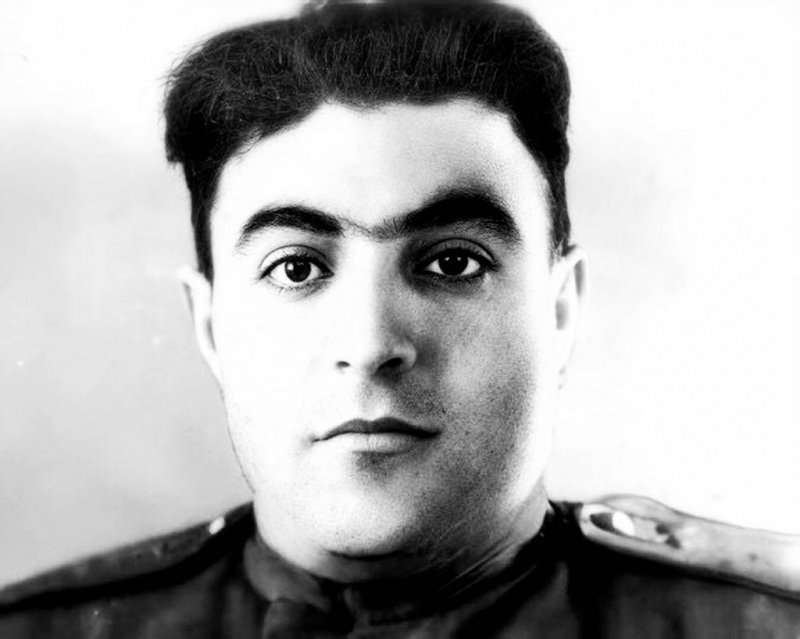
There are several known cases of Azerbaijanis saving Jews during the war at great personal risk. One of them is the feat of an officer of the 51st motorized rifle division of the Red Army, Hamza Sadykhov, carried out in January 1943. For many years, this story remained largely unspoken in the Soviet Union, although the first foreign publications about it appeared as early as 1949.
Hamza Sadykhov was born on May 10, 1915, in the Aghdam district of Azerbaijan, where his parents had moved from the Karabakh city of Shusha. He was drafted into the army in 1938, and in 1940, after graduating from an artillery school in Kyiv, Lieutenant Sadykhov was appointed commander of a battery in the 364th regiment. He fought on the Western and Southern fronts, later undergoing special training and serving in a reconnaissance unit. He spoke four foreign languages fluently: Arabic, German, Italian, and English. After recovering from a wound sustained in 1941, he was sent to the Stalingrad front, where, with the rank of colonel, he served in the 4th department of military intelligence.
His unit was tasked with gathering intelligence on several German generals. One of them, General Johann Carl von Rodenburg, had been sent by Hitler to the outskirts of Stalingrad with orders that included the mass extermination of Jews in occupied territories. Near his headquarters, the general ordered the construction of a “Palace of Death,” where hundreds of Jews were subjected to torture and abuse. Kindergartens where Jews had taken refuge were burned, and around 300 Jewish families were killed. Additionally, a special unit under his command had been involved in the development of biological weapons.
As the German forces approached defeat in the Battle of Stalingrad, Hitler reportedly ordered Rodenburg to poison wells and reservoirs. Soviet intelligence had the option to eliminate the general but instead chose to capture him alive due to the value of the information he possessed. Sadykhov was appointed leader of the operation.
The mission was to attack and destroy Rodenburg’s headquarters. However, nearby there was a building where Jewish prisoners were being held. On January 31, 1943, the operation unfolded differently. Sadykhov and his comrades managed to free dozens of Jewish families from the so-called “Palace of Death.” Afterward, Sadykhov, who reportedly killed 25 German soldiers during the operation, entered the headquarters and forced Rodenburg to his knees at gunpoint.
The general managed to resist and fired six shots, severely wounding Sadykhov. Despite his injuries, Sadykhov disarmed and captured him. The German 76th division was defeated, and its commander remained in Soviet captivity until 1955.
One of the bullets left Sadykhov paralyzed, depriving him of the ability to move and speak. After leaving the hospital, he returned to Aghdam, where he was welcomed as a hero. Even Joseph Stalin reportedly praised him as a courageous Caucasian. Military command recommended awarding him the title of Hero of the Soviet Union, but the proposal was never approved.
At the same time, he faced accusations and investigations, with some claiming he had falsely taken credit for capturing the general. Even while bedridden, he was interrogated. The truth was confirmed when surgeons removed a deeply embedded bullet that was proven to have been fired from Rodenburg’s pistol.
For years, Sadykhov remained bedridden. Two bullets remained in his body, causing lasting paralysis and speech impairment. He died on May 9, 1964, at the age of 49.
During the Nuremberg Trials, it was established that under Rodenburg’s command, experiments with biological weapons had been conducted on Jewish women, children, and prisoners of war. Capturing him likely saved thousands of lives, as he was reportedly close to carrying out plans to poison water sources in Stalingrad.
Testimonies about Sadykhov’s actions were recorded during and after the war. In 1943, NKVD officer Avraam Kogan wrote that a list of Jews saved by Sadykhov had been sent to Moscow, along with a letter to the synagogue in Baku signed by eleven officers. Another letter, signed by 247 Jewish families, described his heroism. Fellow officers also confirmed his actions in reports and diaries.
On October 22, 1949, the Israeli newspaper Maariv published an article titled “Duty,” written by journalist Iosif Feldman. It described how Sadykhov saved Jewish children during the Battle of Stalingrad and called for recognition of his actions. The article urged historians to investigate and publicize the story of the Azerbaijani officer who captured a German general and saved dozens of families.
Sadykhov’s son, Firdovsi Sadykhov, was 15 when his father died. He later learned about his father’s role as an intelligence officer and began researching his story. Over the years, he collected testimonies and documents from various sources, including veterans who had served with his father.
Firdovsi shared this story with American journalist Nurit Greenger, who later wrote about it. She described visiting his home in Azerbaijan, where photographs, flags, and memorabilia created the atmosphere of a personal museum dedicated to his father’s legacy.
Greenger noted that for many years, Sadykhov’s name remained largely unknown. Only after the opening of archives did his story become more widely recognized. Firdovsi expressed hope that the State of Israel would honor his father’s memory.
In Israel, individuals who helped save Jews during the Holocaust are awarded the title of Righteous Among the Nations. According to Greenger, Sadykhov deserves this recognition. His actions, carried out at great personal risk, saved dozens of Jewish families and hundreds of children.
Today, his legacy continues to be remembered. Songs have been dedicated to him, including works by musician Salman Rabayev. His story stands as a powerful example of courage, humanity, and solidarity in one of history’s darkest periods.
By David Shimanovsky


Similar news