How middle powers are quietly reshaping global geopolitics


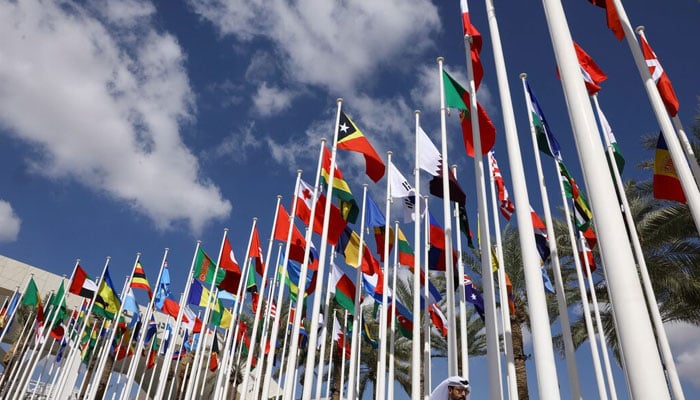
As global power competition intensifies and the traditional order becomes increasingly fragmented, a growing group of states known as “middle powers” are emerging as decisive actors reshaping the international landscape, News.az reports.
No longer content to remain passive players between superpowers, countries such as Türkiye, Azerbaijan, South Korea, India, Saudi Arabia, the UAE, Indonesia, and Brazil are using economic connectivity, regional influence, and diplomatic agility to redefine global politics. Their rise reflects a structural shift in world affairs where power is dispersed, alliances are flexible, and regional leadership matters as much as global alignment.
For decades, global geopolitics was seen primarily through the binary lens of the United States and the Soviet Union, and later through the US–China rivalry. But geopolitical disruptions of the past five years — from the Ukraine war to Middle East tensions, from energy security crises to disruptions in global supply chains — have demonstrated that middle powers are no longer spectators. They have become active architects of new political, economic, and security arrangements.
Analysts note that the most distinctive feature of middle power diplomacy is its emphasis on strategic diversification. Rather than aligning strictly with one superpower, these countries balance relations across competing blocs. Türkiye, for instance, simultaneously maintains NATO membership, deepens cooperation with Russia, and expands economic ties with China, while asserting independent policies in Syria, the Caucasus, and the Eastern Mediterranean. This multi-vector approach allows Ankara to influence crises far beyond its immediate region, including the grain corridor negotiations between Russia and Ukraine.
Azerbaijan has emerged as another significant actor in this middle-power landscape. By acting as a bridge between Europe and Asia, Baku has strengthened its importance in global energy markets and transport corridors. Azerbaijan’s integration into the C5 format of Central Asian states demonstrates a broader trend: middle powers are forming new regional coalitions that bypass traditional great-power frameworks. Through the Middle Corridor — connecting China, Central Asia, the Caspian region, the South Caucasus, and Europe — Azerbaijan is contributing to the diversification of trade routes away from routes dominated by Russia or reliant on Chinese infrastructure alone. The country’s growing relevance in energy supply, rare earth elements, and regional connectivity has also positioned it as a critical partner for both the United States and the European Union at a time of intensified global competition.
In the Middle East, Saudi Arabia and the UAE have leveraged their financial power, investment diplomacy, and decisive regional influence to become essential players in global politics. Their balancing between Washington and Beijing, combined with pragmatic engagement in multilateral platforms such as OPEC+, BRICS+, and regional normalization initiatives, illustrates how middle powers use flexibility rather than ideological alignment to shape outcomes. Their ability to mediate conflicts, diversify their economies, and invest in strategic technologies such as artificial intelligence and green energy also elevates their status on the global stage.
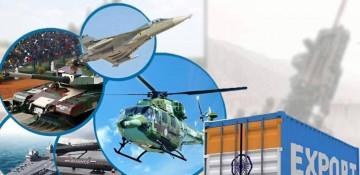
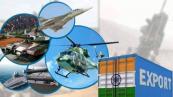
In Asia, South Korea and India have adopted their own versions of middle power activism. Seoul’s Indo-Pacific strategy promotes a rules-based order while expanding defense exports and technological partnerships. India, meanwhile, positions itself as a leading global voice of the Global South, avoids formal alliances, and uses its demographic weight, space technology, and military modernization to project influence across the Indian Ocean and beyond. Both countries demonstrate the shift toward a multipolar Asia in which regional powers compete and cooperate simultaneously.
A crucial factor behind the rise of middle powers is the decline in the ability of superpowers to unilaterally shape global outcomes. The wars in Ukraine and Gaza, the global energy transition, and economic decoupling have created geopolitical vacuums that regional powers are quick to fill. Their strength lies in agility: middle powers can mediate, negotiate, and maneuver in ways that larger powers often cannot. They operate in the gray zones of diplomacy, promoting multivector partnerships, issue-based coalitions, and pragmatic cooperation.
Another defining trend is the emergence of “minilateralism” — small, flexible groups of like-minded states that collaborate on specific issues. Examples include Azerbaijan’s partnerships across the Caspian, Türkiye’s cooperation frameworks with Gulf states, India’s role in the Quad, and the expanding OTS (Organization of Turkic States). These minilateral platforms are replacing the slower, more bureaucratic global institutions that increasingly struggle to address urgent crises.
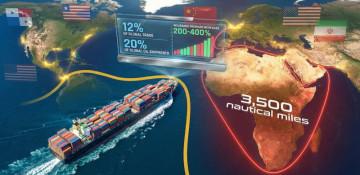
Energy, technology, and logistics corridors are becoming the new battlegrounds of geopolitical influence. Middle powers use these tools to extend their reach. Investments in critical minerals, green energy, digital infrastructure, and defense technology allow them to participate in shaping tomorrow’s global economy. The strategic importance of rare earth elements, semiconductor supply chains, and transport corridors such as the Middle Corridor or the India–Middle East–Europe route underscores how middle powers now sit at the center of global reconfiguration.
As the international system continues its transition toward a multipolar order, the influence of middle powers will only grow. Whether in conflict mediation, energy security, technological competition, or regional integration, they are no longer balancing between great powers — they are defining the rules of engagement. Their rise signals a future in which global geopolitics is shaped not only by Washington and Beijing but by a diverse constellation of dynamic regional actors whose choices will determine the world’s next political and economic decade.


Similar news