Why global shipping routes are becoming geopolitical battlegrounds in the 21st century


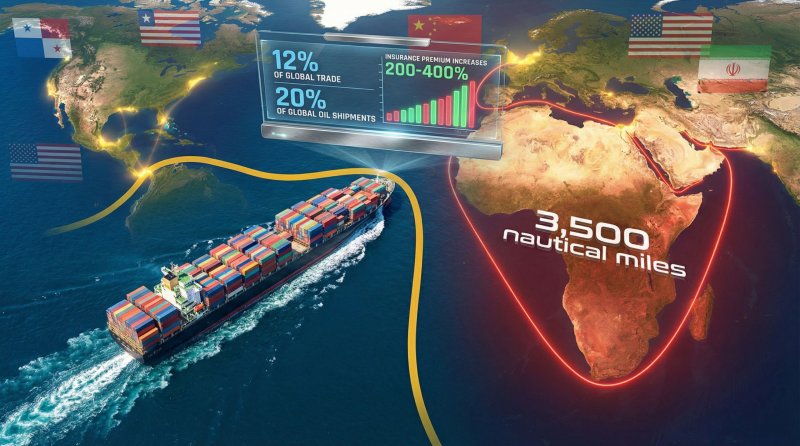
For centuries, control over trade routes has shaped the rise and fall of empires, determined economic power, and influenced global politics. Today, maritime trade remains the foundation of the world economy, with roughly 80 to 90 percent of global trade moving through sea routes.
However, growing geopolitical tensions, wars, sanctions, climate change, piracy risks, and strategic competition between major powers are transforming many of the world’s most important shipping corridors into geopolitical battlegrounds.
RECOMMENDED STORIES
From the Red Sea and the Suez Canal to the Arctic, the South China Sea, and the Middle Corridor linking Asia and Europe, global trade routes are becoming increasingly tied to military strategy, energy security, industrial competition, and international diplomacy.
The consequences affect far more than shipping companies.
Disruptions in global transport corridors can influence inflation, food prices, energy markets, industrial production, supply chains, and economic growth across the entire world economy.
Below is a detailed FAQ explainer examining why strategic shipping routes matter so much and how geopolitical competition is reshaping the future of global trade.
Why are shipping routes so important to the global economy?
Modern globalization depends heavily on maritime transportation.
Ships move oil, natural gas, food, industrial products, electronics, automobiles, raw materials, and consumer goods between continents.
Global supply chains rely on efficient, predictable, and relatively low cost shipping networks.
Even short disruptions in key trade corridors can significantly affect global markets.
Shipping routes therefore function as the arteries of the global economy.
Countries controlling or influencing major trade corridors often gain enormous strategic and economic advantages.
Why are shipping routes becoming more dangerous?
Several global developments are increasing instability.
Geopolitical tensions between major powers are intensifying.
Regional conflicts increasingly affect maritime security.
Sanctions and trade wars are disrupting traditional trade patterns.
Piracy and attacks on commercial vessels remain threats in certain regions.
Climate change is also affecting navigation conditions and infrastructure.
At the same time, global trade itself is becoming increasingly politicized as governments prioritize economic security and strategic resilience.
Shipping routes are therefore no longer viewed simply as commercial infrastructure. They are increasingly treated as geopolitical assets.
Why is the Red Sea so strategically important?
The Red Sea is one of the world’s most critical shipping corridors because it connects the Mediterranean Sea with the Indian Ocean through the Suez Canal.
Large portions of Europe Asia trade and global energy shipments pass through this route.
Any disruption in the Red Sea can significantly affect shipping costs and delivery times worldwide.
Recent regional instability and attacks on commercial vessels dramatically increased global concern regarding maritime security in the region.
Shipping companies were forced in some cases to reroute vessels around Africa, adding substantial time and expense.
The situation demonstrated how vulnerable global trade remains to geopolitical instability.
Why is the Suez Canal so important?
The Suez Canal is one of the world’s most important trade chokepoints.
It allows ships to travel between Europe and Asia without sailing around Africa.
Roughly 10 to 15 percent of global trade passes through the canal.
Energy exports, container shipping, industrial goods, and food shipments all depend heavily on this corridor.
Even temporary disruptions can create major supply chain problems.
The 2021 blockage involving the container ship Ever Given demonstrated how a single incident could disrupt global trade flows and cost billions of dollars.
What is a trade chokepoint?
A chokepoint is a narrow geographic passage through which large volumes of global trade must pass.
Important chokepoints include:
– The Suez Canal
– The Strait of Hormuz
– The Strait of Malacca
– The Panama Canal
– The Bosporus
– Bab el Mandeb
Because so much trade passes through these narrow routes, disruptions can have enormous global economic consequences.
Control or influence over chokepoints therefore carries major geopolitical significance.
Why is the Strait of Hormuz considered so sensitive?
The Strait of Hormuz is one of the world’s most strategically important energy corridors.
A large percentage of global oil exports pass through the narrow waterway connecting the Persian Gulf with international markets.
Tensions involving Iran, Gulf states, or military forces in the region can therefore affect global energy prices immediately.
Any major disruption could significantly impact oil markets and the broader world economy.
This explains why the region remains heavily militarized and strategically sensitive.
How is China influencing global shipping routes?
China plays a central role in global trade and maritime infrastructure.
Beijing’s Belt and Road Initiative includes major investments in ports, logistics hubs, railways, and shipping infrastructure worldwide.
China also possesses one of the world’s largest commercial shipping sectors and increasingly powerful naval capabilities.
At the same time, tensions in the South China Sea and around Taiwan create geopolitical concerns because enormous trade volumes pass through nearby waters.
The United States and its allies increasingly view Chinese maritime expansion as a strategic challenge.
Shipping routes are therefore becoming central to broader US China geopolitical competition.
Why is the South China Sea so important?
The South China Sea carries massive volumes of global trade and energy shipments.
Several countries claim overlapping territorial rights in the region, including China and neighboring Southeast Asian states.
Beijing has expanded military and infrastructure presence in disputed areas, increasing tensions with the United States and regional countries.
Because so much international commerce passes through these waters, the region is considered one of the world’s most strategically sensitive maritime zones.
Any major military confrontation there could have catastrophic consequences for global trade and supply chains.
What is the Middle Corridor and why does it matter?
The Middle Corridor, also called the Trans Caspian International Transport Route, is an emerging trade network connecting Asia and Europe through Central Asia, the Caspian Sea, Azerbaijan, Georgia, and Türkiye.
The route gained strategic importance after the Russia Ukraine war disrupted traditional transport networks through Russia.
Governments and businesses increasingly seek alternative trade routes that reduce geopolitical risk.
The corridor is becoming increasingly important for container shipping, energy exports, and industrial supply chains between Europe and Asia.
How did the Russia Ukraine war affect global shipping?
The war significantly disrupted energy flows, grain exports, insurance markets, and transport logistics.
Black Sea shipping became especially sensitive due to military operations and security concerns.
Global food markets were affected because Ukraine and Russia are major agricultural exporters.
Sanctions and geopolitical tensions also accelerated efforts to diversify supply chains and reduce dependence on vulnerable trade routes.
The war reinforced the idea that trade corridors can quickly become geopolitical flashpoints.
Why is the Arctic becoming strategically important?
Climate change is melting Arctic ice, potentially opening new shipping routes between Europe and Asia.
These routes could significantly reduce travel distances compared with traditional maritime corridors.
Countries including Russia, United States, Canada, and Nordic states increasingly view the Arctic as strategically important.
The region also contains substantial energy and mineral resources.
However, Arctic infrastructure remains underdeveloped and environmental concerns are enormous.
Geopolitical competition in the Arctic is therefore expected to intensify over time.
How do shipping disruptions affect ordinary consumers?
Global shipping disruptions often increase transportation and insurance costs.
These higher costs eventually affect prices for consumer goods, food, electronics, automobiles, and energy.
Supply chain disruptions can also create shortages or delivery delays.
Inflationary pressures frequently increase when transport systems become unstable.
The effects therefore extend far beyond shipping companies themselves.
Why are governments focused on supply chain resilience now?
The COVID 19 pandemic, geopolitical conflicts, and shipping disruptions exposed vulnerabilities in highly globalized supply chains.
Many governments now prioritize resilience alongside efficiency.
This includes:
– Diversifying suppliers
– Building strategic reserves
– Developing alternative transport routes
– Expanding domestic manufacturing
– Reducing dependence on geopolitical rivals
Economic security increasingly overlaps with national security.
Trade routes are therefore becoming part of broader geopolitical strategy.
How does energy security relate to shipping routes?
Oil and natural gas exports depend heavily on maritime transportation.
Disruptions in shipping corridors can therefore directly affect global energy prices and supply security.
Energy importing countries are especially sensitive to instability in maritime chokepoints.
As a result, naval power, port infrastructure, and maritime alliances remain central to global energy politics.
Could climate change reshape global trade routes?
Very likely.
Rising sea levels, stronger storms, droughts, and Arctic ice melting may all affect future shipping patterns.
For example, drought conditions recently affected the Panama Canal by reducing water availability needed for ship transit operations.
Climate risks may therefore reshape global logistics and infrastructure planning significantly over time.
How important are ports in geopolitical competition?
Ports are becoming increasingly strategic assets.
Countries investing in ports gain influence over trade networks, logistics systems, and regional connectivity.
China’s overseas port investments under the Belt and Road Initiative generated particular attention globally.
Governments increasingly worry that commercial infrastructure may also carry strategic or military implications.
Port ownership and infrastructure investment are therefore becoming more politically sensitive.
Can technological innovation improve shipping security?
Technology may help improve logistics and resilience.
Potential innovations include:
– Artificial intelligence for route optimization
– Autonomous ships
– Advanced cargo tracking
– Smart ports
– Digital customs systems
– Enhanced maritime surveillance
However, cyberattacks are also becoming a growing threat to shipping infrastructure.
Digitalization therefore creates both opportunities and new vulnerabilities.
Why are navies becoming more important again?
As trade routes become more geopolitically contested, naval power is regaining strategic importance.
Countries increasingly use naval deployments to protect shipping lanes, deter rivals, and project influence.
The United States, China, and regional powers are all expanding maritime capabilities.
Control over sea lanes remains central to global power projection.
Could globalization become less dependent on traditional shipping routes?
Global trade will likely remain heavily dependent on maritime transport for the foreseeable future.
However, alternative corridors such as rail networks, regional manufacturing hubs, and digital supply chain systems are becoming more important.
Companies increasingly seek flexibility and diversification rather than dependence on single routes or suppliers.
The future global trade system may therefore become more fragmented and strategically diversified.
What does the future of global shipping look like?
Global shipping routes are entering a far more politically contested era.
Trade corridors are no longer viewed merely as commercial infrastructure.
They are increasingly connected to:
– National security
– Geopolitical rivalry
– Energy security
– Industrial strategy
– Climate adaptation
– Technological competition
The future global economy will likely depend heavily on which countries can secure resilient, diversified, and strategically protected trade networks.
Shipping routes helped shape the first era of globalization.
Now they are becoming central battlegrounds in the struggle over what the next era of globalization will look like in the 21st century.
By Faig Mahmudov


Similar news