How mobile phones invented and transformed communication forever


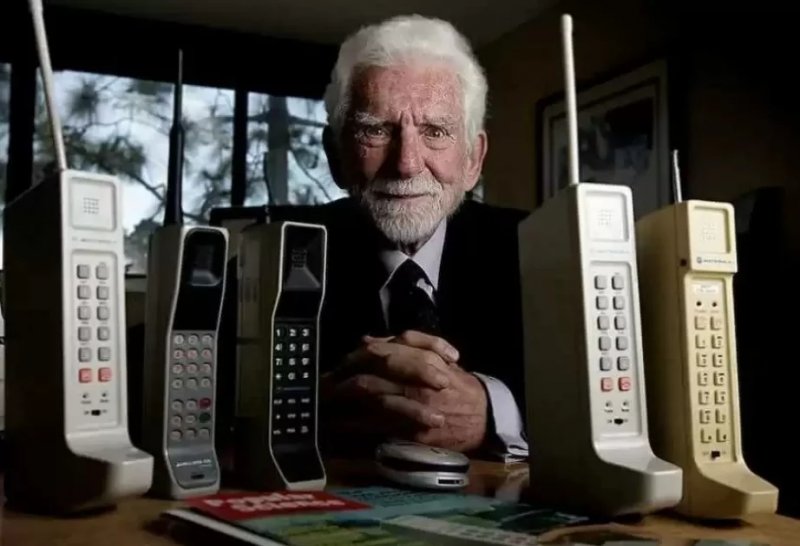
The cellphone is one of the most influential inventions of the modern era. It reshaped communication, transformed global business, created entirely new industries and connected billions of people across continents, News.Az reports.
Today, it is impossible to imagine daily life without mobile phones, yet the technology behind them emerged from decades of scientific breakthroughs, engineering innovations and ambitious ideas. This evergreen explainer examines how the cellphone was invented, who pioneered the technology and how it evolved into today’s advanced smartphones.
Early foundations: wireless communication before cellphones
Long before the first handheld cellphone appeared, scientists were already experimenting with wireless communication. Radio waves, discovered in the late 19th century, provided the foundation for all later developments. Early 20th-century engineers used radio technology to connect ships, military units and broadcast systems.
In the 1920s and 1930s, companies like Bell Labs explored the concept of wireless telephony, but technology at the time was too limited. Early mobile phones existed only in cars, trains or military vehicles and required large equipment boxes and powerful transmitters. These early systems used a single radio channel per call, meaning only one person in a large area could talk at a time, making them impractical for mass use.
The breakthrough concept: the cellular network
The true invention that made modern mobile phones possible was not the device itself but the cellular network idea. In 1947, engineers at Bell Labs—Douglas Ring and W. Rae Young—proposed dividing geographic regions into small radio “cells,” each served by a low-power transmitter.
This cellular approach achieved two major breakthroughs:
-
it allowed frequency reuse, meaning many users could share the same spectrum
-
it enabled users to move between cells without losing their connection
However, while the idea existed, the technology to build such a system—computers, transistors, switching equipment—did not yet exist. Decades of innovation were needed before the concept could be realized.
The first practical step: transistor technology
The invention of the transistor in 1947, also at Bell Labs, was critical for developing portable communication. Transistors made electronic devices smaller, more efficient and far more durable than vacuum-tube systems. Over the next several decades, transistors were refined, and integrated circuits were introduced, making complex electronics small enough to fit into a handheld device.
The race to build a true mobile phone
By the 1960s, several companies were researching mobile telephony. One of the most influential groups was Motorola, led by engineer Martin “Marty” Cooper. Motorola wanted to challenge AT&T/Bell’s vision of a car-based mobile phone system. Cooper believed that mobile communication should be personal, portable and available to everyone—not restricted to vehicles.
Motorola invested heavily in research and development, ultimately achieving a historic breakthrough.
April 3, 1973: the first handheld cellphone call
On April 3, 1973, Martin Cooper walked onto a street in New York City holding a prototype device called the DynaTAC 8000X. Standing near a busy Manhattan roadway, he dialed the number of his rival, Dr. Joel Engel at Bell Labs, and made history:
“Joel, I’m calling you from a real handheld cellphone.”
This was the first public call ever made from a handheld mobile phone. The prototype weighed around 1.1 kilograms, was 25 centimeters tall and provided about 30 minutes of talk time after 10 hours of charging. Despite these limitations, the world had witnessed a revolutionary moment.
Development of the first commercial cellphone
It took Motorola a decade to refine its early prototype into a market-ready product. In 1983, the U.S. Federal Communications Commission (FCC) approved the first commercial cellphone, the Motorola DynaTAC 8000X.
Key features included:
-
a weight of around 800 grams
-
30 minutes of talk time
-
an LED display
-
a price of nearly $4,000
Despite the high cost, demand was strong. The first generation of cellphones, known as 1G devices, relied on analog signals and offered basic voice communication.
1G to 2G: the digital transformation
The 1990s marked the transition from analog to digital cellular systems. The introduction of 2G networks, such as GSM in Europe and CDMA in the United States, brought major improvements:
-
clearer voice quality
-
encryption for security
-
SMS (text messaging)
-
better network capacity
Phones became smaller, lighter and more affordable, and mobile communication began reaching millions of users worldwide.
The rise of mobile phones as everyday devices
By the late 1990s and early 2000s, phones had evolved beyond simple calling devices. Manufacturers such as Nokia, Motorola, Siemens and Sony Ericsson introduced new features:
-
address books
-
games like Snake
-
email capability
-
early cameras
-
customizable ringtones
These devices still relied mostly on keypad interfaces, but they were accessible, durable and extremely popular.
The smartphone revolution begins
While early smartphones like the BlackBerry and Palm Treo appeared in the early 2000s, the true turning point came in 2007 with the launch of the iPhone. Apple transformed the industry by replacing keyboards with a multi-touch screen and building a full mobile computing platform.
Key innovations included:
-
the App Store
-
advanced mobile internet browsing
-
high-quality cameras
-
music and video playback
-
intuitive touch-based navigation
Google launched Android shortly after, creating an open ecosystem that allowed many manufacturers to build smartphones. This competition accelerated innovation and pushed smartphone adoption worldwide.
How smartphone technology evolved rapidly
Over the next decade, smartphones became increasingly powerful, integrating technologies once found only in computers or professional equipment:
-
multi-core processors
-
high-resolution displays
-
GPS and navigation
-
advanced sensors
-
biometric security (fingerprint, facial recognition)
-
4G LTE and eventually 5G connectivity
Cameras became so advanced that they began replacing dedicated digital cameras for everyday use.
The role of networks: from 1G to 5G
Each generation of cellular technology expanded mobile capabilities:
1G – analog voice
2G – digital voice, SMS
3G – mobile internet
4G LTE – high-speed broadband, video streaming, mobile apps
5G – ultra-fast connectivity, low latency, Internet of Things expansion
The invention of the cellphone initially depended on networks. Today, networks depend on cellphones to drive adoption of new technologies.
How mobile phones reshaped society
The impact of mobile phones on global society is profound:
-
communication became instant and borderless
-
mobile banking transformed financial systems
-
social media reshaped culture and politics
-
mobile commerce changed shopping and business models
-
GPS altered navigation, transportation and logistics
-
emergency response became faster and more effective
For many people in developing regions, the mobile phone became their first connection to the digital world.
From tool to essential companion
Modern smartphones function as:
-
cameras
-
GPS devices
-
entertainment centers
-
work tools
-
payment systems
-
health monitors
What began as a simple communication device became an essential multi-purpose platform central to modern life.
The future of cellphones
Looking forward, mobile phones will continue evolving through:
-
artificial intelligence integration
-
augmented and virtual reality
-
foldable and wearable designs
-
satellite-based mobile connectivity
-
enhanced privacy and security technologies
The cellphone is no longer just a device; it is the gateway to the digital economy and the foundation of global connectivity.
Conclusion
The invention of the cellphone was not a single moment but a long chain of innovations—from early radio experiments to digital networks and smartphone ecosystems. Martin Cooper’s first call in 1973 symbolized a turning point in human communication, but the vision of portable, personal connectivity has continued growing for decades.
Today, mobile phones are more than tools; they are extensions of our lives, shaping how people work, learn, communicate and interact with the world. From its origins as a large, heavy prototype to the sophisticated smartphones of today, the cellphone remains one of humanity’s most transformative inventions.


Similar news