India’s capital New Delhi faces hazardous air pollution


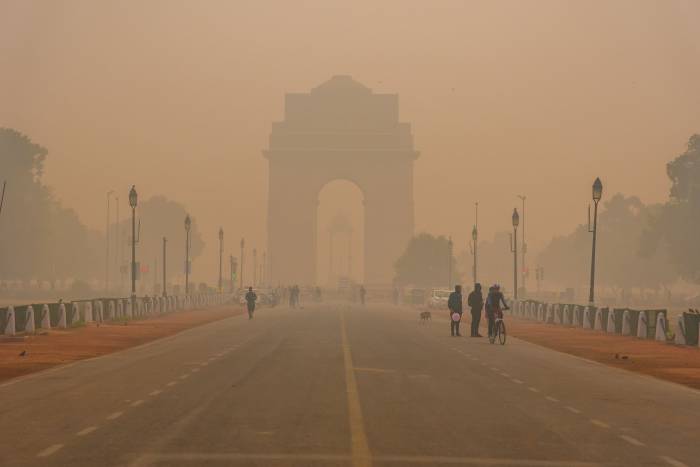
Acrid clouds enveloped India's capital on Wednesday as air pollution, exacerbated by fireworks and farm stubble burning, was classified as "hazardous" by monitoring agencies for the first time this winter.
New Delhi is home to more than 30 million people and is regularly ranked as one of the most polluted urban areas on the planet.Commuters walking to work cough through poisonous smog that kills thousands each year, according to health experts, although few in the sprawling city wear masks, News.Az reports, citing foreign media.
The city's famous India Gate monument was wreathed in foul-smelling mist on Wednesday.
"These days if you want to go out, you can't think of leaving without a mask," teacher Mamta Chauhan, 27, told AFP.
"There is a constant bad smell and the pollution level is very high."
New Delhi is blanketed in acrid smog each year, primarily blamed on stubble burning by farmers in neighbouring regions to clear their fields for ploughing.
Levels of fine particulate matter -- cancer-causing microparticles known as PM2.5 pollutants that enter the bloodstream through the lungs -- surged to nearly 23 times the World Health Organization recommended daily maximum.
The pollutants topped 344 micrograms per cubic metre, according to monitoring firm IQAir on Wednesday, which listed air in the sprawling megacity as "hazardous", ranking it as the world's worst.
Air pollution is expected to worsen during the Hindu festival of lights, Diwali, which falls on November 1 this year when smoky fireworks spewing hazardous toxins are part of celebrations.
The New Delhi government in past years has sought to cut pollution by restricting vehicle traffic, including a scheme that only allowed cars with odd or even number licence plates to travel on alternate days.
Authorities have also imposed seasonal bans on construction work and on diesel-powered vehicles from entering the city.
But government efforts have so far failed to solve the country's air quality problem.
A study in the Lancet medical journal attributed 1.67 million premature deaths in 2019 to air pollution in the world's most populous country.


Similar news