Trump has found an ambassador to Azerbaijan. With Armenian roots?


Editor’s note: Zaur Nurmamedov is a journalist and a graduate of the Faculty of Political Science at the Academy of Public Administration under the President of the Republic of Azerbaijan (1993–1999). He previously served as first deputy editor-in-chief of the Vesti.Az news portal (2009–2023). The views expressed in this article are his own and do not necessarily reflect the position of News.Az.
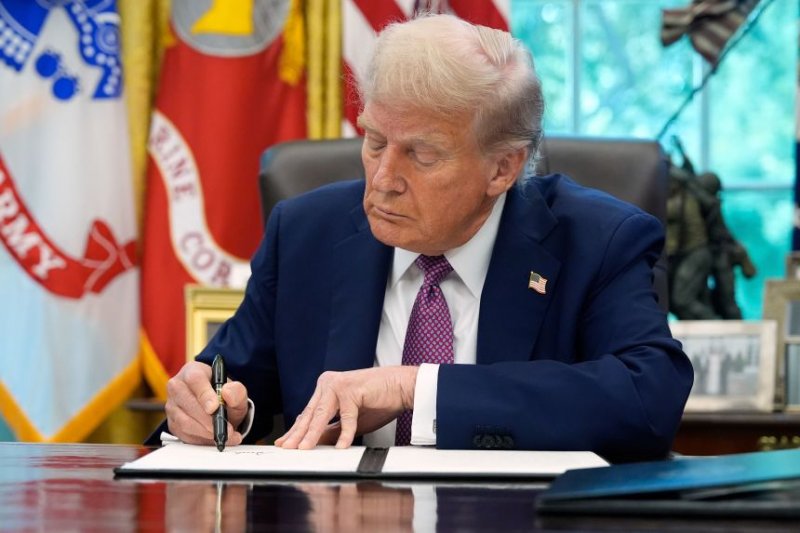
Several days ago, US President Donald Trump announced his choice for the post of Ambassador Extraordinary and Plenipotentiary to Azerbaijan. His nominee is Alexander Alden, whose candidacy has already been submitted to the Senate for confirmation.
The US Embassy in Baku is currently headed by Chargé d’Affaires Amy Carlon. The previous ambassador, Mark Libby, left the post at the end of 2024. Since then, the United States has not had a confirmed ambassador in Azerbaijan.
RECOMMENDED STORIES
It remains unclear why a new head of the diplomatic mission was not appointed earlier. Washington’s preoccupation with multiple international crises may have contributed to the delay.
Another possible explanation is that nominees for the ambassadorship in Azerbaijan have traditionally had to pass through the filter of diaspora lobbying interests, creating difficulties for successive US administrations.
Trump himself encountered such resistance during his first term, when lobbying groups in Congress attempted to block his nominee. Ultimately, however, he succeeded in securing the appointment of his preferred candidate as ambassador to Baku. Previous occupants of the White House were not always as successful. To the embarrassment of a great power, the question of who should represent the United States in Azerbaijan has at times been influenced by Armenian diaspora.
What is known about Alexander Alden?
While serving in the US State Department’s Bureau of European and Eurasian Affairs, Alexander Alden worked as a Deputy Assistant Secretary of State, responsible for strengthening relations between the United States and the European Union, as well as countering China’s regional influence.
At various stages of his career, Alden also served as Senior Director for Emerging Technologies and as Director for Defence Policy and Strategy at the US National Security Council. He holds a master’s degree in political science and speaks several languages.
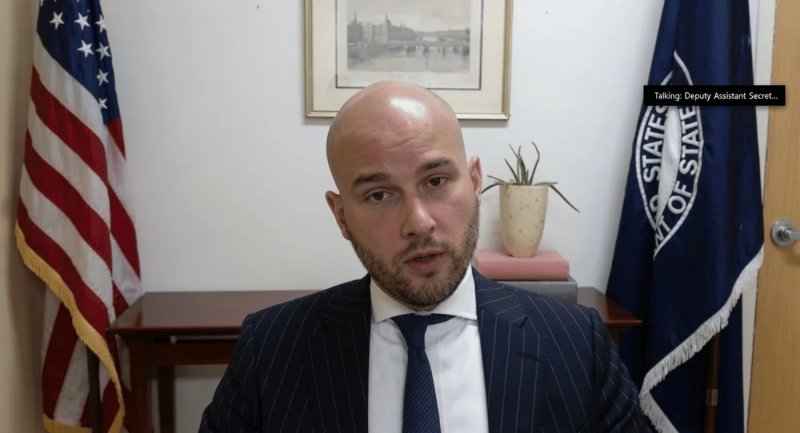 US ambassador nominee to Azerbaijan Alexander Alden
However, this appears not to be the full extent of what is known about Alexander Alden.
The Armenian publication Golos Armenii (Voice of Armenia) has reported a detail that, if accurate, warrants attention.
According to Golos Armenii, Alexander Alden is of Armenian origin, and his parents were Soviet political émigrés who settled in the United States. The publication itself expresses surprise that this individual was selected for the post.
Under one interpretation offered by the newspaper, Washington may have sought to provoke Baku. Under another, the appointment may have been intended to “symbolically demonstrate its desire to put an end to ethnic tensions in the region.”
At the same time, the publication advises Armenians not to expect any particular benefits from the diplomat’s alleged background. As an example, it cites Russian Foreign Minister Sergey Lavrov, noting that his Armenian roots have brought Armenia no discernible advantage.
Even if Alden speaks Armenian, he remains, first and foremost, an American — a US diplomat and government official guided by the interests of the country he represents.
Golos Armenii writes, somewhat sarcastically, that Azerbaijani media have made no public comment on the diplomat’s alleged background, although authorities in Baku are presumably aware of it.
The implication is clear. However, relations between Baku and Washington have reached a level at which public hysteria would be inappropriate. If it is established that the American diplomat does indeed have Armenian roots, the issue will undoubtedly be discussed — but not through emotional demonstrations or sensationalist media campaigns.
Nevertheless, several points must be made.
Although relations between Azerbaijan and Armenia have recently begun to improve, the appointment of a person of Armenian origin as ambassador to Azerbaijan would be inappropriate under the present circumstances.
Naturally, Armenian political and lobbying circles should not assume that they will benefit from the nominee’s alleged ethnic background — again, assuming the information is accurate. The interests of the United States should, of course, take precedence over all else.
But can this always be guaranteed?
With the exception of the current US president, previous American administrations have often appeared vulnerable to pressure from the Armenian diaspora and and its lobbying organisations. Congress has repeatedly blocked or challenged decisions concerning Azerbaijan and Türkiye that did not satisfy Armenian advocacy organisations.
Donald Trump does not allow a particular ethnic lobby to dictate policy because he is politically independent of diaspora influence. But is there any guarantee that a future US president will not once again become dependent on Armenian lobbying groups or on commitments made to them?
Unfortunately, this has happened before, and nothing can be ruled out. Under such circumstances, a conflict of interest could arise.
The Armenian-American community continues to maintain an influential lobby in Congress. Attempts to revise Section 907 of the Freedom Support Act have repeatedly faced resistance. It remains highly doubtful that the amendment will be repealed, as any such initiative is likely to encounter significant opposition from Armenian lobbying groups.
These are political realities that cannot be ignored.
They also raise the possibility that Armenian lobbying organisations could, at some future point, attempt to use a diplomat of Armenian origin to advance their own agenda. This is not to suggest that such efforts would necessarily succeed. Nevertheless, ethnic and family ties can become politically relevant under certain conditions and may be used as channels through which specific interests are promoted.
Broadly speaking, Armenian lobbying activity in Congress serves the interests of the diaspora rather than those of the United States. The fact that such activity may damage Washington’s relations with strategic partners such as Baku and Ankara appears to be of secondary concern. In some interpretations, weakening those ties may even be part of the objective.
For professional lobbyists, national interests may become secondary to the substantial fees paid by advocacy organisations. In certain circumstances, lobbying groups may also attempt to exert pressure on diplomatic institutions if they conclude that an Armenian-American diplomat is not sufficiently advancing the so-called “Armenian cause.”
The Armenian diaspora remains a source of revanchist sentiment, and this should not be overlooked.
The question of Armenian origin is therefore not simply one of nationality. In the context of the South Caucasus, it is also a matter of strategy, perception and security.
Azerbaijan does not cultivate hostility towards Armenians. However, not enough time has passed since the end of nearly three decades of Armenian occupation for Washington to expect a diplomat of Armenian origin to receive an unreservedly positive reception in Baku.
There will be no such reception.
 Source: Shutterstock
A different reaction might be conceivable only if the United States were also prepared to appoint an ambassador of Azerbaijani — or at least Turkish — origin to Armenia. The US ambassadorial post in Yerevan has also remained vacant for a considerable period.
It is not difficult to imagine the political backlash that would occur in Yerevan if a US president appointed a diplomat with even distant Azerbaijani ancestry.
One need only recall the campaign waged by Armenian lobbying groups against Matthew Bryza because his wife was Turkish. This occurred even though Bryza was nominated not as ambassador to Yerevan, but as ambassador to Baku.
The Bryza controversy has not been forgotten. A similar situation could easily arise again if Washington were to show weakness in the face of lobbying pressure.
This is not to suggest that Donald Trump intended to provoke Azerbaijan with this decision. Such an interpretation appears highly unlikely.
However, good intentions alone are not sufficient. If Washington views Alden’s possible appointment as a form of symbolic engagement in regional reconciliation, it could prove counterproductive.
Most importantly, the controversy risks undermining the regional peace agenda.
Finally, it should be recalled that Moscow once attempted to appoint a close relative of then-Armenian Foreign Minister Edward Nalbandian as Russia’s ambassador to Azerbaijan. Baku did not allow that proposal to proceed.
(If you possess specialized knowledge and wish to contribute, please reach out to us at opinions@news.az).


Similar news