Japan starts unilateral oil reserve release


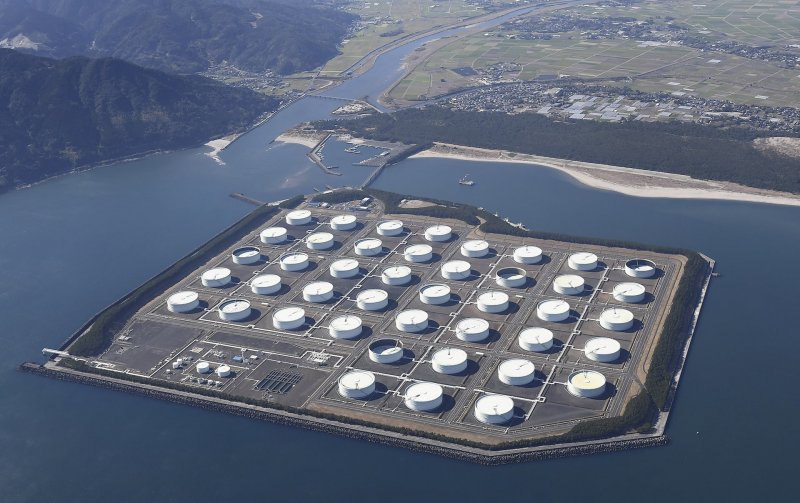
Japan began releasing oil from its reserves on Monday in an effort to ease supply concerns triggered by the escalating U.S.-Israel conflict with Iran and to stabilize the domestic petroleum market.
The move comes ahead of a coordinated release expected from members of the International Energy Agency (IEA), News.Az reports, citing Kyodo.
In its first such action since 2022—when it joined an IEA-led effort after Russia’s invasion of Ukraine—Japan initially released reserves equivalent to 15 days of supply held by the private sector. This will be followed by the release of about one month’s worth of oil from government reserves.
Chief Cabinet Secretary Minoru Kihara said the decision was made as Japan expects a sharp decline in crude oil imports from late March due to the effective closure of the Strait of Hormuz, a key shipping route for global oil tankers.
“We will work to ensure that the released oil flows smoothly into the market,” Kihara said, adding that the government would continue taking all possible measures, including international coordination, to maintain stable energy supplies.
The IEA announced on Sunday that its 32 member states, including Japan, will soon begin a coordinated oil release. The agency said last week that member countries plan to supply around 400 million barrels of oil to global markets to address disruptions caused by the Middle East conflict.
Oil prices have surged amid concerns that the conflict could escalate further. Benchmark West Texas Intermediate crude briefly exceeded $100 per barrel in New York on Sunday, following a similar spike the previous week.
To support the measure, the Japanese government will lower the mandatory oil reserve requirement for refiners and trading companies from 70 days to 55 days under the country’s stockpiling law, allowing firms to draw more from existing inventories.
Last Wednesday, Prime Minister Sanae Takaichi announced plans to release about 80 million barrels of oil—Japan’s largest release on record. The volume equals roughly 45 days of domestic consumption and is 1.8 times larger than the amount released after the devastating 2011 earthquake and tsunami.
Authorities are also preparing to sell government-held oil reserves to wholesalers.
As of the end of 2025, Japan held approximately 470 million barrels of oil in reserves, equivalent to 254 days of domestic consumption. Of that total, 146 days’ worth were owned by the government, 101 days by the private sector, while the remainder was jointly stored with oil-producing countries.
This marks the seventh time Japan has tapped its oil reserves since establishing the stockpiling system in the 1970s.
Japan imports more than 90% of its crude oil from the Middle East, leaving it particularly vulnerable to disruptions in the Strait of Hormuz. The effective closure of the vital waterway has blocked oil and gas shipments from Persian Gulf suppliers and contributed to a sharp rise in global oil prices since the war in the Middle East began on Feb. 28.
By Nijat Babayev


Similar news