Dollar holds near six-week high amid US-Iran talks uncertainty


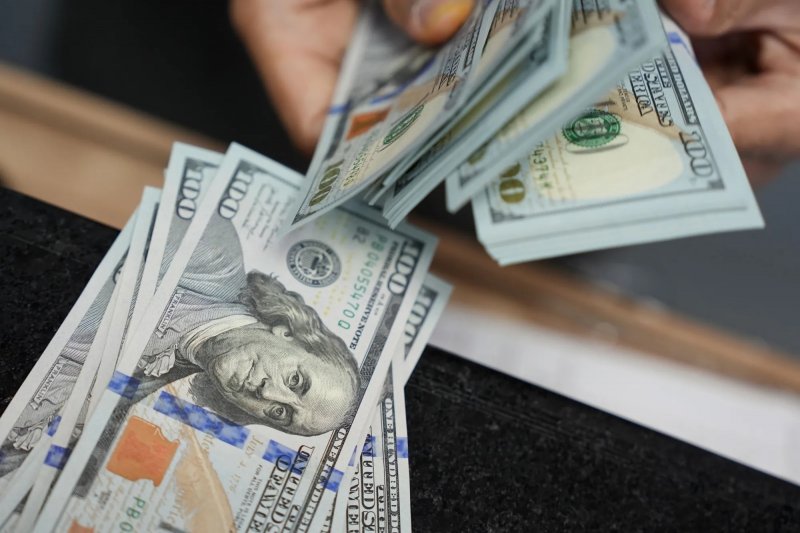
The dollar traded near six-week highs on Friday after mixed signals surrounding a possible US–Iran negotiations deal triggered volatility across global financial markets, News.Az reports, citing Reuters.
Washington and Tehran continued to hold opposing positions on key issues, including Iran’s uranium stockpile and control of the Strait of Hormuz. However, U.S. Secretary of State Marco Rubio said there had been “some good signs” in the ongoing discussions.
The dollar rose 0.17% against a basket of six major currencies, reaching 99.37, just below six-week highs.
RECOMMENDED STORIES
The euro, which is heading for a second consecutive weekly loss, fell 0.2% on the day to $1.1594. Meanwhile, the pound slipped slightly to $1.342, despite earlier data showing retail sales declined at the sharpest pace in nearly a year in April, as consumers were squeezed by inflationary pressures linked to the Iran conflict.
The dollar also found support from U.S. economic data showing weekly jobless claims declined, while manufacturing activity rose to a four-year high in May, highlighting continued resilience in the world’s largest economy.
Market analyst Tony Sycamore of IG said, “We're coming to the end of week 12, we're six weeks in the ceasefire, and I'm just not really that convinced we're any closer to a resolution between the U.S. and Iran.”
He added: “I still feel like the risks are for the U.S. dollar to go higher, because I really just don't see a way out of this situation in the Middle East without them sort of needing to be more forceful.”
The U.S. dollar’s strength, combined with persistently high oil prices, has put pressure on the Japanese yen, which on Friday struggled on the weaker side of 159 per dollar, trading at 159.09 after slipping 0.1%.
The yen remains weak even after what is believed to be recent intervention by Tokyo to support its currency. It has already given up nearly 75% of the gains from that suspected intervention, leaving traders alert to possible further action by Japanese authorities.
Currency strategist Lee Hardman of MUFG commented: “It's just buying time, really. What they need is a change in fundamentals, and I think the best thing that could happen is a quick deal to end the Iran conflict.”
He added that while he does not expect a sharp drop in dollar/yen, a move back into the mid-150s could ease pressure on the yen.
The Bank of Japan is expected to raise borrowing costs only gradually, while other major central banks, including the European Central Bank, are likely to tighten policy more aggressively, putting the yen at a disadvantage as investors seek higher returns elsewhere.
On a trade-weighted basis, the yen remains at record lows, which supports exporters but increases pressure on Japan due to its dependence on imported energy.
Recent data showed Japan’s core inflation slowed to a four-year low in April, complicating the outlook for Bank of Japan policy.
Meanwhile, emerging Asian currencies are also under pressure due to surging global oil prices, forcing policymakers to adopt increasingly urgent and unconventional measures to stabilize their economies.
The Turkish lira hit record lows against the dollar on Friday after a court ruling went against the country’s main opposition party.
By Nijat Babayev


Similar news