Japanese police charge Kodai Murata with firearms violations at the Chinese Embassy


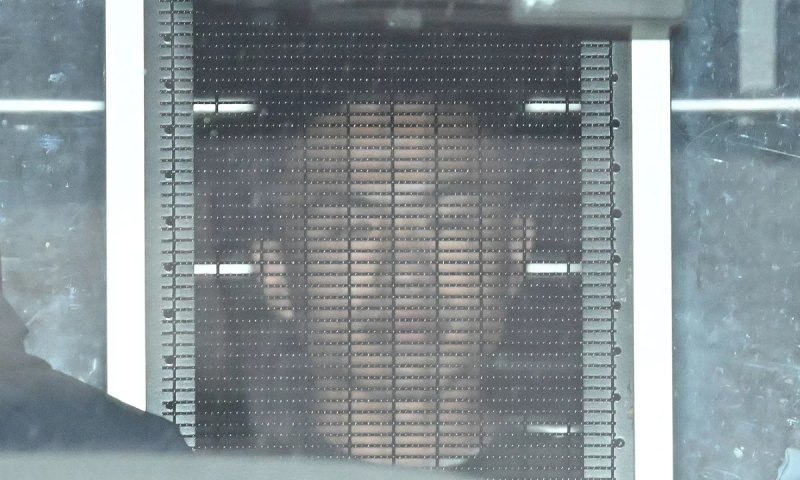
Japanese police on Tuesday rearrested Kodai Murata, second lieutenant in the Japan Ground Self-Defense Force (SDF), who is suspected of violating Japan's Firearms and Swords Control Law by forcibly breaking into the Chinese Embassy in Japan on March 24, according to Japanese media reports. Previously, he had been arrested on suspicion of trespassing at the Chinese Embassy in Japan.
On March 24, Murata climbed over a wall and forcibly entered the Chinese Embassy in Japan while carrying a knife. The incident was shocking and extremely serious in nature and impact. Japanese police had previously arrested him on suspicion of unlawful entry into a building, News.Az reports, citing Global Times.
According to NHK, the incident highlights the security challenges faced by embassies located in central urban areas densely packed with office buildings and apartment complexes. The Tokyo Metropolitan Police Department has decided to use the case as an opportunity to strengthen its security system and will once again urge building managers to implement preventive measures.
RECOMMENDED STORIES
Japan's police rearresting the SDF officer, who intruded into the Chinese embassy under the Firearms and Swords Control Law, appears on the surface to be a procedural law enforcement action, but in essence it still reflects an attempt to downplay the nature of the incident by treating it as an ordinary public security offense, Xiang Haoyu, a distinguished research fellow at the Department for Asia-Pacific Studies of the China Institute of International Studies, told the Global Times on Tuesday.
"It fundamentally reveals Japan's intention to minimize the issue and evade responsibility, behind which there are political calculations," Xiang said.
Xiang said that as an active-duty SDF officer, carrying a knife, climbing over a fence, and forcibly entering a foreign diplomatic facility while issuing threats is premeditated and political in nature, and is by no means an ordinary criminal case.
However, Japan deliberately classifies it as a general legal violation, avoiding the essence of the incident as a breach of the Vienna Convention on Diplomatic Relations, and refuses to fulfill diplomatic obligations such as issuing a formal apology, conducting an assessment of damages, and arranging compensation. In substance, this is an attempt to evade responsibility for security negligence by the government and mismanagement within the SDF, in order to avoid affecting its military expansion plans, the expert said.
Xiang noted that NHK's shift of focus to the "security challenges of embassies in metropolitan areas" is a typical case of evading the core issue, aimed at excusing the government and the SDF and diverting domestic and international attention away from the political nature of the incident. Behind this are political intentions: first, to test external reactions; second, to obscure deeper domestic problems, including the infiltration of extremist ideologies within the SDF and issues of managerial loss of control.
Chinese Foreign Ministry spokesperson Mao Ning said at a press conference on April 1 that the Japanese side did not reflect on its failure in maintaining discipline in the SDF. Instead, it continues to peddle the narrative of external threats and expedite military buildup. This is a highly dangerous trend. China solemnly urges the Japanese side to do serious soul-searching on its history of militarist aggression, and honor its commitment and exercise prudence in military and security areas.
By Leyla Şirinova


Similar news