Kazakhstan expands its fight against religious extremism


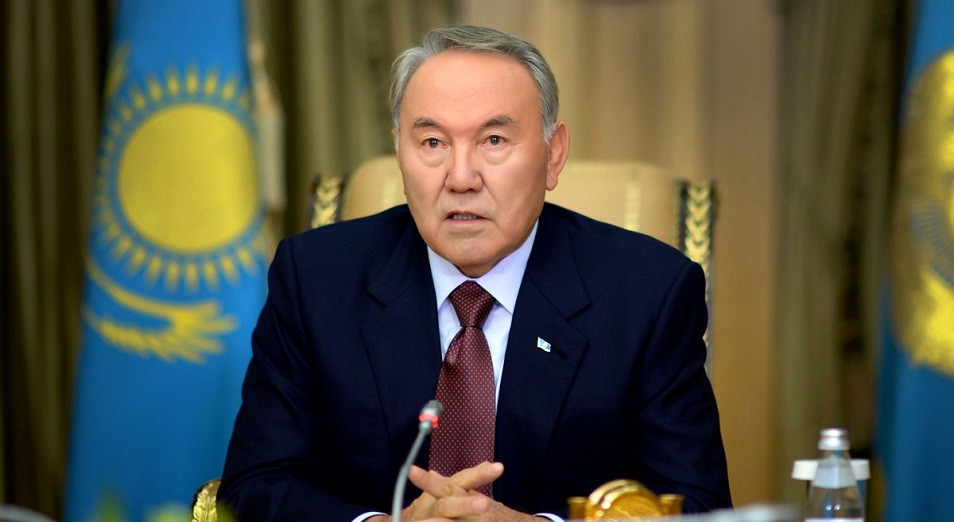
Kazakhstan is keeping up its fight against religious extremism and destructive religious movements, as President Nursultan Nazarbayev approved on Wednesday a document further outlining the government’s policy and approach towards religious institutions, Caspian News reports.
The “Concept of State Policy in the Religious Sphere of the Republic of Kazakhstan for 2017-2020” is seen as strengthening already-existing state policy regarding religion, as Astana tries to balance the secular nature of Kazakhstan’s government with ensuring that religious associations comply fully with the law. The new policy specifically requires religious associations to be financially transparent, and demands that preaching does not promote extremism, incite violence, or inspire hatred.
“There is a need to define the conceptual priorities for the development of state policy in the realm of the religious sphere, on the background of increasing challenges of religious extremism and threats of mass penetration of pseudo-religious teachings that are alien to Kazakhstan society,” the text reads.
The document, which was prepared by the Ministry of Religious Affairs and Civil Society and had been presented to Nazarbayev’s cabinet on May 2, is a continuation of the government’s already existing policy aimed at fighting religious extremism in Kazakhstan.
Nazarbayev has been harshly critical of movements and ideologies originating outside the region, and his government has taken steps over the years to ban a number of them, including Al Nusra Front, a Salafist extremist organization fighting the Syrian government. Others banned in Kazakhstan include Islamic State, otherwise known as “IS” or “ISIS”; Al Qaeda; and the Al Qaeda-affiliated Jama'at al-Muslimin, popularly known as Takfir wal Hijra, which emerged in Egypt in the 1960s and has had members detained in Ukraine and Russia as late as 2013.
“One way to influence us from outside is introducing alien religious teachings for our people. This trend has been observed recently. We must fight against manifestations that are dangerous for our statehood,” Nazarbayev told Muslim clerics during a meeting in April, where they discussed passing legislation that would ban Arab-styled black clothing for women and growing beards for men.
Roughly 70 percent Kazakhstan’s population of 18 million are Sunni Muslims, although 26 percent of the population is Russian Orthodox, with small minorities of Jews and Buddhists.
About 15,000 adhere to the Salafist school within Sunni Islam, an ultra-conservative movement that developed in Saudi Arabia in the first half of the 18th century. Salafists have been repeatedly criticized by the government in Astana after a series of terror attacks in June 2016 in the northwestern city of Aktobe, which resulted in seven deaths and 37 more injured.
On June 5, two attacks took place where guns were being sold, while a third attack was aimed at a military unit. Multiple shootouts between terrorists and police officers occurred over the next few days, while fourth front had opened at a children’s camp three days later.
As a result of the attacks, the Ministry of Religious Affairs and Civil Society was created, in a bid to oppose spread of extremist movements.
Elnur Ismayil, a research fellow at the Wise Men Center for Strategic Studies (BILGESAM) in Turkey, says that 2016 was a watershed moment for Kazakhstan.
“For a long period, the Kazakh government tried to deny the role of religious radicalism as a threat in the country. After 2016, religious terrorism became a threat in Kazakhstan and the government recognized the level of such threat,” Ismayil told Caspian News.
Ismayil explained that Nazarbayev’s policy is centered around minimizing external influences on more mainstream and peaceful interpretations of religious teachings.
“State policy is looking to prohibit radical religious groups like Wahhabism, Takfirism – associated with the Islamic State extremist group –or persons being financed from outside the country,” Ismayil said, adding that the government will have more control over groups linked to radical religious movements with the new policy signed by Nazarbayev.
Dozens of ethnic Kazakhstanis have reportedly joined IS, which remains active in the Middle East. In January 2015, a child soldier who claimed to have come from Kazakhstan was seen executing two alleged Russian spies in a video released by the group. Jihadist promotional materials distributed in November 2016 have stressed that IS actively uses fighters from Central Asia as “shahid,” meaning “martyr” in Arabic, or suicide bombers.
News.Az


Similar news