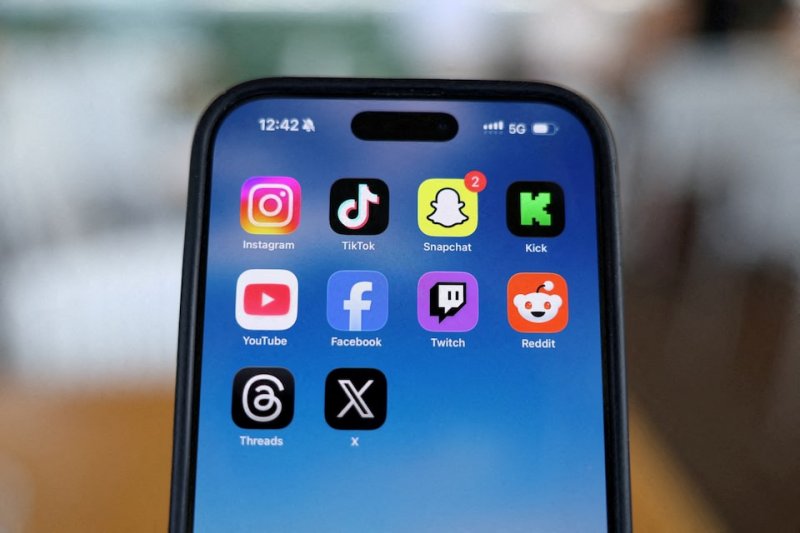
The draft legislation, put forward by lawmaker L.S.K. Devarayalu, comes as India stands as the world’s largest market for platforms owned by Meta Platforms Inc and Alphabet Inc. Devarayalu argues that widespread social media use among minors is fueling addiction while also turning Indian users into a vast source of data for foreign companies, News.Az reports, citing Reuters.
“Not only are our children becoming addicted to social media, but India is also one of the world’s largest producers of data for foreign platforms,” Devarayalu told Reuters. He added that this data is used to build advanced artificial intelligence systems, while the economic and strategic benefits are realised outside India.
The proposal mirrors moves elsewhere. Australia last month became the first nation to ban social media access for children under 16, a decision praised by many parents and child welfare advocates but criticised by major technology firms and free-speech groups. This week, France backed legislation to block under-15s from social media, while United Kingdom, Denmark and Greece are studying similar measures.
In India, Meta, Alphabet and X did not respond to requests for comment on the proposed bill. Meta has previously said it supports stronger parental oversight, but warned that outright bans could push teenagers toward less safe, unregulated online spaces. India’s IT ministry also declined to comment.
India is the world’s second-largest smartphone market, with about 750 million devices and roughly one billion internet users. Despite this scale, the country currently does not set a minimum age for social media access.
Devarayalu’s 15-page draft, titled the Social Media (Age Restrictions and Online Safety) Bill and reviewed by Reuters, would prohibit anyone under 16 from creating or holding a social media account. Platforms would be required to disable accounts found to violate the rule, with full responsibility for age verification placed on the companies themselves.
The proposal follows recent remarks by the government’s chief economic adviser, who said India should consider age-based access limits to address what he described as growing “digital addiction.”
Although the bill is a private member’s proposal rather than government legislation, such initiatives often spark parliamentary debate and can influence future policy. Devarayalu belongs to the Telugu Desam Party, which governs Andhra Pradesh and plays a key role in Modi’s coalition government, giving the proposal added political weight.