Yandex metrika counter
Moldova’s Pro-EU party secures election victory: What comes next?
Photo: Reuters

Editor's note: Faig Mahmudov is an Azerbaijan-based journalist. The article expresses the author's personal opinion and may not coincide with the view of News.Az.
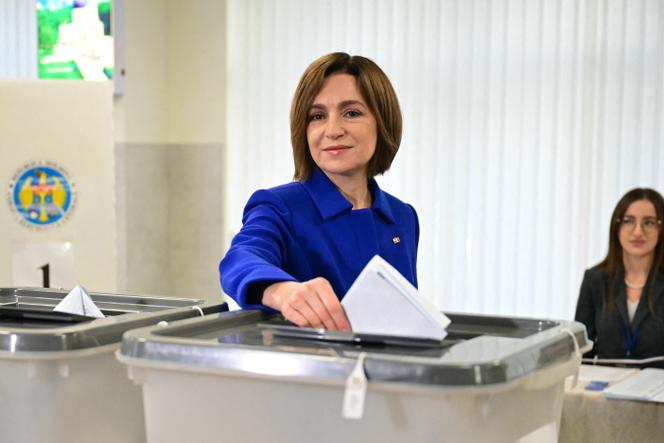
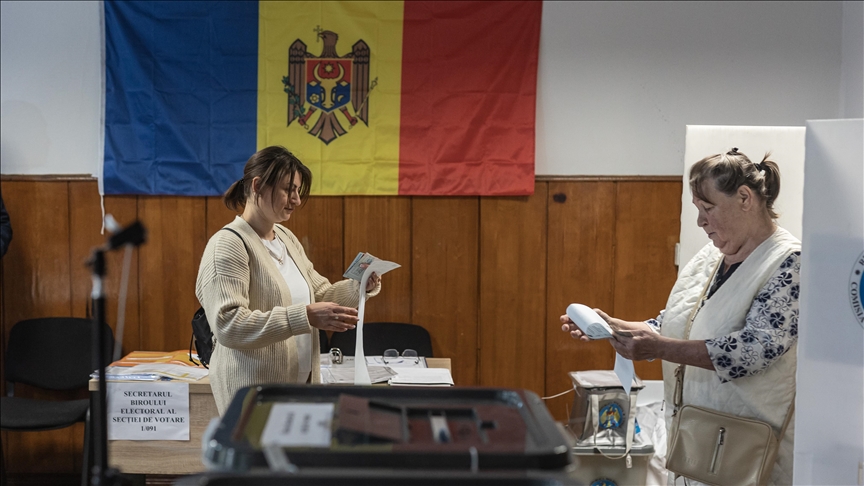
Moldova’s parliamentary elections on September 28 delivered a decisive victory for the pro-European Party of Action and Solidarity (PAS), opening a new chapter in the country’s political trajectory.

According to nearly all ballots counted, PAS secured 50.1% of the vote, translating into roughly 55 seats in the 101-member parliament. The result grants the party a workable majority and positions it to drive forward its European integration agenda.

The main opposition, the pro-Russian Patriotic Electoral Bloc, captured just over 24% of the vote, while smaller groups such as the Russia-friendly Alternativa Bloc, populist Our Party, and right-wing Democracy at Home will also be represented in parliament.

News about - Moldova’s Pro-EU party secures election victory: What comes next?

Source: Lemde

This election was widely viewed as a choice between two directions: closer alignment with the European Union or a retreat into Moscow’s orbit. President Maia Sandu, closely aligned with PAS, framed the vote as Moldova’s most consequential in decades. In her words, the election determined “whether Moldova consolidates democracy and builds its European future, or whether Russia drags us back into the grey zone.” The contest highlighted Moldova’s deep-seated identity struggle. Pro-EU forces promise reforms, anti-corruption measures, and closer ties with Brussels. Their opponents emphasize ties to Russia, economic pragmatism, or skepticism about Western institutions.

The campaign period was marred by allegations of interference and intimidation. Authorities reported bomb threats at polling stations abroad, suspicious movement of ballot materials, and organized voter transportation. Officials accused actors linked to the breakaway Transnistrian region of seeking to destabilize the process. These incidents underscore Moldova’s vulnerability to hybrid threats, where elections become battlegrounds for influence as much as ballots.

While PAS’s victory secures political momentum, the government now faces steep challenges. Delivering tangible change on anti-corruption and judicial reform will be the ultimate test of credibility. Moldova remains heavily dependent on remittances and vulnerable to external shocks, including energy supply disruptions. Pro-Russian parties retain significant support and may mobilize against PAS reforms, complicating parliamentary dynamics. Moldovans abroad, who overwhelmingly supported Sandu in past elections, continue to shape both the political and economic landscape.

Pro-EU party wins majority in Moldova's parliamentary elections, initial  results suggest

Source: Reuters

Moldova’s orientation carries weight beyond its borders. A clear pro-EU majority strengthens Brussels’ hand in the region, while posing a direct challenge to Moscow’s influence. The Transnistria conflict remains a potential flashpoint, as the region functions as a Russian outpost within Moldova’s borders. The EU is expected to welcome PAS’s victory but will condition its support on visible reforms and democratic standards. Russia, meanwhile, is likely to increase political, economic, and hybrid pressures to slow or derail Moldova’s westward course.

Analysts outline several potential paths. A government committed to anti-corruption and institutional strengthening could accelerate Moldova’s EU integration. Institutional resistance and external shocks may dilute reform efforts, frustrating voters. Russian hybrid tactics or economic leverage could destabilize Moldova’s fragile political environment.

Moldova’s election result is a strong signal of public appetite for a European future. Yet elections alone do not secure transformation. The PAS majority now carries the burden of proving that EU integration is not just an aspiration but a practical path to better governance and prosperity. Success or failure in Moldova will resonate far beyond its borders—serving either as a model for reformist states like Georgia and Ukraine, or as another cautionary tale in the region’s ongoing struggle between East and West.


(If you possess specialized knowledge and wish to contribute, please reach out to us at opinions@news.az).


News.Az 

Similar news

Archive

Prev Next
Su Mo Tu We Th Fr Sa
  1 2 3 4 5 6
7 8 9 10 11 12 13
14 15 16 17 18 19 20
21 22 23 24 25 26 27
28 29 30 31