New challenges for Syria: division, instability and influence of external players



Photo: Google images
The fall of Syrian President Bashar al-Assad has triggered a sharp increase in regional tensions. The near-anarchy and destruction of what was once a formidable army have turned the country into a battlefield for neighboring states vying for control over Syria’s legacy. Despite assurances by Abu Mohammad al-Julani, the leader of Hayat Tahrir al-Sham (HTS), about protecting the rights of ethnic and religious minorities, the likelihood of another round of civil war remains high. Particular concerns revolve around the fate of Alawites and Shiites. A country stripped of a functioning state apparatus and security forces will struggle to maintain peace among various population groups.
Reports from Latakia, home to Alawites and relatives of the ousted President Assad, already indicate instances of settling scores. Witnesses report arrests of former Syrian Arab Army (SAA) officers, many of whom have been publicly executed by rebels. The new authorities have announced the revocation of citizenship for Shiites and warned journalists to align their reporting with the government’s official stance.
Recently, Russian forces in Syria have been redeploying to the Mediterranean coastline, focusing on the Khmeimim Air Base and the Russian Navy facility in Tartus. Access to the civilian airport in Khmeimim, which shares a runway with the Russian airbase, is now guarded by HTS fighters. These fighters have informed British journalists that they have been instructed not to interfere with the Russians or engage with them. "We are trying not to provoke the Russians and are giving them space to reconsider their relations with us," stated HTS leader Abu Mohammad al-Julani.
HTS has announced the establishment of "reconciliation centers" in the Alawite province of Latakia for former members of Assad’s security forces. Meanwhile, in northern Syria, U.S. special forces have taken control of former Russian military bases in Kobani (Ayn al-Arab) near the border with Türkiye, as well as in Sarrin and Ayn Issa, following Russia’s withdrawal to Khmeimim and Tartus. Negotiations are currently underway regarding the future of Russia’s military presence in Syria and the terms of its stay. These developments underscore a strategic reshuffling of power in the region, with the U.S. actively filling the vacuum left behind.
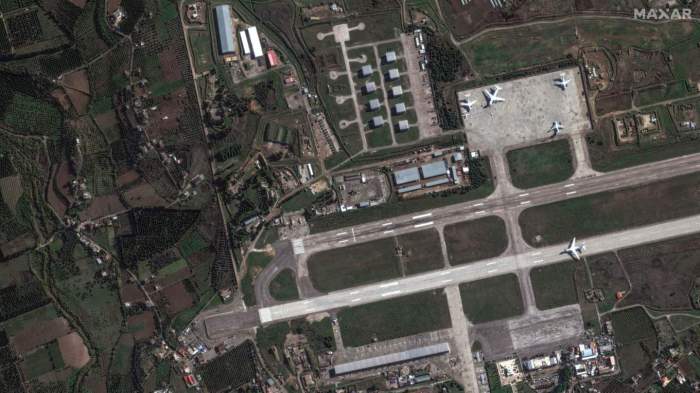
Photo: An aerial view of Russia's Khmeimim airbase. By Maxar
In an effort to restore order, Syria’s Ministry of Defense plans to disband all existing armed groups in the country. Opposition leader Abu Mohammad al-Julani accused Israel of using false pretexts to justify its attacks on Syria, escalating regional tensions. "Israel's arguments are weak and no longer justify their recent violations," he stated on Syria TV. Al-Julani emphasized that "war-torn Syria, after years of conflict, cannot afford new confrontations" and stressed that "the priority at this stage is recovery and stability, not engaging in disputes that could lead to further destruction."
The new Syrian leadership does not intend to enter into conflict with Israel. Amid the ongoing chaos, Druze communities in Syria have reportedly sought to join the Israeli state. During a "popular assembly" in a Druze village in southern Syria, reportedly entered by Israeli forces, a speaker declared, "We want to be under Israeli rule and ask Israel not to leave the southern Syrian villages."
Notably, Abu Mohammad al-Julani referred to Israel as a "state" for the first time in a public speech, instead of using the term "Zionist entity," signaling a significant policy shift. He also stated that diplomatic solutions are the only way to ensure security and stability, avoiding "ill-conceived military adventures." This appears to be influenced by the Abraham Accords, which have ushered in a new era in the Middle East.
Iran, which had supported Hamas, Hezbollah, and Assad’s Alawite regime, was a major obstacle to the Sunni states’ rapprochement with Israel. The loss of Syria has pushed Iran’s regime to the brink of economic and political collapse, with the exchange rate of the Iranian rial plummeting to 740,000 rials per U.S. dollar.
Adding to the concerns of Syria’s new authorities are statements by President Recep Tayyip Erdoğan of Türkiye, who suddenly laid claims to Aleppo, Idlib, Hama, Damascus, and Raqqa, citing "historical ties" with the populations of these provinces. Previously, Erdoğan had supported Syria’s territorial integrity, making this unexpected shift even more alarming. However, Türkiye’s Foreign Ministry later clarified that there are no plans to annex these regions.
Türkiye has also threatened to shoot down Israeli Defense Forces (IDF) aircraft if they provide air support to Kurdish forces. This statement came after Syrian Kurds requested Israeli assistance against pro-Turkish groups. "If Israel takes such actions, our air defense systems and fighter jets are ready to destroy them. Orders have already been issued to Türkiye's General Staff," a Turkish military source revealed. Syrian Kurds have also turned to the U.S. for help in pressuring Türkiye.
In short, the power vacuum in Syria, exacerbated by the withdrawal of Russia and Iran, has invited intervention from neighboring states and the U.S., intensifying regional tensions. The collapse of Syria's regime could act as a trigger for a large-scale conflict, severely impacting the region.
To avoid further instability, Syria’s new leadership must focus on restoring national unity without sectarian bias, recognizing Israel as a state, and disarming all illegal groups.
Reports from Latakia, home to Alawites and relatives of the ousted President Assad, already indicate instances of settling scores. Witnesses report arrests of former Syrian Arab Army (SAA) officers, many of whom have been publicly executed by rebels. The new authorities have announced the revocation of citizenship for Shiites and warned journalists to align their reporting with the government’s official stance.
Recently, Russian forces in Syria have been redeploying to the Mediterranean coastline, focusing on the Khmeimim Air Base and the Russian Navy facility in Tartus. Access to the civilian airport in Khmeimim, which shares a runway with the Russian airbase, is now guarded by HTS fighters. These fighters have informed British journalists that they have been instructed not to interfere with the Russians or engage with them. "We are trying not to provoke the Russians and are giving them space to reconsider their relations with us," stated HTS leader Abu Mohammad al-Julani.
HTS has announced the establishment of "reconciliation centers" in the Alawite province of Latakia for former members of Assad’s security forces. Meanwhile, in northern Syria, U.S. special forces have taken control of former Russian military bases in Kobani (Ayn al-Arab) near the border with Türkiye, as well as in Sarrin and Ayn Issa, following Russia’s withdrawal to Khmeimim and Tartus. Negotiations are currently underway regarding the future of Russia’s military presence in Syria and the terms of its stay. These developments underscore a strategic reshuffling of power in the region, with the U.S. actively filling the vacuum left behind.
Photo: An aerial view of Russia's Khmeimim airbase. By Maxar
In an effort to restore order, Syria’s Ministry of Defense plans to disband all existing armed groups in the country. Opposition leader Abu Mohammad al-Julani accused Israel of using false pretexts to justify its attacks on Syria, escalating regional tensions. "Israel's arguments are weak and no longer justify their recent violations," he stated on Syria TV. Al-Julani emphasized that "war-torn Syria, after years of conflict, cannot afford new confrontations" and stressed that "the priority at this stage is recovery and stability, not engaging in disputes that could lead to further destruction."
The new Syrian leadership does not intend to enter into conflict with Israel. Amid the ongoing chaos, Druze communities in Syria have reportedly sought to join the Israeli state. During a "popular assembly" in a Druze village in southern Syria, reportedly entered by Israeli forces, a speaker declared, "We want to be under Israeli rule and ask Israel not to leave the southern Syrian villages."
Notably, Abu Mohammad al-Julani referred to Israel as a "state" for the first time in a public speech, instead of using the term "Zionist entity," signaling a significant policy shift. He also stated that diplomatic solutions are the only way to ensure security and stability, avoiding "ill-conceived military adventures." This appears to be influenced by the Abraham Accords, which have ushered in a new era in the Middle East.
Iran, which had supported Hamas, Hezbollah, and Assad’s Alawite regime, was a major obstacle to the Sunni states’ rapprochement with Israel. The loss of Syria has pushed Iran’s regime to the brink of economic and political collapse, with the exchange rate of the Iranian rial plummeting to 740,000 rials per U.S. dollar.
Adding to the concerns of Syria’s new authorities are statements by President Recep Tayyip Erdoğan of Türkiye, who suddenly laid claims to Aleppo, Idlib, Hama, Damascus, and Raqqa, citing "historical ties" with the populations of these provinces. Previously, Erdoğan had supported Syria’s territorial integrity, making this unexpected shift even more alarming. However, Türkiye’s Foreign Ministry later clarified that there are no plans to annex these regions.
Türkiye has also threatened to shoot down Israeli Defense Forces (IDF) aircraft if they provide air support to Kurdish forces. This statement came after Syrian Kurds requested Israeli assistance against pro-Turkish groups. "If Israel takes such actions, our air defense systems and fighter jets are ready to destroy them. Orders have already been issued to Türkiye's General Staff," a Turkish military source revealed. Syrian Kurds have also turned to the U.S. for help in pressuring Türkiye.
In short, the power vacuum in Syria, exacerbated by the withdrawal of Russia and Iran, has invited intervention from neighboring states and the U.S., intensifying regional tensions. The collapse of Syria's regime could act as a trigger for a large-scale conflict, severely impacting the region.
To avoid further instability, Syria’s new leadership must focus on restoring national unity without sectarian bias, recognizing Israel as a state, and disarming all illegal groups.
(If you possess specialized knowledge and wish to contribute, please reach out to us at opinions@news.az).


Similar news