The global space domain is undergoing its most profound transformation since the Cold War, News.Az reports.
What was once an exclusive arena for superpower rivalry between states has evolved into a complex ecosystem where private companies, emerging space nations, and international institutions operate side by side. Space exploration is no longer defined solely by scientific prestige or symbolic flag-planting missions. It has become a strategic, economic, and technological battleground with direct consequences for communications, defense, trade, and global governance.
This shift has triggered what many analysts now describe as a “new space race” – not driven by ideology, but by markets, innovation, and long-term strategic positioning.
From state monopoly to commercial competition
For decades, space exploration was dominated by government agencies such as NASA and the former Soviet space program. These institutions focused on exploration, national prestige, and basic scientific research. High costs, technological barriers, and security concerns effectively excluded private actors.
That paradigm has changed. Advances in materials science, computing, and launch technology have drastically lowered entry barriers. Today, private companies not only build satellites and launch vehicles, but also design lunar landers, plan asteroid mining, and develop human spaceflight systems.
Firms such as SpaceX, Blue Origin, and Rocket Lab have redefined cost structures through reusable rockets, rapid launch cycles, and vertically integrated manufacturing. As a result, space is no longer an occasional national project – it is becoming a continuous commercial activity.
Reusable rockets and the economics of orbit
One of the most disruptive innovations in modern spaceflight has been the development of reusable launch systems. Traditionally, rockets were single-use machines, discarded after one flight. This made space access extremely expensive and limited launch frequency.
Reusable rockets have altered this equation. By landing and refurbishing boosters, companies have reduced launch costs by orders of magnitude. This has opened orbit to smaller countries, research institutions, startups, and even universities.
The economic implications are substantial. Lower launch costs mean more satellites, faster deployment of constellations, and shorter development cycles. Space is now integrated into everyday services – from navigation and weather forecasting to financial transactions and disaster response.
Satellite mega-constellations and digital infrastructure
One of the most visible outcomes of the commercial space boom is the rise of satellite mega-constellations. Thousands of small satellites are being deployed in low Earth orbit to provide global broadband internet coverage.
Projects such as Starlink aim to connect remote regions, underserved communities, and critical infrastructure worldwide. Supporters argue that these systems will reduce the digital divide, enable remote education, and strengthen economic inclusion.
However, the rapid growth of mega-constellations has also raised concerns. Astronomers warn about light pollution and interference with ground-based observations. Space agencies caution that overcrowded orbits increase collision risks, potentially triggering cascading debris events that could render parts of space unusable.
Space debris and orbital sustainability
As access to space expands, so do concerns about sustainability. Tens of thousands of defunct satellites, rocket fragments, and debris pieces already orbit Earth at high speeds. Even small objects can cause catastrophic damage upon impact.
The challenge of space debris is no longer hypothetical. Several near-miss incidents and collisions have demonstrated the fragility of orbital environments. Commercial actors and governments now face pressure to adopt responsible behaviors, including debris mitigation, satellite de-orbiting, and active debris removal.
This issue highlights a broader governance gap. International space law, largely based on treaties from the 1960s and 1970s, was not designed for a crowded, commercialized orbital economy. Updating norms and enforcement mechanisms has become an urgent priority.
The Moon returns to strategic relevance
Beyond Earth orbit, the Moon has re-emerged as a focal point of exploration and competition. Unlike the Cold War era, current lunar ambitions are driven by long-term utilization rather than short symbolic missions.
The Moon is viewed as a testing ground for deep-space operations, a potential source of valuable resources, and a stepping stone to Mars. Water ice in permanently shadowed lunar craters could support life support systems and fuel production, enabling sustained presence beyond Earth.
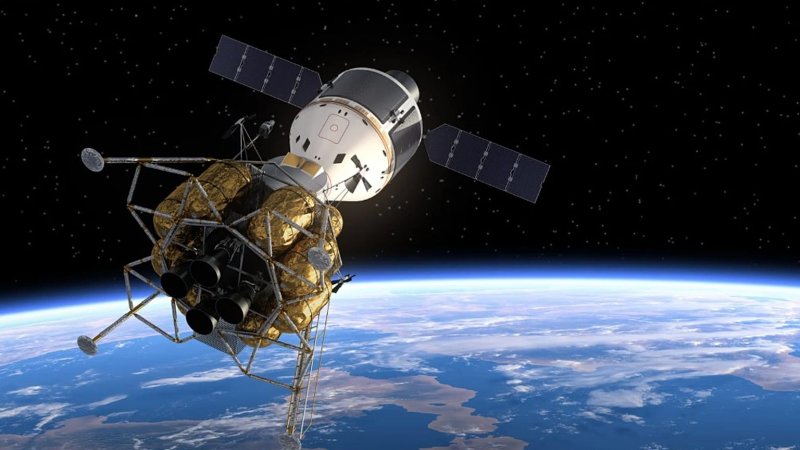
Government-led initiatives, such as the Artemis program, increasingly rely on private companies for landers, logistics, and technology development. This public-private model reflects a broader trend: states define strategic objectives, while commercial actors deliver solutions.
Mars, ambition, and technological limits
Mars remains the ultimate destination for human spaceflight ambition. While robotic missions have provided extensive data, human exploration presents unprecedented challenges – from radiation exposure and psychological strain to life support and propulsion.
Private companies play a prominent role in shaping public imagination around Mars colonization. While timelines are often debated, these visions have accelerated investment in propulsion systems, habitat design, and closed-loop life support technologies.
Even if permanent settlements remain decades away, research conducted under Mars-focused programs is already influencing terrestrial industries, including medicine, energy efficiency, and advanced manufacturing.
Space and national security
As space assets become integral to daily life, their strategic value has increased. Satellites support military communications, intelligence gathering, navigation, and early-warning systems. Disruptions in space could have immediate consequences on Earth.
This reality has driven the militarization of space discourse. Several states have established dedicated space commands and openly acknowledge space as an operational domain alongside land, sea, air, and cyber.
The presence of commercial actors complicates this landscape. Civilian satellites often provide dual-use services, blurring the line between commercial infrastructure and military assets. Protecting these systems without escalating conflict represents a delicate balance.
The geopolitics of access and inequality
Despite falling costs, access to space remains uneven. A small number of countries and corporations control launch capabilities, satellite manufacturing, and orbital slots. This raises questions about equitable access, technological dependency, and digital sovereignty.
Emerging space nations seek partnerships, technology transfers, and regional cooperation to avoid marginalization. Space is increasingly viewed as a development multiplier rather than a luxury sector.
At the same time, regulatory fragmentation risks creating parallel systems and standards. Without coordination, competition could undermine safety, sustainability, and trust.
The future of space governance
The transformation of space exploration demands new governance approaches. Traditional treaties emphasize peaceful use and state responsibility, but commercial reality requires more granular rules covering licensing, liability, traffic management, and environmental protection.
Multilateral dialogue, industry standards, and transparency mechanisms are gaining importance. The challenge lies in balancing innovation with regulation, and competition with cooperation.
Space, by its nature, transcends borders. Decisions made today will shape orbital environments for generations. Whether the new space race leads to shared prosperity or fragmented rivalry depends on how governments and companies manage this transition.
Conclusion: space as a permanent strategic domain
Space exploration has entered a new phase – continuous, commercial, and deeply interconnected with life on Earth. It is no longer a distant frontier visited occasionally by astronauts. It is a permanent strategic domain shaping communications, security, science, and economic growth.
The new space race is not about who arrives first, but who builds sustainable systems, sets credible rules, and integrates space responsibly into global development. As commercial and state actors continue to expand their presence beyond Earth, space will increasingly reflect the same challenges and opportunities that define the international system itself.