Pope Leo XIV celebrates first Mass in Sistine Chapel


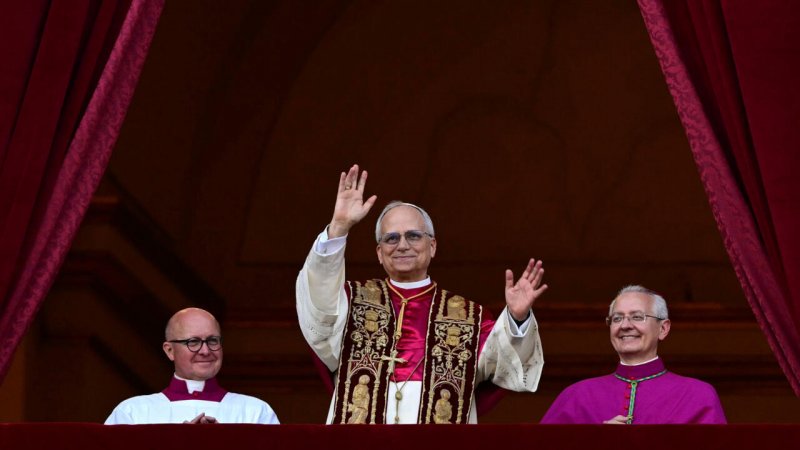
Photo: AFP
Pope Leo XIV, history’s first North American pope, celebrated his first Mass as pontiff on Friday, presiding in the Sistine Chapel with the cardinals who elected him to succeed Pope Francis and follow in his social justice-minded footsteps.
Wearing white vestments, Leo processed into the Sistine Chapel and blessed the cardinals as he approached the altar and Michelangelo’s “The Last Judgment” behind it, News.Az reports, citing AP.
It was in the same frescoed chapel that Leo, the Chicago-born missionary Robert Prevost, was elected Thursday afternoon as the 267th pope and the first from the United States.
Leo, the Chicago-born Augustinian missionary Robert Prevost, surprised the world Thursday when he emerged on the loggia of St. Peter’s Basilica as the 267th pontiff, overcoming the traditional prohibition against a pope from the United States.
The 69-year-old wore the traditional red cape — which Francis had eschewed on his election in 2013 — and trappings of the papacy, suggesting a return to some degree of rule-following after Francis’ unorthodox pontificate.
But in naming himself Leo and referring to some of Francis’ more social justice-minded priorities, the new pope could also have wanted to signal a strong line of continuity: Brother Leo was the 13th century friar who was a great companion to St. Francis of Assisi, the late pope’s namesake.
“Together, we must try to find out how to be a missionary church, a church that builds bridges, establishes dialogue, that’s always open to receive — like on this piazza with open arms — to be able to receive everybody that needs our charity, our presence, dialogue and love,” Leo said in near-perfect Italian in his first comments to the world.
Francis, the first Latin American pope, clearly had his eye on Prevost and in many ways saw him as his heir apparent. He sent Prevost, who had spent years as a missionary in Peru, to take over a complicated diocese there in 2014. Francis then brought Prevost to the Vatican in 2023 to head of the Vatican’s powerful Dicastery for Bishops, which vets bishop nominations around the world and is one of the most important jobs in church governance.


Similar news