Presidential election in Tunisia: What awaits the country?


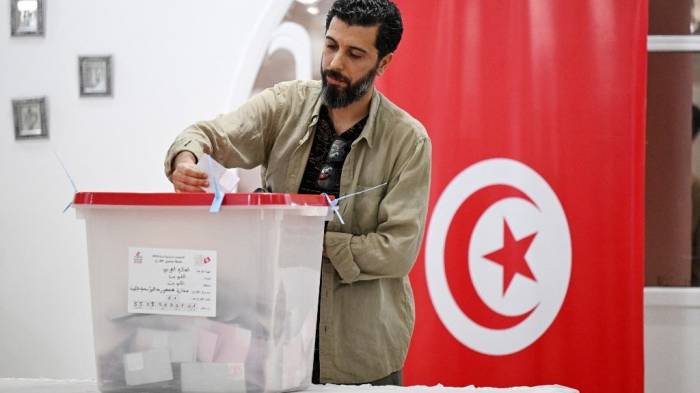
On October 6, 2024, Tunisia held its presidential election, which was anticipated with great interest both within the country and abroad. Incumbent President Kais Saied was the main contender for victory, as confirmed by exit polls. These elections marked a continuation of a difficult period for Tunisia, associated with political instability and economic challenges.
Polling stations were open from 8:00 AM to 6:00 PM local time, with 9.7 million people eligible to vote. However, according to the Independent High Authority for Elections (ISIE), turnout reached only 27.7%. This indicates a significant decline in voter interest, likely due to limited competition and ongoing economic difficulties that continue to exert pressure on the country, News.Az reports.Official election results will be announced within three days, but it is already evident that Kais Saied will win. For his supporters, Saied is seen as the country's savior, fighting corruption and strengthening sovereignty, while his critics view him as an autocrat, undermining democratic institutions. The situation is exacerbated by the fact that Saied's main opponent, businessman Ayachi Zammel, remained in detention during the election and was unable to campaign. The third candidate, Zouhair Maghzaoui, secretary-general of the People's Movement, had minimal support among voters.
These elections took place under special circumstances for Tunisia, the country where in 2010 the unrest that sparked the so-called "Arab Spring" began—a chain reaction of protests that swept across many Arab countries. This period was perceived by many as an opportunity for democratization in the region, but the reality proved to be much more complex.
Economic and political reforms, which initially held great promise, led to mixed results. While Tunisia and Egypt experienced regime changes, representatives of the old elite eventually returned to power. In other countries, such as Libya and Yemen, the Arab Spring led to civil war and the de facto collapse of state institutions. These nations remain in deep instability to this day.
As noted in 2017 by former CIA Director John Brennan, the expectations of U.S. President Barack Obama’s administration regarding the Arab Spring were misguided. He acknowledged that the West, especially the United States, had supported these processes, but they did not bring about the desired results. For example, Syria remains fragmented, and the civil war continues despite the survival of Bashar al-Assad’s regime. This "experiment," known as "managed chaos," has turned into a tragedy for millions of people.
The 2024 presidential election in Tunisia highlights that the country is still grappling with the consequences of the Arab Spring and is at a crossroads between authoritarianism and democratic reforms. Low voter turnout and the lack of real political competition raise questions about Tunisia's direction and whether it still has prospects for a democratic future. Kais Saied is likely to continue consolidating his power, but this could also heighten political and social instability in the country. In any case, the future of Tunisia, like many countries that experienced the Arab Spring, remains uncertain.


Similar news