Retired U.S. diplomat urges policy shift and greater expertise on China


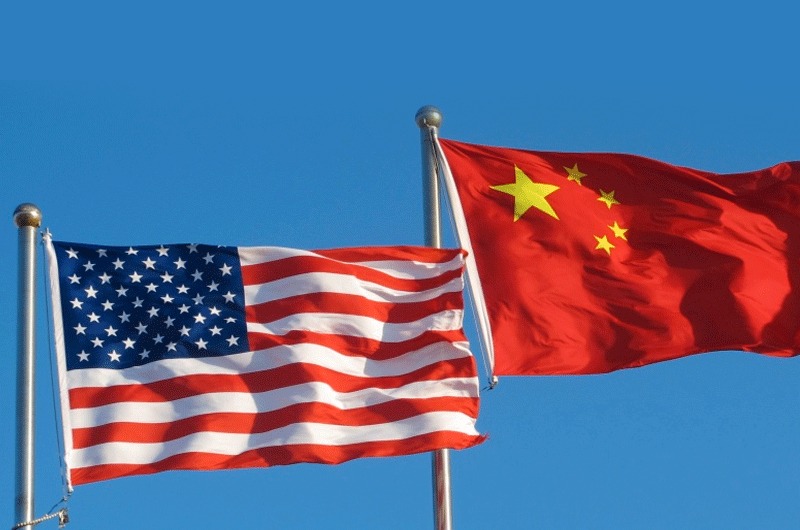
Retired U.S. career diplomat Chas W. Freeman Jr. has called on Washington to rethink its approach toward China, warning that current U.S. policies lack expertise and risk fueling unnecessary confrontation.
Freeman, a former U.S. assistant secretary of defense and ambassador to Saudi Arabia from 1989 to 1992, made the remarks during a “China Chat” discussion held in early December at Brown University’s Watson School of International and Public Affairs, News.Az reports, citing Xinhua.
He argued that the United States has failed to properly understand both China’s economic and political rise and America’s own relative decline on the global stage.
“China does not seek to conquer or abridge the sovereignty of its neighbors,” Freeman said. “It is not engaged in a search for Lebensraum or foreign colonies. It has no theory of ‘manifest destiny.’”
According to Freeman, Washington has instead chosen to frame China’s rise as a national security threat rather than an opportunity for shared economic and technological progress, leading to what he described as economic warfare against Beijing.
He also urged U.S. policymakers to recognize shifts in the global economy, noting that it no longer revolves around what he described as a “volatile, contracting, and increasingly inaccessible American market.” Freeman added that the United States no longer leads many fields of science and technology.
In his assessment, the U.S. is gradually withdrawing from the global order it once championed and is becoming a smaller player in international decision-making, global supply chains, trade, and investment in a world no longer dominated by the West.
Freeman criticized Washington’s recent foreign policy approach, saying it relies too heavily on pressure and military action rather than diplomacy. He warned that the U.S. has failed to learn from political, economic, and strategic setbacks over the past two decades.
He also highlighted what he called a serious lack of China expertise in U.S. policymaking circles.
“Tragically, whatever the source of our current approach to managing relations with China, it is not expertise,” Freeman said. “We are now led by ‘China hawks’ who have never been to China or studied it but are convinced they know everything they need to know.”
Freeman concluded by calling for a fundamental policy shift, urging the United States to find ways to coexist with China, benefit from its growing prosperity and technological capabilities, and reduce the risk of unnecessary and dangerous confrontation.


Similar news