Russia and Iran agree on foreign ministry cooperation plan


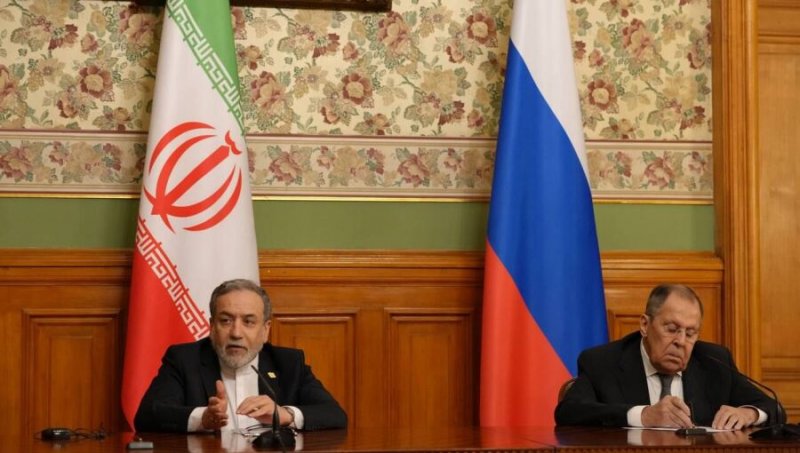
On December 17, Russia signed a cooperation program with Iran, officially outlining consultations and joint initiatives for the next two years.
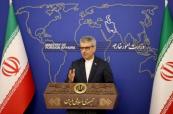
The vague document was endorsed at the conclusion of talks in Moscow between Russian Foreign Minister Sergei Lavrov and his Iranian counterpart, Abbas Aragchi, in the Kremlin, News.Az reports, citing foreign media.
Officially, the press release states that the agreement follows the "implementation of the Comprehensive Strategic Partnership Treaty" signed earlier this year, which both sides say has accelerated bilateral cooperation as both governments continue to battle against US and European sanctions.
Lavrov said Moscow and Tehran have reaffirmed their commitment to resolving issues surrounding Iran’s nuclear programme through political and diplomatic channels, rejecting any prospect of escalation.
“Both Russia and Iran are determined to stabilise and normalise the situation, and to rule out any return to coercive measures categorically,” Lavrov said in response to a question. “What is required here are exclusively political and diplomatic solutions.”
"Both we and Iran want to stabilise the situation, normalise it, and categorically rule out any relapse into forceful methods. Purely political and diplomatic solutions are what's needed in this situation," the minister noted.
He pointed to the 2015 nuclear deal (JCPOA) that had resolved Iran’s nuclear issue, but said the United States destroyed it, reiterating earlier comments he made to Iran's state broadcaster IRIB.
“That's where all the troubles stem from. And now those who destroyed the JCPOA, who undermined the Security Council resolution that approved it, are trying to shift the blame onto Iran; everyone understands this very well," he said, adding that Tehran and Moscow regularly discuss the situation surrounding the nuclear programme.
During the meeting, both sides pledged to deepen cooperation in countering unilateral US sanctions, supporting international initiatives against coercive measures, and working together within organisations such as BRICS, the Shanghai Cooperation Organisation and the Eurasian Economic Union.
At a joint press conference, Araghchi pointed to significant growth in economic cooperation, particularly in energy, transport and transit projects, including the strategic International North-South Transport Corridor (INSTC) and the construction and funding of the Rasht-Astara railway.
Araghchi reiterated Iran’s position on its nuclear programme, stressing that Russia has consistently supported Tehran’s right to enrichment and has played a constructive role in nuclear negotiations.
Tehran calls actions by three European states (France, Germany and the UK) as "illegal" and condemned recent US and Israeli attacks against Iran in June.
Araghchi’s visit to Moscow followed a stop in Belarus and included meetings with members of the State Duma and the Federation Council, underscoring the breadth of Iran’s diplomatic engagement with Russia.


Similar news