Singapore’s Punggol Digital District redefines smart city model


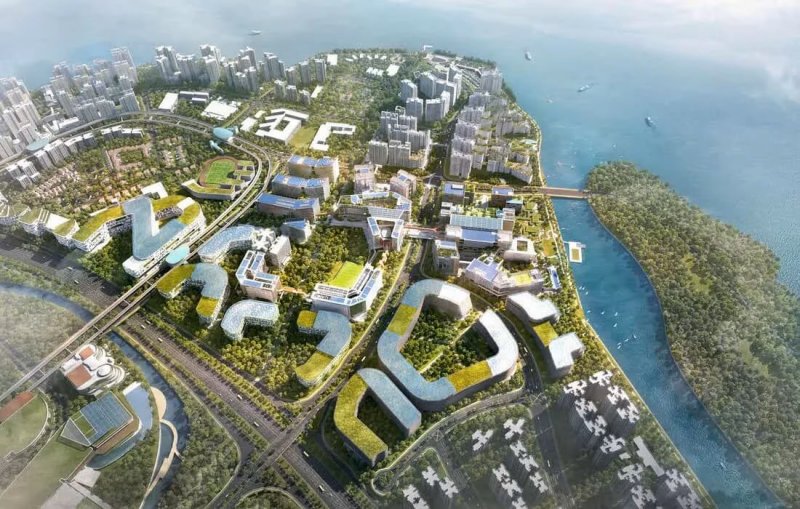
Singapore’s Punggol Digital District (PDD) is emerging as a real-world testbed for AI-driven urban development, offering a state-planned alternative to Silicon Valley-style organic innovation ecosystems.
Six years after construction began, the district has transitioned from concept to operational “living lab,” integrating infrastructure, data systems, and industry within a single coordinated environment designed to support smart-city experimentation, News.Az reports, citing foreign media.
Unlike Silicon Valley, which evolved gradually through private-sector clustering and talent mobility, Punggol is being built as a tightly managed innovation ecosystem where digital systems and physical infrastructure are designed in parallel from the outset.
RECOMMENDED STORIES
The model has drawn comparisons with China’s Xiong’an New Area, a state-led megaproject designed to redistribute functions from Beijing and serve as a long-term innovation hub.
Covering about 50 hectares, PDD includes academic, residential, and commercial zones, with the Singapore Institute of Technology (SIT) acting as a key anchor institution. The campus is physically integrated into the district through connected walkways linking education and industry spaces.
Recent developments include the launch of autonomous vehicle trials in the district, involving companies such as Grab and WeRide, marking Singapore’s first robotaxi deployment in a residential environment.
The district also hosts multinational firms including robotics, cybersecurity, and technology companies, as it seeks to attract both local startups and global enterprises into a controlled innovation environment.
Officials describe PDD as a “smart town” powered by a central digital platform that aggregates sensor data across buildings, transport systems, and public services, enabling real-time monitoring of urban activity.
Sustainability features such as rooftop solar panels, water recycling systems, and waste-to-fertiliser technology are also embedded into the district’s design, reflecting Singapore’s broader green development strategy.
Analysts note that while Silicon Valley remains driven by open-ended market forces and institutional history, Punggol represents a more engineered approach to innovation—one that attempts to design the conditions for technological development from the ground up.
By Aysel Mammadzada


Similar news