South Korea-US security talks focus on uranium enrichment rights


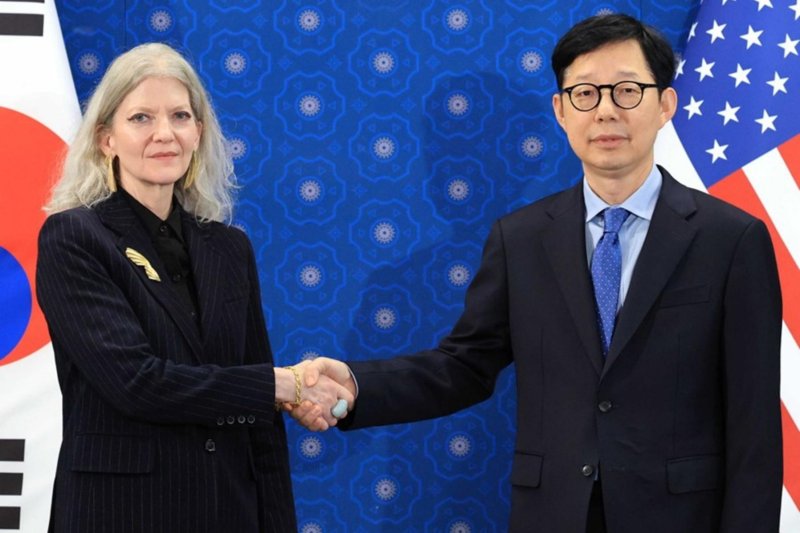
South Korea and the US continued their talks on security agreements for a second consecutive day on Wednesday, with Seoul’s effort to obtain uranium enrichment and spent nuclear fuel reprocessing capabilities for peaceful purposes expected to be the main focus of the agenda, News.Az reports, citing Yonhap.
The talks on Wednesday marked the second and final day of a meeting that began on Tuesday, as the two allies launched bilateral consultations aimed at advancing the agreements reached during an October summit between the leaders of the two countries last year.
According to the joint fact sheet, the US committed to supporting processes that would enable uranium enrichment and spent nuclear fuel reprocessing for civilian use, as well as backing Seoul’s initiative to develop conventionally armed, nuclear-powered submarines.
RECOMMENDED STORIES
The U.S. delegation, headed by Under Secretary of State for Political Affairs Allison Hooker, arrived in Seoul on Monday for the negotiations.
She was accompanied on the visit by Ivan Kanapathy, senior director for Asia at the National Security Council (NSC), and Matthew Napoli, deputy administrator for defense nuclear nonproliferation at the National Nuclear Security Administration, along with other officials.
On Wednesday, the talks were expected to center on the issue of allowing Seoul to enrich uranium and reprocess spent nuclear fuel for civilian purposes, a process that would require a revision of a 2015 bilateral nuclear energy cooperation pact.
The existing agreement bars South Korea from enriching uranium or reprocessing spent nuclear fuel unless it obtains U.S. consent through consultations and in writing.
Seoul is reportedly seeking to revise the pact, known as the 123 Agreement, in a way that would help secure "advance consent" from the U.S. -- a preapproved and long-term permission.
Working-level discussions on these issues were expected to be the focus of Wednesday's meeting, with officials from South Korea's National Security Office and the NSC likely to lead the talks.
The allies discussed the nuclear-powered submarine program Tuesday.
In a social media post Wednesday, Hooker said she "discussed working closely to make progress on bilateral nuclear cooperation" during her meeting with National Security Adviser Wi Sung-lac on Tuesday.
"We also covered a wide range of issues that underscored economic security is national security," she said on X.
The follow-up security talks took place months later than expected as Seoul's legislative process for a planned US$350 billion investment in the U.S. -- another key element of the summit agreement -- had been delayed.
Growing U.S. concerns over what Washington views as discriminatory treatment of U.S.-listed e-commerce giant Coupang Inc. in South Korea have also been cited as factors behind slow progress in the security talks.
By Nijat Babayev


Similar news