Sudan introduces measures to regulate traditional mining, curb smuggling


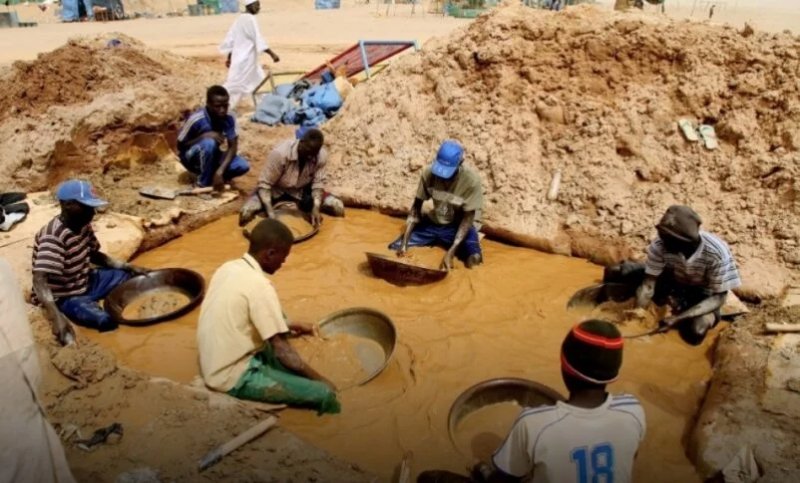
Sudanese authorities on Saturday unveiled a package of measures to regulate the traditional mining sector, combat gold and drug smuggling, and address the negative impacts of unregulated mining.
Several Sudanese states are experiencing an increase in traditional mining activities that use chemicals harmful to human health and the environment, most notably thiourea and cyanide. These substances recently caused the death of more than 20 sheep after they drank from fermentation basins used in gold extraction, News.Az reports, citing Sudan Tribune.
Minister of Information and Culture, Khalid Aleisir, said in a press statement that Prime Minister Kamel Idris ordered the removal of mills and basins located within residential neighbourhoods and military areas, and the urgent regulation of gold markets in production areas.
He explained that Idris, as part of the new measures, called for intensifying media and awareness campaigns to highlight the dangers of unregulated mining and the chemicals used in gold extraction.
The prime minister held a meeting with ministers and representatives of security and police agencies to discuss challenges in regulating the mining sector, gold and drug smuggling, and ways to address them.
Aleisir said the meeting called on the Ministry of Minerals to issue informative leaflets on the dangers of chemicals used in mining and to deploy awareness teams targeting workers in the sector.
He pointed to the need to issue identification cards to miners and to directly educate them about the risks posed by hazardous materials used in gold extraction.
Traditional mining areas in Sudan face a widespread and alarming proliferation of drugs among workers and miners. Many open markets have turned into fertile environments for promoting narcotics, benefiting from high population density, significant financial spending, and complex security challenges in the country.
Aleisir explained that the meeting reviewed the risks of drug smuggling through Sudanese territory, describing it as part of a multifaceted war targeting the Sudanese people, especially the youth.
He noted that the meeting emphasized the need to confront smuggling operations and combat drugs as a priority for protecting national security, while activating information exchange mechanisms among relevant state institutions, establishing specialized addiction treatment centres, and giving special attention to affected youth.
A report issued by the Sudan Transparency and Policy Tracker (STPT) last March described Sudan’s transformation from a mere transit route for Captagon into an emerging manufacturing hub, citing the seizure of several laboratories and an increase in production capacity since the outbreak of war in April 2023.
The report explained that Sudan’s strategic location on the Red Sea facilitates the access of drugs to Gulf markets, amid a fragile security environment and declining state control in several regions.
Traditional mining accounts for about 80% of Sudan’s gold production, compared to only 20% from the regulated sector. Approximately two million people work in the mining sector, with most mining activities concentrated in the River Nile, Northern, and Red Sea states.
By Faig Mahmudov


Similar news