What is behind military violence in Chad?


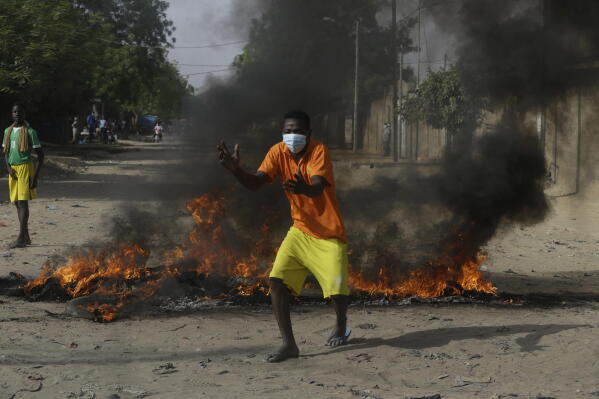
Chad has long been one of the most volatile countries in Central Africa. Military violence, armed confrontations, rebel offensives, communal clashes, and security crises have shaped much of the country's post-independence history.
While outbreaks of violence often appear to be triggered by a specific incident, the reality is far more complicated, News.az reports.
A combination of political instability, rebel insurgencies, ethnic rivalries, competition over resources, weak state institutions, poverty, regional conflicts, and environmental pressures drives military violence in Chad. These factors frequently overlap, creating a security environment in which violence can emerge quickly and spread across large areas.
Understanding why military violence continues in Chad requires examining the country's history, geography, political system, and socio-economic challenges.
Why has Chad experienced decades of conflict and instability?
Military violence in Chad cannot be understood without looking at the country's history.
Since gaining independence from France in 1960, Chad has experienced repeated cycles of civil wars, armed rebellions, military coups, and political crises. Successive governments have struggled to establish strong national institutions capable of managing the country's vast territory and diverse population.
Many political transitions in Chad have occurred through force rather than through peaceful democratic processes. As a result, armed movements have often viewed military action as a viable path to power.
This historical pattern has contributed to a culture of political competition in which weapons and military force have frequently played a central role.
How do rebel groups contribute to military violence across Chad?
Rebel movements remain one of the most significant drivers of military violence in Chad.
Over the years, numerous armed groups have emerged with the objective of challenging the government, gaining political influence, or seeking greater autonomy for specific regions or communities.
Many of these groups operate in remote border areas where government control is limited. These regions provide opportunities for armed organizations to recruit fighters, establish bases, and launch attacks against military positions.
Rebel offensives often lead to intense fighting between insurgents and government forces. Even when rebellions are suppressed, new groups frequently emerge, creating a continuous cycle of instability.
The existence of multiple armed movements makes achieving long term security particularly difficult.
Why are ethnic divisions often linked to military violence?
Ethnic dynamics play an important role in Chad's political and security landscape.
The country is home to more than 200 ethnic groups, each with its own history, traditions, and social structures. While diversity itself is not a cause of conflict, political competition often becomes intertwined with ethnic identities.
In many cases, communities perceive access to political power, military positions, government jobs, and economic resources through an ethnic lens.
When groups feel excluded from political decision making or believe they are being treated unfairly, grievances can develop.
These grievances can sometimes be exploited by political leaders, armed groups, or local actors seeking support for their causes.
As a result, political disputes can evolve into ethnic tensions, which in turn contribute to violence.
How does competition over land and natural resources fuel conflict?
One of the fastest growing causes of violence in Chad involves competition over land, water, and other natural resources.
Large portions of the population depend on agriculture and livestock for their livelihoods. Farmers require access to fertile land for cultivation, while pastoralists need grazing areas and water sources for their animals.
As populations increase and available resources become more limited, competition intensifies.
Disputes may begin when livestock enter farmland and destroy crops, or when agricultural expansion blocks traditional grazing routes.
Although these incidents may initially appear local in nature, they often trigger broader confrontations involving entire communities.
In many cases, resource related disputes have escalated into deadly clashes resulting in significant casualties and property destruction.
What role does climate change play in Chad's security crisis?
Climate change has become an increasingly important factor behind violence in Chad.
The country faces serious environmental challenges, including rising temperatures, desertification, droughts, irregular rainfall patterns, and declining water resources.
These environmental pressures affect both farmers and herders.
Agricultural communities may experience lower crop yields, while pastoralists may struggle to find sufficient grazing land and water for livestock.
As environmental conditions deteriorate, communities are often forced to move into new areas in search of resources.
This movement increases competition and raises the likelihood of disputes.
Climate change does not directly cause violence, but it creates conditions that make conflicts over resources more likely and more severe.
Why is the conflict in neighboring Sudan affecting Chad?
Chad's security situation is heavily influenced by events beyond its borders.
The country shares a long frontier with Sudan, and communities on both sides often have ethnic, cultural, and family connections.
When violence erupts in Sudan, its effects frequently spill into Chad.
Refugee movements, arms trafficking, armed groups, and political rivalries can cross borders, creating additional security challenges.
The ongoing instability in Sudan has increased concerns about weapons proliferation and the movement of armed actors throughout the region.
Managing these cross border pressures places additional strain on Chad's security forces and government institutions.
How significant is the threat posed by extremist organizations?
Extremist groups operating in the Lake Chad Basin represent another major security concern.
Organizations linked to Boko Haram and the Islamic State West Africa Province have conducted attacks against military installations, civilian communities, and infrastructure in the wider region.
Although Chad's military has earned a reputation as one of the more capable fighting forces in the region, extremist threats continue to require substantial attention and resources.
Military operations against these groups often involve complex cross border coordination with neighboring countries.
The need to combat extremist organizations means that Chad must divide its security resources across multiple fronts.
Why is the military so influential in Chadian politics?
The military occupies a unique position within Chad's political system.
Unlike in many countries where civilian institutions dominate political life, Chad's military has historically played a central role in determining political outcomes.
Several national leaders have either emerged from military backgrounds or relied heavily on military support to maintain power.
As a result, military institutions are deeply intertwined with governance.
This relationship means that political disputes often have military dimensions, while security issues frequently become political issues.
The close connection between politics and the armed forces increases the likelihood that political crises may evolve into military confrontations.
How did the death of Idriss Déby affect Chad's stability?
The death of President Idriss Déby in 2021 marked a significant turning point.
Déby had ruled Chad for decades and was regarded as one of the country's most influential political and military figures.
His death occurred during fighting with rebel forces, highlighting the persistent security threats facing the country.
Following his death, a military transitional authority assumed control under the leadership of his son, Mahamat Idriss Déby.
Although the transition prevented an immediate power vacuum, it did not eliminate the structural causes of instability.
Many of the political, economic, and security challenges that existed before his death continue to shape Chad's security environment today.
Why do coups and coup attempts remain a recurring concern?
The possibility of military intervention in politics remains a persistent issue.
Several factors contribute to coup risks in Chad:
• Political competition
• Elite rivalries
• Dissatisfaction within military ranks
• Economic grievances
• Ethnic tensions
• Concerns about governance
When political institutions are perceived as weak or ineffective, some actors may view military action as an alternative means of achieving political change.
Even unsuccessful coup attempts can create uncertainty and undermine stability.
How does poverty contribute to violence and instability?
Economic conditions play a major role in shaping security outcomes.
Despite possessing natural resources, including oil, Chad remains one of the world's poorest countries.
Many communities face challenges such as:
• High unemployment
• Limited educational opportunities
• Poor infrastructure
• Inadequate healthcare services
• Low incomes
Economic hardship can make recruitment into armed groups more attractive, particularly for young people with limited opportunities.
Poverty also reduces communities' ability to recover from violence, creating conditions that allow instability to persist.
Why has oil not eliminated security problems?
Oil production has generated significant revenues for Chad, but it has not resolved the country's underlying challenges.
Critics argue that the benefits of resource wealth have not been distributed evenly across society.
Disputes over how oil revenues are managed have occasionally contributed to political tensions.
Resource wealth can also intensify competition for control of state institutions, making political rivalries more contentious.
As a result, oil has sometimes become part of the problem rather than a complete solution.
Why are farmer-herder conflicts becoming increasingly deadly?
Farmer-herder disputes have evolved into one of Chad's most serious security concerns.
Historically, many such disputes were resolved through local mediation mechanisms.
Today, however, several factors have increased their severity:
• Population growth
• Expansion of agricultural land
• Environmental degradation
• Increased availability of weapons
• Weak dispute resolution systems
Conflicts that once involved a few individuals can now escalate into large scale communal violence involving entire villages.
The resulting casualties and property destruction can be devastating.
What challenges does the government face in maintaining security?
The Chadian government faces an extraordinarily difficult security environment.
Authorities must simultaneously address:
• Rebel insurgencies
• Extremist threats
• Communal violence
• Border insecurity
• Refugee inflows
• Political tensions
• Economic challenges
Managing multiple crises at the same time stretches government resources and complicates security planning.
Even when progress is achieved in one area, new challenges can emerge elsewhere.
Could military violence worsen in the future?
Many analysts believe significant risks remain.
Several underlying drivers of instability continue to exist:
• Political uncertainty
• Resource competition
• Climate pressures
• Regional conflicts
• Poverty
• Weak institutions
Unless these issues are addressed effectively, the potential for future violence is likely to remain.
The combination of domestic and regional pressures means that Chad's security situation will continue to require close attention.
What is the main reason military violence persists in Chad?
There is no single explanation.
Military violence in Chad results from the interaction of multiple factors that reinforce one another.
Political instability creates opportunities for rebellion.
Economic hardship fuels grievances.
Climate change increases competition over resources.
Regional conflicts generate cross border threats.
Weak institutions struggle to manage disputes effectively.
Together, these challenges have produced a complex security environment where violence can emerge from political rivalries, communal tensions, resource disputes, insurgent activities, or regional instability.
Understanding Chad's military violence therefore requires looking beyond individual incidents and recognizing the broader structural forces shaping the country's security landscape.
By Faig Mahmudov


Similar news