The Dark Money of Ruben Vardanyan


By Tural Heybatov
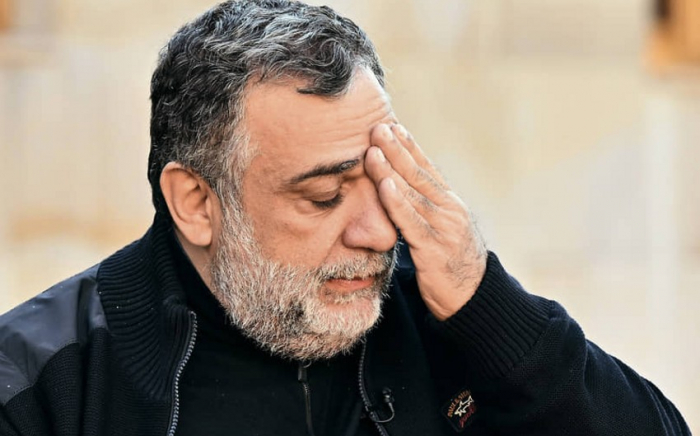
In a world where rules are often written in gold, the story of Ruben Vardanyan stands out distinctly. He is a controversial figure: on one hand, a billionaire, philanthropist, and patron of the arts; on the other, a man whose wealth is shrouded in scandals, corruption, and criminal allegations.
Currently, he is under investigation in Azerbaijan, and his name appears on the list of nominees for the Nobel Peace Prize. How could someone accused of terrorism and separatism find themselves alongside global peace advocates? This question looms large, especially in light of investigations casting doubt on the legitimacy of his fortune and his methods of earning it.
The origins of Vardanyan's wealth are enigmatic and ominous. In 2019, the Organized Crime and Corruption Reporting Project (OCCRP) uncovered the scale of a scheme known as "Troika Laundromat," which laundered billions of dollars through a complex network of offshore companies. Vardanyan, the former head of the investment bank "Troika Dialog," was a key figure in this operation, enabling the Russian elite to conceal assets and funnel money abroad.
The "Troika Laundromat" involved staggering sums of money moving through banks owned by the Russian Federation, incorporating numerous Western financial institutions. The investigation revealed how offshore companies, created under the auspices of "Troika," conducted fictitious trade operations to disguise money transfers.
Amid these scandals, Vardanyan portrays himself as a philanthropist, actively investing in charity, culture, and education, particularly in Armenia. He has funded the construction of educational facilities, cultural centers, and even a cable car, although critics argue that many of these projects are more commercially than humanitarianly motivated.
Despite Vardanyan's attempts to justify his activities as "standard practice for investment banks at that time," the international community has responded with criticism and skepticism. The data presented by the OCCRP corroborates Vardanyan's involvement in financial operations indicative of tax evasion and fraud.
The Armenian diaspora and many Armenian politicians herald him as a hero, despite the serious allegations leveled against him by countries including Azerbaijan and Ukraine. In Ukraine, he is listed in the "Peacemaker" database as a person posing a threat to national security.
His nomination for the Nobel Peace Prize seems not only unusual but also provocative. Ukrainian parliament members have expressed concerns about potentially "whitewashing" his reputation through such an accolade. They have called on the Nobel Committee to reject his candidacy due to his ties to corruption scandals and actions detrimental to Ukraine.
The question then arises: Should the Nobel Peace Prize be awarded to someone whose conduct is so contentious? Or are we witnessing an era where political and financial manipulations cloud the principles and values that this prestigious award is supposed to champion?
Furthermore, the involvement of Western financial institutions and banks in the "Troika Laundromat" system, including major banks like Citigroup, Raiffeisen, and Deutsche Bank, underlines the global nature of corruption and money laundering issues. These institutions have occasionally overlooked legal and ethical standards, facilitating significant money laundering activities.
Despite all the controversies, Vardanyan continues to receive support from certain quarters. His nomination for the Nobel Peace Prize seems more like a tool for political and social maneuvering than a recognition of his peace efforts. This situation raises concerns about the selection criteria and motives of the Nobel Committee.
If the Nobel Peace Prize is awarded to a person whose activities are tainted by serious accusations, it could significantly undermine the credibility of the prize and its role as a beacon of hope and peace.
In conclusion, Ruben Vardanyan's case exemplifies the challenge of distinguishing genuine charity from strategic investments in personal reputation in today's world. This backdrop requires the public and experts to monitor developments closely, and the Nobel Committee to select laureates with utmost caution, ensuring the award does not become an instrument for political machinations and personal gain.


Similar news