Trump national security aide Flynn resigns over Russian contacts


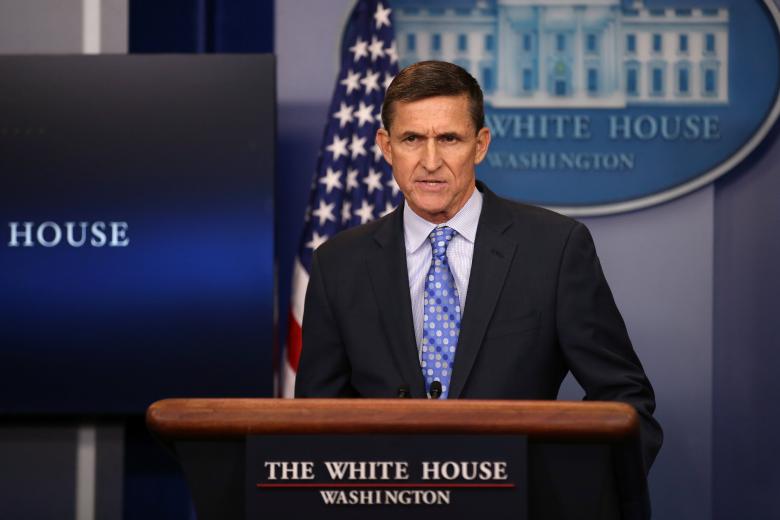
President Donald Trump's national security adviser, Michael Flynn, resigned late on Monday after coming under fire over whether he discussed the possibility of lifting U.S. sanctions on Russia before Trump took office.
Retired General Keith Kellogg, who has been chief of staff of the White House National Security Council, was named the acting national security adviser while Trump determines who should fill the position.
Kellogg, retired General David Petraeus, a former CIA director, and Robert Harward, a former deputy commander of U.S. Central Command, are under consideration for the position, a White House official said.
Flynn submitted his resignation hours after Trump said through a spokesman that he was reviewing the situation and talking to Vice President Mike Pence.
Flynn had promised Pence he had not discussed U.S. sanctions with the Russians, but transcripts of intercepted communications, described by U.S. officials, showed that the subject had come up in conversations between him and the Russian ambassador to the United States, Sergey Kislyev.
Such contacts could potentially be in violation of a law banning private citizens from engaging in foreign policy, known as the Logan Act.
Flynn's departure was the most dramatic moment yet of Trump's young presidency, a 24-day period during which his White House has been repeatedly distracted by miscues and internal dramas.
"Unfortunately, because of the fast pace of events, I inadvertently briefed the vice president-elect and others with incomplete information regarding my phone calls with the Russian ambassador. I have sincerely apologized to the president and the vice president, and they have accepted my apology," Flynn said in his resignation letter.
Flynn's resignation came after it was reported that the Justice Department warned the White House weeks ago that Flynn could be vulnerable to blackmail for contacts with Russian officials before Trump took power on Jan. 20.
News.Az


Similar news