Trump win could ease path for Musk's robotaxi, but challenges remain


Patrick Pleul/Pool via REUTERS/File Photo
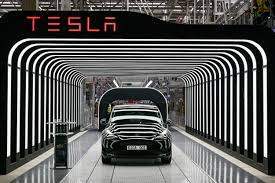
As Tesla's EV sales stall, Elon Musk bets on self-driving robotaxis, despite tech and regulatory hurdles, News.Az reports citing Reuters .
Now Musk - as one of President-elect Donald Trump's biggest backers - may have the influence to help break through those regulatory roadblocks.Tesla (TSLA.O), opens new tab currently faces a diverse landscape of state driverless-vehicle laws that Musk blasted in an Oct. 23 earnings call, calling it “incredibly painful to do it state-by-state.” He signaled he would advocate for one federal approval process if Trump won and followed through on a promise to name Musk “efficiency czar.”
“If there’s a department of government efficiency,” Musk said, “I’ll try to help make that happen.”
On Tuesday, Trump tapped Musk and another ally to lead such an entity, which is not a government agency. It remains unclear how the organization will function.
Musk's sway is likely to extend beyond efficiency. The billionaire, who gave at least $119 million to a pro-Trump group during the campaign, is expected to influence the president-elect’s pick for the next Transportation Department secretary, according to a person close to Musk and Trump’s transition planning. That department, which includes the National Highway Traffic Safety Administration (NHTSA), regulates automakers and could push through significant changes to the self-driving rules at a national level.
But even if Musk secures favorable regulation, Tesla would still face steep technological and legal hurdles in deploying driverless vehicles, along with questions over how to insure them, according to Reuters' interviews with nine regulatory and legal experts and a review of U.S. state driverless-vehicle laws.
Tesla and Musk did not respond to Reuters' requests for comment.
At present, Tesla remains years behind rivals in California, by far the carmaker's largest U.S. market and a primary testing ground for the autonomous-vehicle industry. Other companies have navigated California’s regulatory maze and completed millions of autonomous-vehicle testing miles under state oversight, according to a Reuters review of state regulatory data.
Waymo declined to comment on Tesla's regulatory strategy or its approach to autonomous driving.
Tesla currently has the lowest-level California permit, which allows testing with human-driver oversight. Only six companies have driverless-testing approvals. California data for those firms shows each tested with a driver for a minimum of three years, often for millions of miles, before securing driverless-testing approvals. Amazon's (AMZN.O), opens new tab Zoox, for instance, logged more than 1.6 million miles over three years. General Motors’ (GM.N), opens new tab Cruise racked up more than 2.1 million miles over five years.
Cruise declined to comment. Zoox said it also has a separate driverless “pilot” permit from California regulators that allows the company to pick up passengers without charging fares.
“Tesla has that entire journey in front of them,” said Phil Koopman, a Carnegie Mellon University engineering professor and autonomous-vehicle safety expert. He said Tesla’s current “Full Self-Driving” (FSD) system — which actually requires a human driver paying strict attention — is “nowhere near ready to be a robotaxi.”
Musk says self-driving Teslas will be ready next year, echoing unfulfilled promises dating back about a decade. He has increasingly bet Tesla’s future on robotaxis since this spring, when Reuters reported the automaker had scrapped plans for a mass-market affordable car for human drivers amid softening electric-vehicle demand and rising competition from cheap Chinese EVs.
He told investors last month at a Hollywood-style robotaxi unveiling near Los Angeles that Tesla would deploy fully autonomous versions of its Model 3 and Model Y next year in Texas and California. He also unveiled a two-seat “Cybercab” robotaxi he says will start production in 2026 and cost “roughly $25,000.” Tesla stock fell 9% the next day as some underwhelmed investors said Musk’s presentation lacked concrete product details. Since the election, however, Tesla shares have jumped more than 30%, adding nearly $200 billion in market value, as investors expect friendlier autonomous-driving and artificial-intelligence regulation.


Similar news