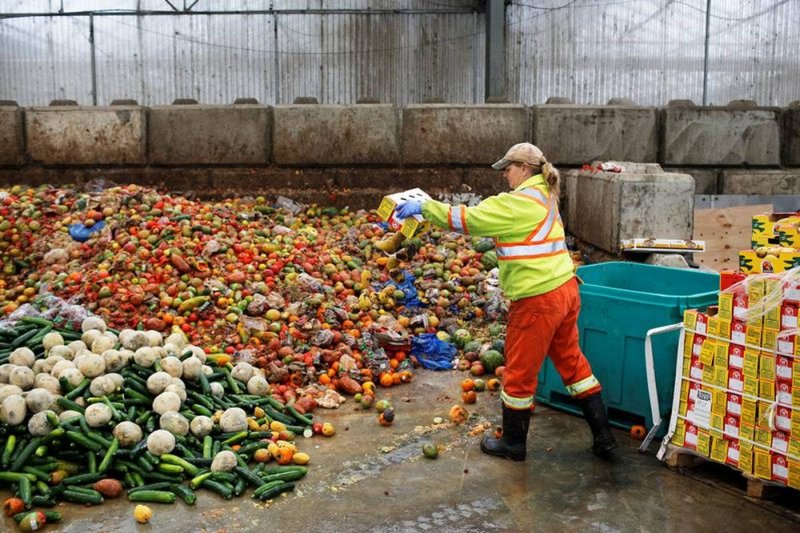
In a joint statement marking the International Day for Zero Waste, the United Nations Environment Programme and United Nations Human Settlements Programme warned that food loss and waste are undermining food security, economic stability and environmental sustainability, News.Az reports, citing Reuters.
Scale of food waste remains staggering
According to the agencies, around 19 percent of all food available to consumers is wasted, while an additional 13 percent is lost before it even reaches retail markets.
Households account for the largest share of food waste, responsible for roughly 60 percent of the total. Food services contribute 28 percent, while retail accounts for the remaining 12 percent.
The figures suggest that households alone waste more than one billion meals every day, highlighting the scale of inefficiency in global food systems.
Economic and environmental costs intensify
Inger Andersen said the financial impact of food waste is equally severe, estimating that it costs the global economy around one trillion dollars annually.
Beyond economic losses, food waste is a major contributor to environmental degradation. The agencies noted that food loss and waste generate between 8 and 10 percent of global greenhouse gas emissions.
Food waste alone is responsible for up to 14 percent of global methane emissions, a potent greenhouse gas that significantly accelerates climate change.
Reducing waste, Andersen emphasized, offers multiple benefits, including lowering emissions, improving food security and supporting the transition to a more sustainable, circular economy.
Cities play key role in solutions
Anaclaudia Rossbach highlighted the growing role of cities in addressing the crisis.
Urban areas are increasingly integrating food systems with water services and waste management, while also developing mechanisms to recover surplus food and reduce inefficiencies.
Rossbach noted that informal workers, including waste pickers and community level managers, are playing a crucial role in building circular systems that reduce waste, cut emissions and create employment opportunities.
Call for systemic change
The UN agencies stressed that tackling food waste requires coordinated action across governments, businesses and households.
They called for stronger policies, improved infrastructure and greater public awareness to drive behavioral change and reduce waste at every stage of the supply chain.
As global populations grow and pressure on natural resources intensifies, reducing food waste is seen as a critical step toward achieving sustainable development goals and ensuring long term ecological resilience.
The message from the United Nations is clear: without decisive action, food waste will continue to strain economies, accelerate climate change and deepen global inequalities.