US judge blocks Trump’s citizenship-proof voter rule as unconstitutional


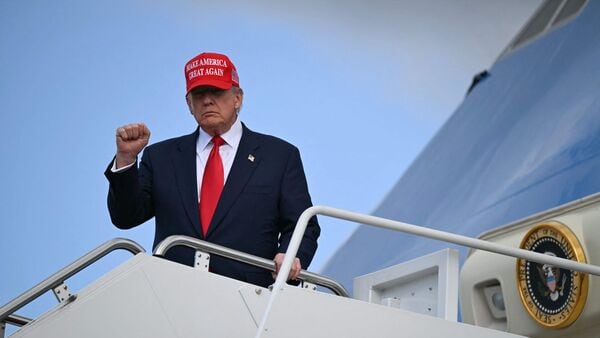
A U.S. federal judge has struck down President Donald Trump’s attempt to require documentary proof of citizenship for federal voter registration, ruling the mandate unconstitutional and beyond presidential authority.
The decision marks a major setback for Trump’s effort to tighten voting rules ahead of the 2026 election cycle, News.Az reports, citing foreign media.
In a ruling issued Friday, U.S. District Judge Colleen Kollar-Kotelly said Trump overstepped his constitutional authority when he ordered federal election agencies to add a citizenship-document requirement to the national voter registration form.
“The Constitution assigns responsibility for election regulation to the States and to Congress,” the judge wrote, adding that the president has “no direct role” in setting voter qualifications.
The ruling permanently blocks the U.S. Election Assistance Commission from implementing the rule.
The American Civil Liberties Union — one of the plaintiffs — celebrated the outcome.
“This is a clear victory for our democracy,” said Sophia Lin Lakin of the ACLU, calling the Trump order “an unconstitutional power grab.”
Democratic groups and voting-rights organizations had argued that the policy would disenfranchise eligible voters and undermine federal election procedures.
Trump has long pushed for stricter voting requirements, claiming they are needed to prevent noncitizens from voting. But multiple nonpartisan studies and state investigations have found such cases to be extremely rare.
Past state-level attempts at similar rules have produced confusion and blocked tens of thousands of eligible voters — including natural-born citizens who lacked the required documents.
Kansas and New Hampshire previously implemented proof-of-citizenship laws, both of which were reversed after legal challenges and administrative chaos.
The ruling blocks only the citizenship-proof mandate. Other parts of Trump’s election executive order — including a requirement that mail ballots be received (not just postmarked) by Election Day — remain under court review.
Additional lawsuits over Trump’s election-related directives are pending in federal courts, including challenges led by 19 state attorneys general.


Similar news