US Pacific northwest faces major flood threat from potential megaquake


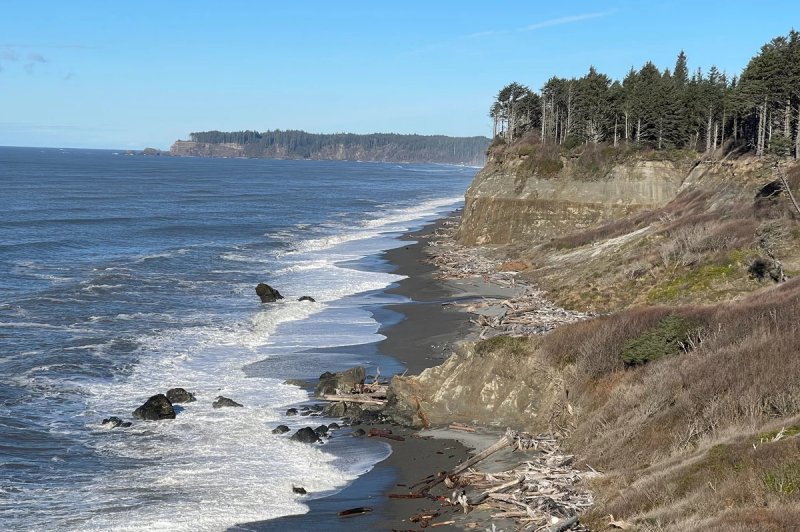
The Quinault Reservation has 28 miles of Pacific Ocean beaches, open only to enrolled tribal members. Photo: John Ryan/KUOW
A powerful earthquake striking the Cascadia subduction zone could lead to a sudden and dramatic rise in sea levels along the Pacific Northwest, posing a major threat to coastal communities from northern California to Washington, according to a new scientific study.
Published in the Proceedings of the National Academy of Sciences, the study highlights how such a quake—often referred to as “the big one”—could trigger rapid land subsidence, significantly increasing the risk of severe flooding in low-lying areas, News.Az reports, citing The Guardian.
The region has long braced for such an event, which would unleash a major tsunami, causing widespread destruction and potentially killing tens of thousands of people.
A major earthquake could cause land along the coast to sink more than six feet and significantly expand the coastal floodplain with “lasting impacts to coastal populations, infrastructure, and ecosystems”, according the study. There is a 15% chance of an earthquake greater than 8.0 magnitude on the fault in the next 50 years, the study states.
“The expansion of the coastal floodplain following a Cascadia subduction zone earthquake has not been previously quantified, and the impacts to land use could significantly increase the timeline to recovery,” said Tina Dura, the lead author of the study and an assistant professor of geosciences at Virginia Tech, told a university publication.
While climate-driven sea level rise happens gradually, these changes would unfold in an instant and persist over decades to centuries, Dura and the study’s other authors write. The most significant impacts would occur in “densely populated” parts of southern Washington, northern Oregon and northern California. And if the next major earthquake took place in 2100 – there is a 29% chance of one greater than 8.0 magnitude by then – with climate-driven sea level rise, some “low-lying” areas along the fault might never recover, according to the study.
The authors wrote that they hoped the findings could support decision-makers and coastal communities better prepare for hazards caused by an earthquake and climate-driven sea-level rise.
“Preparing for these compound hazards can minimize long-term damage, ensure resilient communities, and protect critical coastal ecosystems from permanent degradation,” the authors wrote.
The last great earthquake along the Cascadia Subduction Zone took place in 1700 and brought sudden sea level rise of more than six feet in minutes and generated a huge tsunami that destroyed seaside settlements and created effects seen as far as Japan.
Recent research suggests that a 9.0 magnitude quake on the Cascadia subduction zone could lead to more than 30,000 deaths, 170,000 damaged or destroyed structures on the coast, and economic impacts of more than $81bn. A 2022 study found that a tsunami caused by a major earthquake could exceed 200ft high.


Similar news