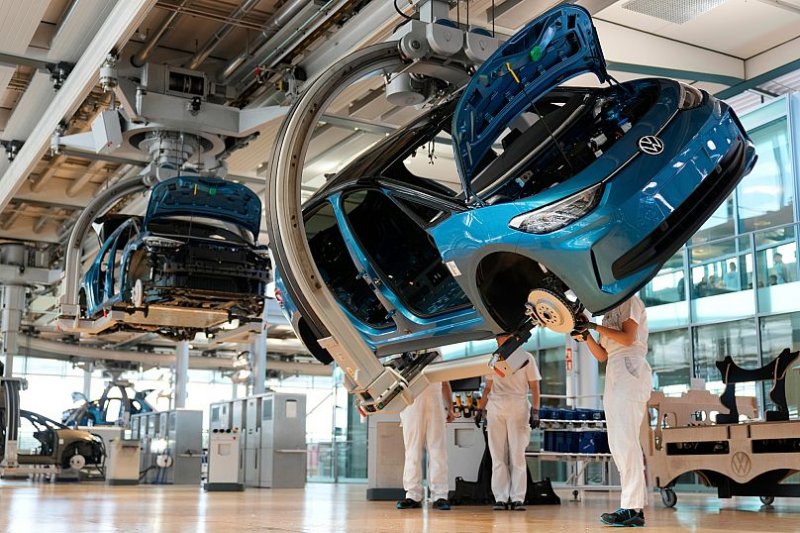
In a joint article published on Thursday in several European outlets, including France’s Les Echos and Germany’s Handelsblatt, Volkswagen chief executive Oliver Blume and Stellantis boss Antonio Filosa argued that electric vehicles largely produced within the EU should benefit from targeted support measures, News.Az reports, citing AFP.
These include purchase subsidies for consumers, government procurement orders, and a “CO₂ bonus” paid directly to carmakers. “European taxpayers’ money should be carefully deployed to promote European production and bring investment into the EU,” they wrote.
“In a world where others proudly defend their industries, Europe must urgently decide whether it wants to become merely a market for others or remain a producer and industrial power in the future,” they added.
European automakers are under strain on several fronts, including tariffs imposed by US President Donald Trump and China’s dominance across key parts of the electric vehicle supply chain, notably batteries and rare earth materials.
Chinese manufacturers such as BYD, which have already taken significant market share from foreign brands in China, are now expanding their presence in Europe. This has raised concerns that European carmakers could lose ground even in their home markets.
“Our companies have always built cars by Europeans for Europeans,” Blume and Filosa wrote, noting that their business models are increasingly challenged by “competition from importers operating under less demanding regulatory and social conditions than those in the EU.”
Since 2024, the EU has imposed higher tariffs on Chinese-made electric vehicles, arguing they benefit from unfair state subsidies. However, Blume and Filosa said that tariffs alone are not enough.
They called for a broader “Made in Europe” strategy to support domestic manufacturers, warning that producing competitively priced electric cars without relying on Chinese inputs remains extremely difficult.
“Our European customers rightly expect us to offer electric vehicles that are as affordable as possible,” they said. “But the lower the price of a car, the greater the pressure to import the cheapest available batteries.”