What we know about the US Antifa movement, which Trump says he wants to ban


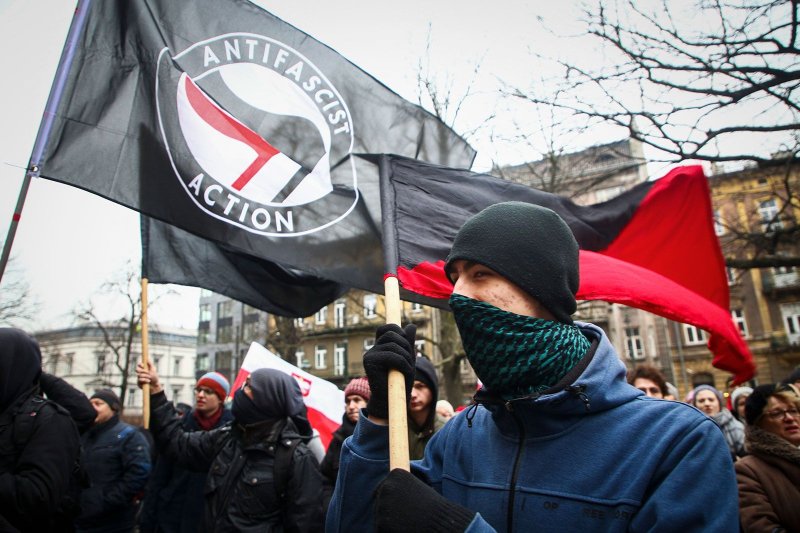
President Donald Trump says he will designate the far-left “Antifa” movement a “major terrorist organization,” reviving a long-running debate over what Antifa is, how it operates, and whether US law even allows such a designation for domestic actors, News.Az reports.
What is Antifa?
“Antifa” is shorthand for “anti-fascist” and functions as a loose, decentralized network of activists who oppose fascists, white supremacists, and neo-Nazis—often through counter-protests and direct action. It has no national leadership, membership rolls, or single funding structure, a fact that has complicated previous efforts to treat it like a formal organization. Former FBI officials have described Antifa more as an ideology or movement than a single group.
Trump’s announcement
Trump said this week that he intends to classify Antifa as a terrorist organization and urged investigations into people who allegedly finance it. He made the announcement during a state visit to the UK and on his social platform, calling Antifa a “sick, dangerous, radical left disaster.” The move follows heightened political tension after the killing of conservative activist Charlie Kirk.
Can the US ‘ban’ Antifa? The legal hurdles
Unlike the State Department’s list of Foreign Terrorist Organizations, there is no established federal process for designating a domestic group as a terrorist organization. Civil-liberties experts note that broad designations risk colliding with First Amendment protections of speech and assembly, especially when the target is a diffuse set of affiliated activists rather than a single incorporated entity. Even some law-enforcement officials have previously signaled challenges in treating Antifa as an “organization” for prosecution or designation purposes.
Violence and accountability
Clashes involving self-identified Antifa activists have occurred at various demonstrations over the past decade, sometimes including property damage or skirmishes with far-right groups. Legal analysts generally argue that existing state and federal laws allow prosecution of specific crimes without a sweeping domestic terrorism designation, while supporters of Trump’s approach say a formal label would sharpen federal tools and signal a tougher stance.
On Capitol Hill
In parallel to the White House stance, some lawmakers have pushed symbolic measures urging that Antifa conduct be treated as domestic terrorism; one House resolution this Congress urges such a designation, underscoring how the debate has moved from the streets into legislative messaging.
What happens next
The administration has not detailed the legal mechanism or timeline for the designation, and it remains unclear what practical effect it would have on protests, funding investigations, or prosecutions. Any sweeping action is likely to face court challenges on constitutional grounds.


Similar news