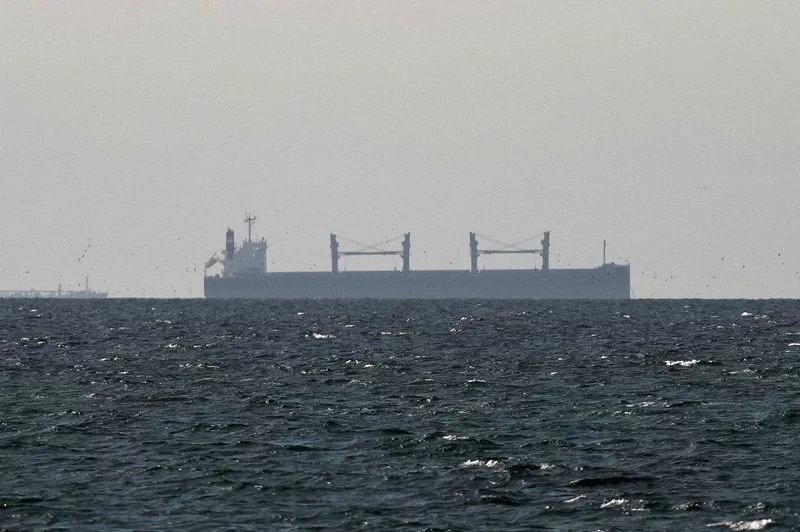
Market focus remains firmly on developments in the Strait of Hormuz, a key global oil transit route handling roughly a fifth of the world’s crude supply. The ongoing standoff between the United States and Iran continues to fuel uncertainty, keeping energy markets on edge.
U.S. President Donald Trump over the weekend announced a new initiative dubbed “Project Freedom,” aimed at restoring stalled shipping flows through the strategic waterway. However, details of the plan remain limited.
At the same time, maritime authorities have introduced enhanced security measures in the region, while Iran’s military has warned foreign forces against entering the strait, signaling readiness to respond forcefully to perceived threats. Commercial shipping has also been cautioned to coordinate movements with Iranian authorities.
The prolonged stalemate has kept oil prices elevated compared to pre-conflict levels, raising concerns over inflation and broader economic stability. Although diplomatic signals suggest ongoing backchannel communication, uncertainty continues to dominate the outlook.
U.S. employment data in spotlight
Beyond geopolitics, investors are preparing for a series of key U.S. economic releases, led by the April employment report.
Economists expect job creation to slow significantly, with forecasts pointing to around 73,000 new positions compared to March’s stronger reading. The unemployment rate is projected to remain unchanged at 4.3 percent.
The data will be closely analyzed for any signs that the Middle East crisis is beginning to impact business activity and hiring trends in the world’s largest economy. Additional labor market indicators, including job openings data and private payroll figures, are also due throughout the week.
Services activity and consumer sentiment
Markets will also assess the health of the U.S. services sector, which represents the majority of economic output. The latest reading from the Institute for Supply Management is expected to show continued expansion, although at a slightly slower pace.
Meanwhile, the University of Michigan consumer sentiment index is forecast to edge lower, reflecting concerns among households about rising fuel costs and broader economic uncertainty linked to geopolitical tensions.
Analysts note that shifts in consumer confidence could provide early signals of changing spending behavior, a key driver of economic growth.
Federal Reserve officials under scrutiny
Attention will also turn to a busy schedule of speeches from Federal Reserve policymakers, as investors look for further clarity on the direction of monetary policy.
Fed Chair Jerome Powell recently indicated that the central bank is moving toward a more neutral stance, following a decision to keep interest rates unchanged. However, divisions within the Federal Open Market Committee highlight ongoing uncertainty around the policy outlook.
Key figures including John Williams, Michelle Bowman and Michael Barr are set to speak during the week, potentially offering insights into how policymakers are balancing inflation risks against growth concerns.
Powell has also signaled that he intends to remain on the Fed’s board after his term as chair ends, a move that could influence the transition to his expected successor, Kevin Warsh.
Global central banks in focus
Beyond the United States, several major central banks are due to announce policy decisions, adding to the week’s significance for global markets.
The Riksbank and Norges Bank are widely expected to keep interest rates unchanged, while acknowledging risks tied to prolonged energy market disruptions.
In contrast, the Reserve Bank of Australia is seen as likely to raise rates by 25 basis points, as policymakers respond to persistent inflation pressures, a tight labor market and resilient economic activity.
A week shaped by risk and data
With geopolitical tensions, economic indicators and central bank actions converging, markets are bracing for potential volatility.
Investors will be navigating a complex environment where elevated energy prices, shifting monetary policy expectations and uncertainty around global growth intersect. Any developments in the Strait of Hormuz or unexpected economic data could quickly alter market direction in the days ahead.