Why Alibaba is betting on AI to transform gaming and film industries


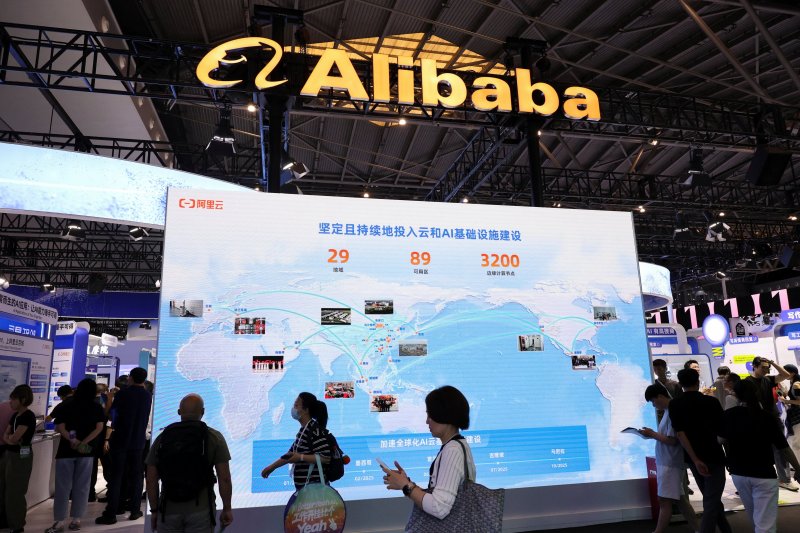
Alibaba has unveiled a new generation artificial intelligence model designed to target the gaming and film industries, signaling a major expansion of its ambitions in the global digital content economy.
The model is part of a broader push to embed advanced AI capabilities across creative sectors where production complexity, cost, and scale have traditionally been major barriers.
RECOMMENDED STORIES
Unlike earlier AI systems focused mainly on text or data analysis, this model is built to support end to end creative workflows. It can assist in scriptwriting, character development, visual design, animation, and even post production processes. This positions Alibaba not just as a technology provider, but as a key enabler of next generation entertainment ecosystems.
The announcement reflects a deeper strategic shift. Alibaba is moving beyond its established strengths in e commerce and cloud computing toward high value, innovation driven industries where AI is becoming the primary engine of growth.
Why is Alibaba focusing specifically on gaming and film?
Gaming and film represent two of the most influential and rapidly expanding sectors in the global entertainment economy. Both industries are content intensive, capital heavy, and increasingly reliant on digital technologies to remain competitive.
In gaming, user expectations are rising. Players demand immersive environments, intelligent characters, and personalized experiences. Traditional development processes struggle to keep pace with these expectations due to high costs and long production cycles. AI offers a solution by automating key elements of design and enabling real time adaptability.
In film, similar pressures exist. Studios face increasing demand for high quality visual effects, faster production timelines, and global distribution. AI can streamline workflows, reduce costs, and open up new storytelling possibilities, including interactive and AI generated narratives.
By targeting these sectors, Alibaba is entering markets where AI can deliver immediate and visible impact. It also allows the company to tap into massive global audiences and revenue streams.
How does the new AI model actually work?
At its core, Alibaba’s system is a large scale multimodal AI model. This means it can process and generate multiple forms of data, including text, images, and potentially video and audio.
The model is trained on extensive datasets that include scripts, visual assets, gameplay mechanics, and user interaction patterns. Through this training, it learns to replicate and enhance creative processes.
For example, in gaming, the AI can generate entire environments based on a few input parameters. Developers can describe a setting, and the system can produce landscapes, textures, and objects that fit the narrative. It can also design non player characters with realistic behaviors and dialogue.
In film, the model can assist in writing scripts by generating dialogue and plot structures. It can create storyboards, simulate scenes, and even suggest camera angles. During post production, it can automate editing, enhance visual effects, and localize content for different languages and regions.
This level of integration transforms AI from a support tool into a central component of the creative pipeline.
How will this change the gaming industry?
The gaming industry is likely to be one of the earliest and most significantly affected sectors.
AI driven development can drastically reduce the time required to build games. Tasks that once took months, such as designing levels or animating characters, can be completed in a fraction of the time. This allows studios to release content more frequently and respond quickly to player feedback.
Another major impact is personalization. AI enables games to adapt to individual players in real time. Storylines can change based on decisions, characters can respond dynamically, and environments can evolve continuously. This creates a more engaging and immersive experience.
Independent developers may also benefit. With access to AI tools through Alibaba’s ecosystem, smaller studios can compete with larger companies by producing high quality content without massive budgets.
At the same time, the role of developers may shift. Instead of manually creating every asset, they may focus more on guiding AI systems and refining outputs.
What transformation can be expected in the film industry?
The film industry stands on the brink of a similar transformation.
AI can streamline pre production by generating scripts, casting suggestions, and visual concepts. Directors and producers can experiment with multiple ideas quickly, reducing the risk associated with creative decisions.
During production, AI can assist with real time visual effects and scene optimization. This reduces the need for expensive reshoots and complex setups.
Post production is where AI may have the most immediate impact. Editing, color correction, sound design, and visual effects can be partially automated, significantly reducing time and cost. AI can also generate realistic digital actors or enhance performances.
Localization is another critical area. AI can automatically translate and dub films into multiple languages while preserving emotional tone and lip synchronization. This makes global distribution more efficient.
In the long term, entirely new formats may emerge. Interactive films, where viewers influence the storyline, could become more common as AI enables real time narrative generation.
How does this move affect competition with Tencent?
Alibaba’s entry into AI driven entertainment intensifies its rivalry with Tencent, which already has a strong foothold in gaming and digital media.
Tencent’s strength lies in its extensive user base and established gaming franchises. It controls major platforms and has deep experience in content distribution and monetization.
Alibaba, on the other hand, is leveraging its technological infrastructure. By focusing on AI and cloud integration, it aims to provide tools that empower creators rather than relying solely on content ownership.
This creates a different competitive dynamic. Instead of competing only for users, the two companies are now competing for developers, studios, and the underlying technological ecosystem.
The outcome of this rivalry could shape the future of China’s digital economy and influence global trends.
What role does Alibaba Cloud play in this strategy?
Alibaba Cloud is a central pillar of the company’s AI ambitions.
The development and deployment of advanced AI models require massive computational resources. Alibaba Cloud provides the infrastructure needed to train these models and deliver them to users.
By integrating AI into its cloud platform, Alibaba allows businesses to access powerful tools without significant upfront investment. Developers can use these capabilities on demand, scaling their usage as needed.
This not only drives adoption but also strengthens Alibaba’s position in the cloud market. As more companies rely on its platform, Alibaba gains valuable data and revenue, which can be reinvested into further innovation.
The cloud AI integration also enables seamless collaboration. Teams across different locations can work on projects simultaneously, using shared AI tools and resources.
What are the economic implications of this development?
The economic impact of AI in gaming and film could be substantial.
Production costs are likely to decrease as automation reduces the need for manual labor and expensive equipment. This could lead to a surge in content creation, as more companies and individuals enter the market.
At the same time, revenue opportunities may expand. Personalized and interactive content can drive higher user engagement and monetization. New business models, such as AI generated content subscriptions or dynamic storytelling platforms, may emerge.
However, there could also be disruption. Jobs that involve repetitive or technical tasks may be affected as AI takes over these functions. This could lead to a shift in the labor market, with increased demand for skills related to AI management and creative direction.
Overall, the balance between efficiency gains and workforce impact will be a key issue.
What are the ethical and regulatory challenges?
The integration of AI into creative industries raises several ethical and regulatory concerns.
One major issue is intellectual property. Determining ownership of AI generated content can be complex, especially when models are trained on existing works.
Another concern is authenticity. As AI becomes capable of producing highly realistic content, distinguishing between human created and machine generated material may become more difficult.
There are also questions about bias and fairness. AI systems can reflect the biases present in their training data, potentially leading to problematic outputs.
Regulators may introduce rules to address these issues, which could affect how companies develop and deploy AI technologies. Balancing innovation with responsible use will be a critical challenge.
How does this fit into the global AI race?
Alibaba’s move is part of a broader global competition in artificial intelligence.
Countries and companies around the world are investing heavily in AI, recognizing its potential to drive economic growth and technological leadership.
By focusing on gaming and film, Alibaba is expanding the scope of this competition into creative industries. This adds a new dimension to the AI race, where cultural influence and content production become strategic factors.
The development also contributes to a more diverse technological landscape. Instead of a single dominant model, multiple systems from different regions are emerging, each with its own strengths and focus areas.
This could lead to innovation but also fragmentation, as different ecosystems compete for dominance.
What should businesses and consumers expect in the near future?
Businesses can expect increased access to AI tools that enhance productivity and creativity. This may lead to faster innovation cycles and more competitive markets.
For developers and filmmakers, the ability to experiment and iterate quickly will be a major advantage. They can test ideas, refine concepts, and bring products to market more efficiently.
Consumers are likely to benefit from richer and more personalized experiences. Games may become more immersive, and films may offer new forms of interaction and storytelling.
However, there may also be challenges related to privacy, data security, and content authenticity. Users will need to adapt to a world where AI plays a central role in shaping digital experiences.
What is the long term significance of Alibaba’s AI strategy?
Alibaba’s investment in AI for gaming and film reflects a broader transformation in the global technology landscape.
AI is becoming a foundational technology that influences every aspect of the digital economy. By integrating AI into creative industries, Alibaba is positioning itself at the intersection of technology and culture.
This strategy has the potential to reshape not only how content is produced but also how it is consumed and monetized. It could lead to the emergence of entirely new forms of entertainment and redefine the relationship between creators and audiences.
At the same time, it underscores the importance of adaptability. Companies that can successfully integrate AI into their operations will be better positioned to compete in the future.
Alibaba’s move is a clear indication that the next phase of the AI revolution will extend beyond traditional technology sectors into the heart of human creativity and expression.
By Faig Mahmudov


Similar news