What is behind the Xi Jinping and Kim Jong Un meeting?


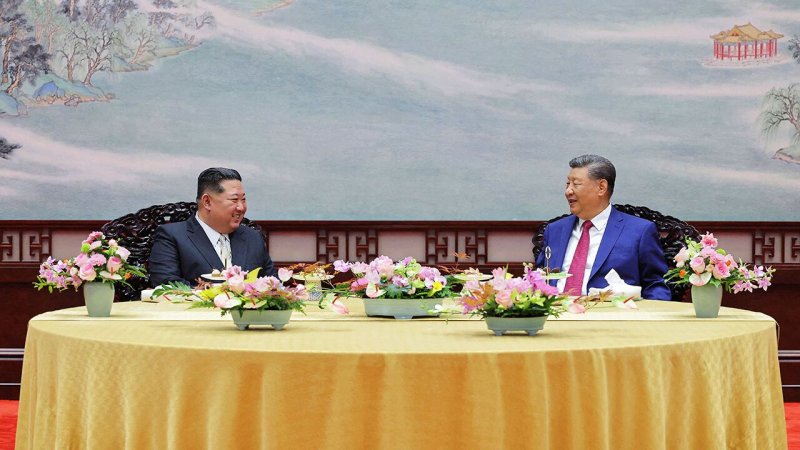
Chinese President Xi Jinping is set to pay a state visit to North Korea from June 8 to 9 at the invitation of North Korean leader Kim Jong Un.
The visit is politically significant because it brings together the leaders of China and North Korea at a time of rising tensions in East Asia, growing rivalry between China and the United States, and renewed attention to North Korea's nuclear and missile programs, News.az reports.
Why is this meeting important?
The meeting is important because China is North Korea's most powerful political and economic partner. For Pyongyang, Beijing remains essential for diplomatic protection, trade and strategic backing. For China, North Korea is a crucial buffer state on its northeastern border and an important factor in regional security calculations.
The visit is also a signal to Washington, Seoul and Tokyo that Beijing and Pyongyang are strengthening coordination at a sensitive geopolitical moment.
What is the main purpose of Xi Jinping's visit?
The main purpose is to reaffirm the strategic partnership between China and North Korea.
The two leaders are expected to discuss bilateral relations, regional security, economic cooperation and the broader international situation. The visit also allows both sides to show political unity and demonstrate that their alliance remains strong despite pressure from the United States and its partners.
Why is the meeting taking place now?
The timing is not accidental.
North Korea has been intensifying its nuclear and missile activities, while the United States, South Korea and Japan have expanded military cooperation. At the same time, China is facing growing strategic competition with the United States across the Indo Pacific region.
By visiting Pyongyang now, Xi is likely seeking to reinforce China's influence over North Korea and ensure that Beijing remains central to any future security arrangement on the Korean Peninsula.
What does China want from North Korea?
China wants stability on the Korean Peninsula.
Beijing does not want a war, a collapse of the North Korean state or a refugee crisis near its border. It also does not want stronger US military deployment in the region.
China therefore tries to maintain enough influence over Pyongyang to manage tensions, while also using its relationship with North Korea as leverage in wider regional diplomacy.
What does North Korea want from China?
North Korea wants political support, economic breathing space and diplomatic protection.
Because of international sanctions, North Korea remains heavily dependent on China for trade and access to essential goods. Kim Jong Un also needs Beijing's backing to avoid deeper isolation.
A high level visit by Xi strengthens Kim's domestic and international image by showing that North Korea is not isolated and still has the support of a major global power.
Is this meeting connected to North Korea's nuclear program?
Yes, indirectly.
North Korea's nuclear program is one of the central issues shaping regional tensions. Pyongyang continues to present its nuclear arsenal as a guarantee of regime survival, while the United States, South Korea and Japan see it as a major security threat.
China officially supports stability and dialogue, but it also opposes excessive pressure that could destabilize North Korea. Xi and Kim are likely to discuss how to manage the nuclear issue without giving Washington full control over the diplomatic process.
Could China pressure North Korea to reduce tensions?
China may encourage restraint, but it is unlikely to publicly pressure Kim Jong Un in a way that weakens him.
Beijing's priority is not necessarily denuclearization at any cost. Its main concern is preventing conflict and maintaining influence. China may push North Korea to avoid actions that could trigger a major regional crisis, but it will also defend Pyongyang against what it sees as excessive US led pressure.
How does the United States factor into the meeting?
The United States is one of the biggest factors behind the meeting.
China sees expanding US security ties with South Korea and Japan as part of a broader strategy to contain Beijing. North Korea also views US military presence in the region as a direct threat.
By meeting now, Xi and Kim are sending a message that China and North Korea will coordinate more closely in response to Washington's regional strategy.
What message does the meeting send to South Korea and Japan?
The meeting sends a warning that pressure on North Korea will not happen in isolation.
South Korea and Japan have been deepening defense cooperation with the United States, including missile defense coordination and joint military exercises. China and North Korea see this as a hostile alignment.
The summit signals that Beijing and Pyongyang may respond with closer political and security coordination of their own.
Is Russia part of the background to this meeting?
Yes.
North Korea has moved closer to Russia in recent years, especially as Moscow has faced Western pressure over the war in Ukraine. This has created a new strategic triangle involving China, North Korea and Russia.
China may want to ensure that it remains North Korea's most important external partner and that Moscow does not gain too much influence in Pyongyang. The meeting helps Beijing reassert its central role.
Could economic cooperation be discussed?
Economic cooperation is likely to be one of the main topics.
North Korea needs trade, food supplies, fuel, infrastructure support and economic links. China can provide all of these, although it must balance such cooperation with international sanctions.
The two sides may discuss border trade, transport links, industrial cooperation, tourism and humanitarian support.
Why does North Korea matter so much to China?
North Korea matters to China for three main reasons.
First, it is a buffer between China and US allied South Korea. Second, instability in North Korea could create security and refugee problems for China. Third, North Korea gives Beijing diplomatic leverage in talks involving the United States, South Korea and Japan.
For China, losing influence over Pyongyang would weaken its position in Northeast Asia.
Why does China matter so much to North Korea?
China is North Korea's main lifeline.
Without China, North Korea would face much deeper economic isolation. Beijing provides diplomatic cover at the international level and remains Pyongyang's most important trade partner.
For Kim Jong Un, strong ties with Xi Jinping help balance pressure from the West and strengthen his regime's sense of security.
Will the meeting lead to a major breakthrough?
A dramatic breakthrough is unlikely.
The meeting is more likely to produce symbolic statements, political commitments and possible economic cooperation than a sudden change in North Korea's nuclear policy. However, even without a breakthrough, the visit matters because it shows where both countries stand in the regional balance of power.
Could this meeting prepare the ground for future talks with the US?
Possibly.
China may seek to position itself as an indispensable player in any future dialogue involving North Korea and the United States. If Washington wants to reopen talks with Pyongyang, Beijing will likely want to be part of the process or at least shape the conditions around it.
For Kim, coordination with Xi before any future diplomatic engagement would strengthen his negotiating position.
What does Kim Jong Un gain politically from hosting Xi?
Kim gains prestige and legitimacy.
A visit from China's president shows North Korean citizens and elites that Kim remains internationally recognized by a major power. It also allows him to present himself as a leader who can deal directly with one of the world's most powerful figures.
This strengthens Kim's domestic image and reinforces the authority of his leadership.
What does Xi Jinping gain politically from the visit?
Xi gains diplomatic visibility and strategic leverage.
The visit allows him to show that China remains central to Northeast Asian security. It also demonstrates that Beijing has influence over an issue where Washington has struggled to achieve lasting results.
For Xi, the trip reinforces China's image as a major power capable of shaping regional outcomes.
How could the meeting affect regional security?
The meeting could harden existing blocs in Northeast Asia.
On one side, the United States, South Korea and Japan are strengthening defense cooperation. On the other side, China and North Korea are reinforcing their political alignment, with Russia also playing a growing role.
This could make the region more polarized and increase the risk of miscalculation.
Could the meeting increase tensions?
Yes, depending on the messages that follow.
If Xi and Kim issue strong statements against the United States, South Korea or Japan, tensions could rise. If North Korea follows the summit with missile tests or military demonstrations, the situation could become more serious.
However, China may also use the meeting to encourage North Korea to avoid actions that could spiral into a larger crisis.
What should observers watch after the meeting?
Observers should watch for any joint statement, references to military cooperation, economic agreements, comments about the United States, South Korea and Japan, and signals about North Korea's nuclear policy.
They should also watch whether North Korea conducts new missile tests after the visit or whether China increases economic engagement with Pyongyang.
What is the broader geopolitical meaning of the meeting?
The broader meaning is that China and North Korea are trying to strengthen their position in an increasingly divided international system.
The meeting reflects a world in which major powers are forming tighter strategic alignments. For Beijing and Pyongyang, closer ties are a way to resist pressure from Washington and its allies.
For the United States and its partners, the visit will likely be seen as a sign that China is not distancing itself from North Korea, despite concerns over Pyongyang's nuclear ambitions.
Bottom line
The Xi Jinping and Kim Jong Un meeting is not just a routine diplomatic visit. It is a strategic signal at a moment of growing regional tension. China wants stability, influence and leverage. North Korea wants protection, legitimacy and economic support. Together, the two countries are showing that their partnership remains an important factor in Northeast Asian security and in the wider contest between China and the United States.
By Faig Mahmudov


Similar news