Why are energy and critical minerals central to Japan–Australia talks?


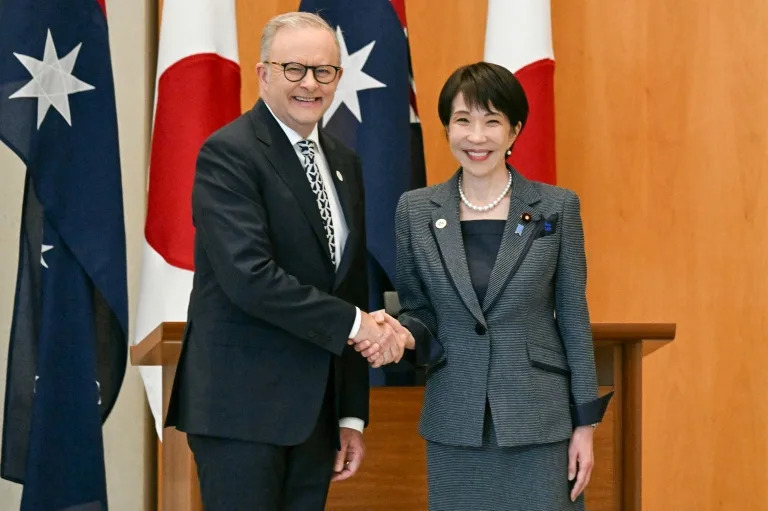
Japan’s Prime Minister Sanae Takaichi opened talks in Australia on Monday as both countries seek to navigate a tightening global oil supply, News.Az reports, citing AFP.
Australia remains a key supplier of coal and liquefied natural gas to Japan, while Japan provides about seven percent of Australia’s diesel imports.
Takaichi met with Prime Minister Anthony Albanese before the two leaders jointly addressed the media, with discussions expected to focus on energy, critical minerals, and defence cooperation.
RECOMMENDED STORIES
“Gas plays a role in all our discussions because it fundamentally underpins the shared energy security between our countries,” Foreign Minister Penny Wong told journalists in Canberra ahead of the talks.
“Our export partners have always put to us they want reliability,” she added.
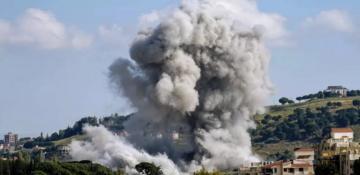
Around one-fifth of global oil supply typically passes through the Strait of Hormuz, where shipping has been constrained by Iran following attacks by the United States and Israel.
Japan’s government has also emphasized the importance of securing stable supplies of critical minerals, which are essential for semiconductors, electric vehicle batteries, and weapons systems.
Australia has promoted its vast reserves of critical minerals as an alternative to reduce China’s dominance in the global rare earths market.
“We want to make sure that we’re resilient in a time where we see a lot of economic and global disruption,” Wong said.
“Critical minerals are necessary for our economy.”
The two countries have also expanded defence ties, including a deal worth Aus$10 billion (US$6 billion) signed last year under which Japan will supply Mogami-class stealth warships to the Australian navy.
Speaking at a foreign policy event in Vietnam over the weekend, Takaichi pledged to further support a “free and open Indo-Pacific,” a strategy that has drawn criticism from China.
She said Japan aims to strengthen its resilience by reinforcing supply chains for energy and critical minerals, as well as enhancing security cooperation.
Originally proposed about a decade ago by her mentor Shinzo Abe, the concept of a “free and open” Indo-Pacific has since been adopted by several US allies and partners seeking to counter China’s growing influence in the region.


Similar news