Why did China ban four New Zealand lawmakers?


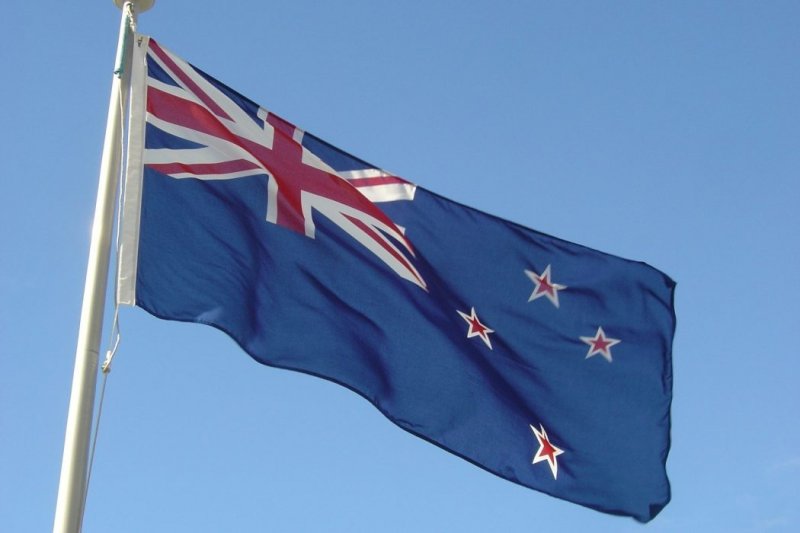
China has imposed a one year travel ban on four New Zealand lawmakers following their visit to Taiwan in May, marking the first time Beijing has taken such action against members of New Zealand's Parliament.
The restrictions apply to mainland China, Hong Kong and Macau. The affected lawmakers come from both governing and opposition parties, highlighting the cross party nature of the Taiwan visit. officials and institutions, News.az reports.
RECOMMENDED STORIES
Chinese officials argued that the lawmakers crossed a political red line by making the visit. as official exchanges with Taiwan.
The decision has attracted international attention because it highlights the growing tensions surrounding Taiwan and reflects Beijing's increasingly assertive response to foreign political engagement with the self governed island.
What happened?
Chinese authorities imposed travel restrictions on four members of New Zealand's Parliament after they visited Taiwan as part of a parliamentary delegation.
The lawmakers reportedly received notification that they would be prohibited from entering mainland China, Hong Kong and Macau for a period of one year.
The sanctions affect politicians from different political parties, demonstrating that the issue extends beyond domestic political divisions within New Zealand.
Why did China impose the ban?
The central issue is Taiwan.
China considers Taiwan to be part of its territory under the One China principle and strongly opposes any actions that could be interpreted as recognizing Taiwan as an independent political entity.
Beijing regularly criticizes foreign officials who visit Taiwan, particularly when those visits involve elected politicians, parliamentary delegations or government representatives.
From China's perspective, such visits undermine its sovereignty claims and encourage what it describes as separatist activities.
Why is Taiwan such a sensitive issue for China?
Taiwan is one of the most important and emotionally charged issues in Chinese foreign policy.
The Chinese government maintains that there is only one China and that Taiwan is an inseparable part of it. Beijing has repeatedly stated that reunification remains a national objective and has not ruled out the use of force to achieve that goal.
Taiwan, however, operates with its own government, military, legal system and democratic institutions.
This difference between political reality and Beijing's territorial claims has made Taiwan a persistent source of international tension.
Who are the lawmakers affected?
The travel ban applies to four members of New Zealand's Parliament who participated in the Taiwan visit.
The fact that the lawmakers come from both governing and opposition parties is significant because it suggests that support for parliamentary engagement with Taiwan is not confined to a single political faction.
Their trip focused on strengthening parliamentary dialogue and discussing economic, political and security issues.
Does New Zealand officially recognize Taiwan?
No.
Like most countries, New Zealand officially recognizes the People's Republic of China rather than Taiwan.
Wellington adheres to the One China policy and does not maintain formal diplomatic relations with Taipei.
However, New Zealand continues to maintain economic, cultural and unofficial political contacts with Taiwan, particularly in areas such as trade, education and parliamentary exchanges.
This balancing act is similar to the approach adopted by many Western democracies.
How unusual is China's decision?
While China has previously sanctioned politicians from countries including the United States, Canada, Lithuania and several European nations, imposing restrictions on New Zealand lawmakers is relatively rare.
The move is viewed by analysts as a signal that Beijing is becoming less willing to tolerate foreign political engagement with Taiwan, regardless of the size or influence of the country involved.
It also reflects China's broader willingness to use diplomatic and political tools to discourage official contacts with Taiwan.
How has New Zealand responded?
New Zealand officials have expressed concern over the decision.
Political leaders in Wellington have emphasized the importance of parliamentary independence and the right of lawmakers to engage with international counterparts.
While New Zealand remains committed to maintaining constructive relations with China, officials have also defended the right of parliamentarians to travel and participate in fact finding missions abroad.
The response reflects New Zealand's effort to balance its democratic values with its important economic relationship with China.
Could the dispute affect China New Zealand relations?
Potentially, although major diplomatic breakdowns remain unlikely.
China is New Zealand's largest trading partner, and both countries have significant economic interests in maintaining stable relations.
However, disputes involving Taiwan, human rights, security concerns and foreign influence have become increasingly common points of friction between China and several Western countries.
The travel ban may add further strain to an already complex relationship.
What does this mean for trade relations?
At this stage, the sanctions are targeted at individuals rather than economic institutions.
There is no indication that China intends to impose trade restrictions on New Zealand as a result of the lawmakers' visit.
Nevertheless, political tensions can sometimes influence broader bilateral relations, particularly if similar disputes occur in the future.
Businesses and investors will be watching closely to see whether the disagreement remains limited to political symbolism or develops into something more substantial.
Is this part of a wider trend?
Yes.
China has become increasingly active in responding to foreign political engagement with Taiwan.
In recent years, lawmakers, ministers and parliamentary delegations from Europe, North America and Asia have visited Taiwan more frequently. Many governments view these visits as legitimate exchanges with a democratic partner.
China, however, often interprets them as challenges to its sovereignty claims.
As a result, sanctions, travel restrictions and diplomatic protests have become more common tools in Beijing's foreign policy.
Why are more politicians visiting Taiwan?
Taiwan has gained greater international attention because of its strategic importance, advanced technology sector and democratic political system.
The island is home to some of the world's most important semiconductor manufacturers and occupies a critical position in global supply chains.
Many lawmakers see engagement with Taiwan as economically beneficial and politically significant.
Growing concerns about regional security and China's military activities around Taiwan have also increased international interest in the island.
Could similar incidents happen again?
Yes.
As more foreign lawmakers and officials travel to Taiwan, the likelihood of additional diplomatic disputes remains high.
China has repeatedly warned governments against official exchanges with Taiwan and has shown a willingness to respond with political, diplomatic and economic measures.
At the same time, many democratic countries appear increasingly willing to maintain or expand unofficial engagement with Taipei.
This means tensions surrounding Taiwan are likely to remain a recurring feature of international politics.
What does the incident reveal about the future of Taiwan diplomacy?
The ban highlights the increasingly difficult balancing act facing many countries.
Governments want to maintain strong economic ties with China while also preserving democratic values, parliamentary independence and relations with Taiwan.
As strategic competition intensifies across the Indo Pacific region, disputes like this are likely to become more frequent.
The sanctions against the four New Zealand lawmakers may appear limited in scope, but they reflect a much larger geopolitical struggle over Taiwan's international status, China's growing global influence and the future shape of regional diplomacy.
By Faig Mahmudov


Similar news