Why did the Minnesota lawmaker murder suspect plead guilty?


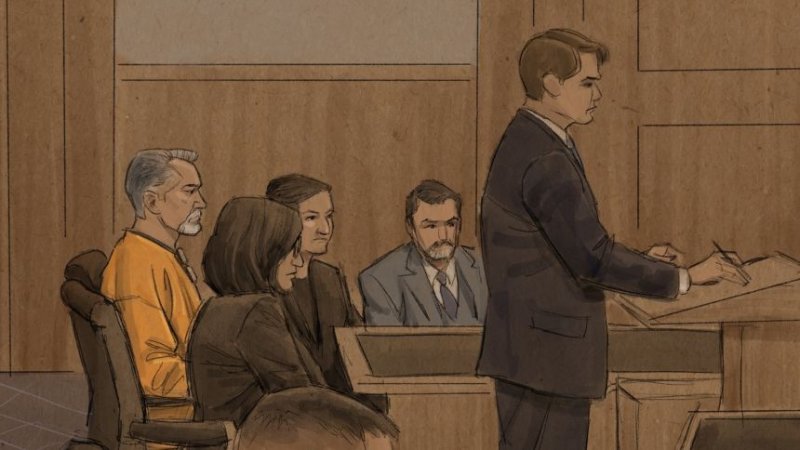
Nearly one year after one of the most shocking acts of political violence in recent American history, the man accused of assassinating a top Minnesota lawmaker and her husband has pleaded guilty to federal charges.
The case attracted national attention because it involved a carefully planned attack on elected officials, the use of a police disguise, and a lengthy manhunt that became the largest in Minnesota's history, News.az reports.
The suspect, Vance Luther Boelter, admitted responsibility for the killings of former Minnesota House Speaker Melissa Hortman and her husband, Mark Hortman, as well as the attempted murders of State Senator John Hoffman and his wife, Yvette Hoffman. His guilty plea means that the federal case will not proceed to trial and that he will spend the rest of his life in prison.
The case has become a symbol of growing concerns about political violence in the United States and has raised important questions about security for public officials, political extremism, and the dangers of escalating polarization.
Who Is Vance Boelter?
Vance Luther Boelter is a Minnesota resident who became the focus of a nationwide manhunt after authorities accused him of carrying out a politically motivated attack against elected officials in June 2025.
According to prosecutors, Boelter spent months preparing for the attacks. Investigators say he researched potential targets, gathered equipment, and developed a plan that involved impersonating a police officer in order to gain access to the homes of public officials.
Authorities described the attacks as deliberate and premeditated rather than spontaneous acts of violence. Investigators later discovered evidence suggesting that Boelter had compiled a list of additional potential targets that included politicians, activists, and individuals associated with political causes.
His arrest and prosecution quickly became one of the highest-profile criminal cases in Minnesota's history.
What Happened During the Attacks?
The attacks took place during the early hours of June 14, 2025.
According to federal prosecutors, Boelter disguised himself as a police officer and drove a vehicle modified to resemble a law enforcement SUV. Wearing tactical gear and a realistic mask, he allegedly approached the homes of elected officials under the appearance of conducting official police business.
Authorities say he first targeted State Senator John Hoffman and his wife, Yvette, at their home. Both survived but suffered severe injuries after being shot multiple times.
Later that night, prosecutors say Boelter traveled to the home of Melissa Hortman, then one of Minnesota's most influential Democratic lawmakers. Hortman and her husband, Mark, were fatally shot.
The killings sent shockwaves through Minnesota and the wider United States, triggering fears about the increasing threat of politically motivated violence.
Who Was Melissa Hortman?
Melissa Hortman was one of Minnesota's most prominent political figures.
A longtime member of the Minnesota House of Representatives, she served as Speaker of the House and later became the leader of the Democratic caucus. Throughout her political career, she played a major role in shaping state policy on issues ranging from education and healthcare to environmental protection and economic development.
Colleagues frequently described her as a skilled negotiator and an influential leader capable of building consensus on difficult issues.
Her death was widely mourned across the political spectrum, with leaders from both parties condemning the attack and expressing concern about rising threats against public officials.
For many Minnesotans, the assassination represented not only a personal tragedy but also an attack on democratic institutions.
Why Was the Attack Considered Politically Motivated?
Investigators concluded that the attack was motivated by politics because of the evidence discovered during the investigation.
Authorities reported finding a list containing dozens of names of public officials, political activists, and individuals associated with specific political causes. Many of the people identified on the list were Democrats or supporters of abortion rights and other progressive policies.
Federal prosecutors argued that the attack was not random but instead reflected a deliberate effort to target elected officials because of their political roles.
The fact that multiple politicians were allegedly targeted in a coordinated operation reinforced concerns that the violence was intended to intimidate or harm public officials.
Government officials repeatedly described the shootings as acts of political violence and warned about the broader implications for democracy.
Why Did Boelter Plead Guilty?
The guilty plea was part of an agreement reached between Boelter and federal prosecutors.
Under the deal, Boelter admitted guilt to multiple federal charges, including murder, stalking, and firearms offenses. In exchange, the Department of Justice agreed not to pursue the death penalty.
The agreement eliminates the need for a lengthy trial and guarantees that Boelter will never be released from prison.
Federal prosecutors stated that securing a permanent sentence without the uncertainty of a trial was an outcome they considered appropriate given the circumstances.
For victims' families, the plea also avoids years of appeals and additional court proceedings that often accompany capital punishment cases.
Why Did Prosecutors Drop the Death Penalty?
The decision not to seek execution has generated significant discussion.
Federal officials explained that the plea agreement guarantees a punishment that will keep Boelter imprisoned for the remainder of his life. Under the terms of the agreement, he is expected to receive two consecutive life sentences plus an additional 40 years.
Prosecutors indicated they believed they could potentially secure a death sentence but concluded that obtaining guaranteed life imprisonment through a guilty plea served the interests of justice more effectively.
Death penalty cases often involve years or even decades of appeals. By accepting the plea agreement, authorities ensured that Boelter's punishment would begin immediately without prolonged litigation.
The decision reflects a broader debate over whether certainty of punishment is sometimes preferable to pursuing capital sentences.
What Charges Did He Plead Guilty To?
Boelter pleaded guilty to multiple federal offenses connected to the attacks.
The charges included murder, firearms violations, and stalking offenses related to the killings of Melissa and Mark Hortman and the attempted murders of John and Yvette Hoffman.
Federal prosecutors argued that the attacks involved extensive planning and targeted violence against public officials.
The combination of murder, attempted murder, stalking, and weapons charges made the case one of the most serious federal criminal prosecutions in Minnesota in recent years.
The guilty plea means prosecutors no longer need to prove these allegations before a jury.
What Sentence Will He Receive?
The plea agreement calls for an extraordinarily severe sentence.
Federal officials stated that Boelter will receive two life sentences plus an additional 40 years in prison. The sentences are expected to run consecutively, ensuring that he will spend the rest of his life incarcerated.
Because of the length and structure of the sentence, there is effectively no possibility that he will ever regain freedom.
The punishment reflects both the severity of the crimes and the fact that multiple victims were targeted.
What About State Charges?
The federal guilty plea does not end all legal proceedings.
Boelter still faces separate charges in Minnesota state court, including murder and attempted murder counts related to the same attacks. State prosecutors have indicated that those charges remain active.
Legal experts note that federal and state prosecutions can proceed independently because they involve separate jurisdictions.
While the federal plea resolves one major aspect of the case, additional proceedings may still occur at the state level.
The exact relationship between the federal sentence and any future state proceedings remains subject to legal decisions.
Why Did the Case Receive So Much National Attention?
Several factors combined to make the case one of the most closely followed criminal investigations in the country.
First, the victims were elected officials, making the attack inherently significant. Second, investigators described the violence as politically motivated, raising concerns about threats to democracy and public service.
Third, the suspect allegedly disguised himself as a police officer, using deception to gain access to his targets.
Finally, the attacks occurred during a period of heightened concern about political polarization and extremist violence in the United States.
The case became part of a broader national conversation about how political disagreements can sometimes evolve into threats, intimidation, or violence.
What Does This Case Say About Political Violence in America?
Many experts view the case as a warning sign about the dangers of political extremism.
While acts of political violence remain relatively rare, threats against elected officials have increased significantly in recent years. Public servants at local, state, and national levels have reported growing concerns about harassment, intimidation, and security risks.
The Minnesota attacks demonstrated how political grievances can evolve into deadly violence when individuals become radicalized or convinced that violence is justified.
Officials from both major political parties used the case to call for greater civility and stronger condemnation of political violence regardless of ideological beliefs.
The incident reinforced concerns that democratic institutions depend not only on laws and elections but also on a shared rejection of violence as a political tool.
How Did the Victims and Their Families Respond?
The attacks left lasting physical and emotional consequences.
While Melissa and Mark Hortman were killed, Senator John Hoffman and his wife survived despite suffering severe injuries. Recovery has involved extensive medical treatment and rehabilitation.
Family members, colleagues, and supporters have repeatedly emphasized the importance of remembering the victims rather than focusing solely on the perpetrator.
Many have also used the tragedy to advocate for greater unity and a rejection of political hatred.
Their responses have highlighted both the personal devastation caused by the attacks and the broader social consequences of political violence.
The Bottom Line
Vance Boelter's guilty plea brings a major legal chapter to a close in one of the most disturbing political violence cases in modern Minnesota history. By admitting responsibility for the murders of Melissa Hortman and her husband and the attempted murders of Senator John Hoffman and his wife, Boelter avoided the death penalty but guaranteed that he will spend the rest of his life in prison.
The case remains a powerful reminder of the dangers posed by political extremism and targeted violence against public officials. Beyond the courtroom, it has become a symbol of the need to protect democratic institutions and reject violence as a means of advancing political beliefs. As Minnesota approaches the anniversary of the attacks, the guilty plea provides a measure of legal resolution while leaving a lasting legacy of grief, reflection, and concern about the future of political discourse in the United States.
By Faig Mahmudov


Similar news