Why were Swedes fined for throwing stones into Russia?


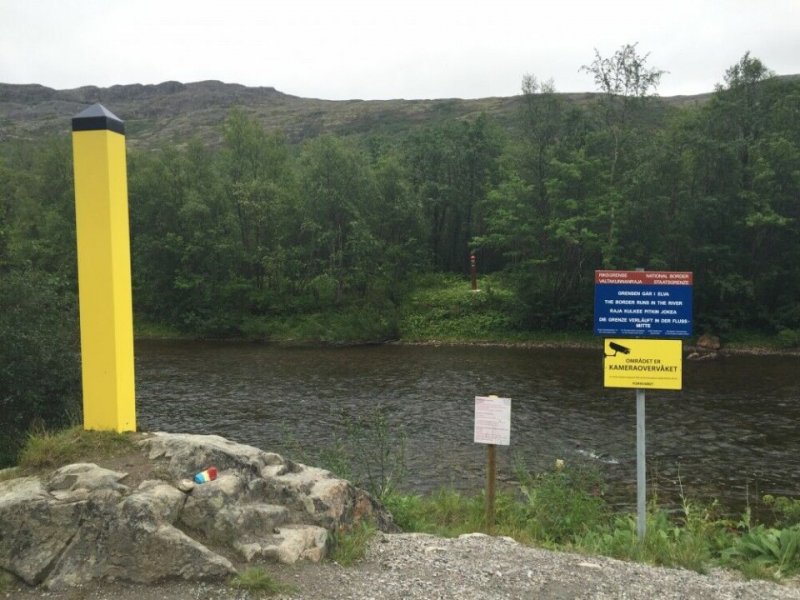
Three Swedish citizens have been fined after throwing stones across the border into Russian territory from Norway, an incident that may appear harmless at first glance but is treated as a legal offense under Norwegian law.
The incident took place in Grense Jakobselv, a remote area in northern Norway close to the frontier with Russia, News.az reports.
Authorities imposed fines on the individuals after determining that their actions violated Norway's strict border regulations. The case serves as a reminder that borders are not simply geographic lines on a map but areas often governed by special legal rules designed to prevent diplomatic incidents, security concerns, and cross-border tensions.
Although the penalties were relatively modest, the incident has sparked curiosity about why throwing a stone could be considered a punishable act and what makes the Norway-Russia border so sensitive.
What Exactly Happened?
According to authorities, three Swedish nationals were found to have thrown stones from Norwegian territory across the border and into Russia.
The incident occurred in the Grense Jakobselv area, located near the northernmost section of the land border separating Norway and Russia. Police determined that the individuals had violated regulations governing conduct near the frontier and subsequently issued fines. Each person reportedly received a penalty of 8,000 Norwegian kroner.
While the action itself may seem insignificant, border authorities considered it a breach of specific rules designed to regulate behavior in the area.
The event quickly attracted media attention because many people were surprised to learn that throwing stones across an international border could result in criminal sanctions.
Why Is Throwing Stones Across the Border Illegal?
The answer lies in Norway's border legislation.
Norway has maintained special regulations governing activities near the Russian frontier for decades. The laws were originally introduced to prevent actions that could provoke incidents, create misunderstandings, or generate diplomatic tensions between neighboring states.
Authorities regard the act of deliberately throwing objects across the border as an unauthorized action directed toward another country's territory.
Even if the stones cause no damage, the act itself is considered a violation because it involves crossing an internationally recognized boundary with physical objects.
Officials emphasize that border regulations exist to ensure that people behave responsibly in areas where even minor incidents can have broader implications.
What Law Did the Swedes Violate?
The fines were reportedly issued under Norway's border legislation dating back to 1950.
The law contains provisions governing conduct near the country's border with Russia. One section prohibits offensive or inappropriate behavior directed toward the neighboring state or its authorities.
Although the legislation was originally developed during a very different geopolitical era, it remains in force today and continues to regulate activities along the frontier.
Violations can result in financial penalties and, in more serious circumstances, imprisonment for up to three months.
The law reflects Norway's long-standing approach of carefully managing its border relationship with Russia through strict rules and clear enforcement.
Where Is Grense Jakobselv?
Grense Jakobselv is a small and remote settlement in northeastern Norway.
Located near the Barents Sea and not far from the town of Kirkenes, the area lies close to one of the most sensitive border regions in northern Europe. The Norway-Russia border stretches approximately 198 kilometers and represents one of NATO's direct frontiers with Russia.
The region attracts visitors because of its dramatic Arctic landscape, unique geography, and historical significance.
In several locations, roads and walking areas run very close to the border itself. A small creek marks parts of the boundary, creating the impression that the neighboring country is only a few meters away.
This proximity sometimes encourages tourists to approach the frontier, but authorities repeatedly warn visitors to respect all regulations.
Why Is the Norway-Russia Border So Sensitive?
The border carries considerable strategic importance.
Norway is a member of NATO, while Russia remains one of the alliance's principal geopolitical rivals. As a result, the frontier represents not only a national border but also a boundary between competing security spheres.
Although Norway and Russia have generally maintained stable border relations, the region has become increasingly sensitive since Russia's invasion of Ukraine and the deterioration of relations between Moscow and Western countries.
Military activity, intelligence concerns, sanctions, and broader geopolitical tensions have heightened the importance of maintaining stability along the border.
Authorities therefore place significant emphasis on preventing incidents that could be interpreted as provocative or hostile.
Why Are Border Rules Stricter Than Normal Laws?
Borders are unique legal environments.
Governments often impose additional regulations in frontier areas because actions that seem harmless elsewhere can carry greater significance when directed toward another country.
For example, crossing a border marker, photographing certain facilities, entering restricted zones, or throwing objects across the boundary may trigger legal consequences even if no malicious intent exists.
The objective is to prevent misunderstandings and reduce the risk of incidents that could escalate unnecessarily.
In sensitive border regions, authorities frequently prefer clear and strict rules rather than relying on subjective judgments about intent.
This helps ensure consistent enforcement and minimizes potential diplomatic complications.
Are Tourists Warned About These Rules?
Yes.
Authorities have installed signs throughout the area informing visitors about the regulations that apply near the border.
These warnings explain that travelers must avoid crossing the frontier, throwing objects across it, or engaging in behavior that could be interpreted as offensive toward the neighboring state.
Local officials emphasize that ignorance of the rules is not considered a valid defense.
Visitors are expected to familiarize themselves with the regulations before entering border areas.
The signs are particularly important because many tourists are unfamiliar with the legal restrictions governing international frontiers.
How Closely Is the Border Monitored?
The Norway-Russia border is monitored extensively.
Despite the remote and sparsely populated nature of the region, authorities maintain effective surveillance capabilities. Border guards, security personnel, cameras, sensors, and other monitoring systems help ensure compliance with regulations.
Norwegian officials have repeatedly stressed that individuals who violate border rules face a high likelihood of being detected.
On the Russian side, access is even more restricted. Large areas near the frontier are controlled security zones monitored by Russian border forces.
The combination of surveillance and strict regulations means that even relatively minor violations are often identified quickly.
Has This Happened Before?
Yes.
The recent case is not the first time people have been punished for throwing objects into Russian territory.
Authorities reported a similar incident in 2016 involving Norwegian citizens who were detained and fined after throwing stones across the border.
That case also attracted media attention because many observers were surprised by the severity of the response to what appeared to be a minor act.
The recurrence of such incidents suggests that some visitors underestimate the seriousness with which border regulations are enforced.
Officials often cite previous cases as evidence that authorities consistently apply the rules regardless of the nationality of those involved.
Could Someone Go to Jail for This?
In theory, yes.
Norwegian border legislation allows for penalties that include both fines and imprisonment.
While authorities typically reserve jail sentences for more serious violations, the law provides for prison terms of up to three months in certain circumstances.
Factors such as intent, repetition, damage caused, or actions perceived as deliberately provocative could influence how authorities respond.
Most minor cases result in financial penalties rather than incarceration.
However, the existence of possible prison sentences demonstrates how seriously border-related offenses are viewed.
Why Do Governments Care About Small Incidents Like This?
Governments often focus on preventing minor incidents before they become larger problems.
International borders can be sensitive environments where misunderstandings have the potential to create diplomatic friction.
A seemingly harmless action by a tourist might be interpreted differently by border guards, security agencies, or political authorities on the other side.
By enforcing regulations consistently, governments seek to establish clear expectations and reduce ambiguity.
This approach helps maintain stability and ensures that borders remain peaceful even during periods of broader geopolitical tension.
Could Such Incidents Affect Diplomatic Relations?
In most cases, minor incidents do not create major diplomatic disputes.
However, governments prefer to avoid situations that might be misinterpreted or exploited for political purposes.
The Norway-Russia relationship has generally remained pragmatic despite broader tensions between Russia and Western countries. Maintaining clear rules along the border helps preserve that stability.
Authorities therefore often respond quickly to violations to demonstrate that regulations are being enforced.
This approach reduces the likelihood that isolated incidents will attract unnecessary political attention.
What Does This Incident Reveal About Border Security?
The case highlights how seriously border security is treated even in remote regions.
Many people imagine that isolated Arctic frontiers receive limited attention. In reality, these areas are often subject to sophisticated monitoring and strict legal oversight.
The incident also illustrates how border management extends beyond preventing illegal crossings. Authorities are equally concerned with behavior that could create misunderstandings or undermine stability.
As geopolitical tensions continue to shape relations between Russia and Western countries, border security remains a high priority for governments throughout northern Europe.
What Happens If Someone Accidentally Crosses the Border?
Accidental border crossings can still create legal problems.
Authorities generally distinguish between deliberate and accidental actions, but individuals may still face questioning, detention, or penalties depending on the circumstances.
Because international borders represent sovereign territory, even unintentional violations are taken seriously.
Visitors are therefore encouraged to remain aware of their surroundings and follow all instructions provided by local authorities.
The best approach is to avoid approaching border markers too closely unless doing so is specifically permitted.
The Bottom Line
The fines imposed on three Swedish citizens for throwing stones into Russian territory may seem unusual, but the incident underscores the strict rules governing one of Europe's most sensitive frontiers. Norway's border laws are designed to prevent actions that could provoke misunderstandings or create tensions with neighboring countries. While the offense involved nothing more than stones crossing a narrow border stream, authorities viewed it as a violation of regulations that have long governed conduct along the Norway-Russia frontier.
The case serves as a reminder that international borders are not ordinary public spaces and that even seemingly harmless actions can carry legal consequences when they occur in strategically sensitive areas.
By Faig Mahmudov


Similar news