How is BYD expanding its EV footprint across Europe?


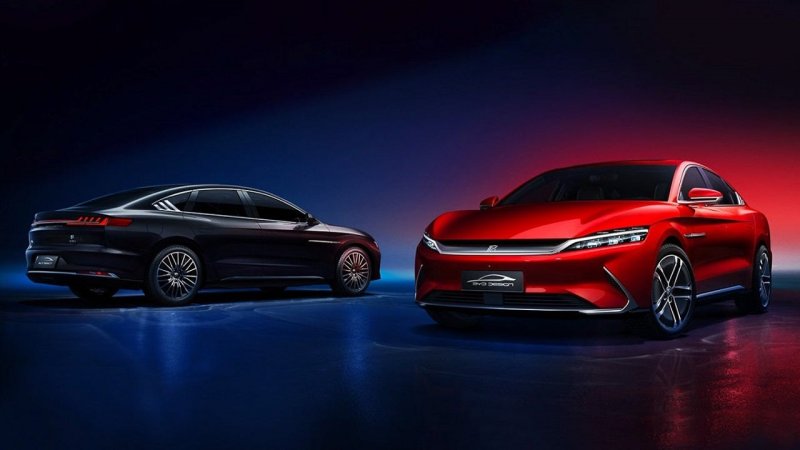
Chinese electric vehicle giant BYD is actively searching for an existing factory in Europe as part of an ambitious plan to expand production capacity and strengthen its position in one of the world's most competitive automotive markets.
The company is seeking a second European manufacturing facility that would complement its first plant in Hungary and help accelerate its long-term growth strategy across the continent, News.az reports.
What makes the search particularly interesting is that BYD is not looking to build a completely new factory from scratch. Instead, the company wants to acquire or take over an existing automotive facility, a strategy that could dramatically reduce costs, speed up production, and help meet increasingly strict European requirements for locally manufactured vehicles.
Although BYD has not officially identified a specific factory, Spain has emerged as one of the strongest candidates for the company's next major European investment. The move highlights the growing influence of Chinese automakers in Europe and signals an increasingly intense battle for dominance in the electric vehicle market.
What Is BYD Looking For?
BYD is seeking an operational or underutilized automotive factory in southern Europe that can be converted into an electric vehicle production facility.
According to company executives, the preferred option is not a newly constructed site but an existing factory that already possesses much of the necessary infrastructure. This approach would allow BYD to begin production much faster than building an entirely new plant.
The company believes that acquiring an existing facility would help it avoid lengthy construction timelines, regulatory delays, and rising development costs. Automotive factories already contain many essential components such as assembly lines, logistics networks, supplier relationships, and transportation links.
As competition intensifies in Europe's EV market, speed has become increasingly important. Every year saved on construction could translate into substantial market advantages.
Which Factory Is BYD Actually Targeting?
At this stage, BYD has not publicly revealed the identity of any specific factory.
Executives have confirmed that the company is exploring opportunities in southern Europe and that Spain is among the countries being seriously considered. However, no official announcement has been made regarding a particular facility.
Industry observers believe BYD is likely examining factories that have excess capacity, reduced production, or uncertain futures under their current owners.
Several European automakers have struggled with declining demand, rising costs, and the transition from combustion engines to electric vehicles. As a result, some factories are operating below capacity, creating potential acquisition opportunities for rapidly growing manufacturers like BYD.
The lack of an official target has fueled speculation across the automotive sector, with analysts closely monitoring facilities in Spain and other southern European countries.
Why Is Spain Emerging as a Leading Candidate?
Spain offers several advantages that make it attractive for electric vehicle manufacturing.
The country already possesses one of Europe's largest automotive industries, supported by skilled workers, established supplier networks, and extensive transportation infrastructure. Spain has decades of experience producing vehicles for major international brands and remains one of Europe's leading automobile exporters.
Labor costs are generally lower than in some northern European countries, while the country's geographic position provides convenient access to both European and international markets.
Spain has also become increasingly important in Europe's efforts to develop electric vehicle supply chains. Significant investments in battery manufacturing and renewable energy have strengthened its attractiveness for EV producers.
For BYD, these factors could create an ideal environment for expansion.
Why Doesn't BYD Just Build a New Factory?
Under normal circumstances, constructing a new factory might seem like the obvious choice.
However, BYD faces increasing pressure to establish local production quickly.
European policymakers are moving toward rules that favor vehicles with higher levels of local content. Future regulations may require manufacturers to source more components and conduct more production within Europe itself.
Building a new factory could take several years before reaching full production capacity. By contrast, acquiring an existing facility could significantly shorten the timeline.
Industry experts describe this strategy as pursuing a "brownfield" investment rather than a "greenfield" project. Brownfield investments involve repurposing existing industrial sites, while greenfield projects require entirely new construction.
For BYD, speed appears to be a critical factor driving the decision.
How Does This Fit Into BYD's European Strategy?
Europe has become one of BYD's most important international growth markets.
The company has experienced rapid sales growth across the continent as European consumers increasingly embrace electric vehicles. BYD now competes directly with established brands such as Volkswagen, Renault, BMW, Mercedes-Benz, and Tesla.
To sustain that growth, the company needs manufacturing capacity closer to customers.
Producing vehicles inside Europe offers several advantages. It reduces shipping costs, shortens delivery times, lowers exposure to trade barriers, and improves relationships with regulators.
Local manufacturing also helps address political concerns about reliance on imported vehicles from China.
The search for a second factory therefore represents a natural extension of BYD's broader European expansion strategy.
What Role Does the Hungary Plant Play?
BYD's first European passenger vehicle factory is located in Szeged, Hungary.
The facility is expected to begin production in the near future and will initially manufacture vehicles for the European market. The plant represents BYD's first major automobile manufacturing investment within the European Union.
However, company executives have indicated that Hungary alone will not be sufficient to meet long-term demand.
Europe is a vast and highly diverse market. Additional production facilities could help improve distribution efficiency and increase manufacturing capacity.
The Hungarian factory remains BYD's top priority, but management has already made clear that a second European production hub is the next major objective.
The search for another facility demonstrates confidence in the company's future growth prospects across Europe.
Why Is BYD Expanding So Aggressively?
BYD has become one of the fastest-growing automotive companies in the world.
The company is now among the world's largest electric vehicle manufacturers and has openly stated its ambition to become one of the dominant global automakers in the coming years.
International expansion is central to achieving that goal.
While China remains BYD's largest market, overseas sales have become increasingly important as domestic competition intensifies. Europe represents one of the most attractive opportunities because of strong demand for electric vehicles and supportive environmental policies.
By increasing local production, BYD hopes to capture a larger share of European sales while reducing dependence on exports from China.
The company's aggressive expansion reflects confidence in both its technology and its ability to compete with traditional automotive giants.
How Do EU Tariffs Influence BYD's Plans?
Tariffs are one of the most important factors driving BYD's manufacturing strategy.
The European Union has imposed additional tariffs on electric vehicles imported from China following investigations into state support and competitive practices.
These tariffs increase the cost of selling Chinese-made vehicles in Europe and reduce profit margins for manufacturers.
Producing vehicles within Europe provides a way to avoid many of these costs.
Local production allows companies to classify vehicles as European-made rather than imported products. This significantly improves competitiveness and helps manufacturers maintain attractive pricing.
For BYD, expanding European manufacturing is therefore not only a growth strategy but also a response to changing trade conditions.
Could BYD Take Over a Factory Owned by Another Automaker?
Many analysts believe this is a realistic possibility.
Several established automakers currently operate factories that are underutilized due to changing market conditions. The transition from gasoline and diesel vehicles to electric mobility has forced manufacturers to rethink production strategies.
Some facilities no longer operate at full capacity, while others face uncertain futures.
These circumstances create opportunities for companies like BYD that are looking for manufacturing space.
Although no specific acquisition has been confirmed, industry observers note that existing automotive plants could provide exactly the type of infrastructure BYD is seeking.
A takeover would allow the company to begin production more rapidly while preserving industrial jobs and utilizing existing assets.
What Would a Second European Factory Mean for the EV Market?
A second European factory would strengthen BYD's ability to compete directly with established manufacturers.
Increased production capacity could lead to greater availability of BYD vehicles across Europe and potentially lower prices through reduced transportation and tariff costs.
Consumers could benefit from more competition in the EV sector, while traditional automakers might face additional pressure to accelerate innovation and improve affordability.
The expansion could also contribute to Europe's broader transition toward electric mobility by increasing vehicle supply and encouraging further investment in charging infrastructure.
As Chinese manufacturers continue expanding internationally, competition within the European automotive industry is expected to intensify significantly.
Could Other Chinese Carmakers Follow the Same Strategy?
Many already are.
Several Chinese automakers are actively exploring manufacturing opportunities across Europe. Like BYD, they recognize that local production offers significant advantages in terms of cost, regulation, and market access.
Some companies are establishing joint ventures, while others are considering factory acquisitions or partnerships with existing manufacturers.
The trend reflects a broader shift in global automotive competition. Rather than relying solely on exports from China, manufacturers increasingly want production facilities located close to customers.
This strategy is expected to become even more common as trade barriers, localization requirements, and political pressures continue to evolve.
What Happens Next?
BYD has not announced a timeline for selecting its second European production facility.
The company's immediate priority remains launching production at its Hungarian plant. However, executives have made clear that work on identifying a second factory is already underway.
Industry analysts expect further announcements once negotiations with potential partners or factory owners progress.
Any eventual decision will likely depend on factors such as infrastructure quality, labor availability, government incentives, supplier networks, and regulatory conditions.
The search is being closely watched because it could shape the future of EV manufacturing in Europe.
The Bottom Line
BYD is actively searching for an existing factory in southern Europe to serve as its second European electric vehicle production hub. While the company has not revealed a specific target, Spain has emerged as one of the leading candidates due to its strong automotive industry, skilled workforce, and strategic location. Rather than building a new facility, BYD wants to acquire an existing plant that can be rapidly converted for EV production. This approach would help the company expand more quickly, avoid tariffs, comply with future European content rules, and strengthen its position in one of the world's most important electric vehicle markets.
As BYD continues its rapid global expansion, the choice of its next European factory could become a major milestone in the evolving competition between Chinese and European automakers.
By Faig Mahmudov


Similar news