What is behind the deadly drone strike on a funeral procession in Sudan?


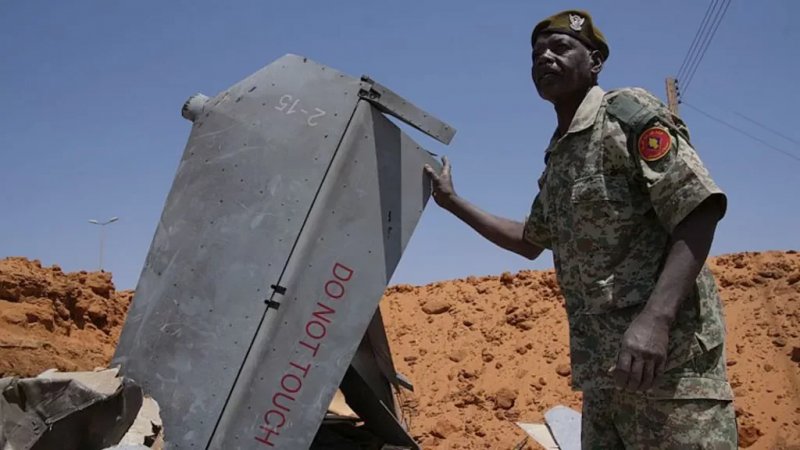
A deadly drone strike on a funeral procession in the Sudanese city of El-Obeid has once again highlighted the devastating toll of Sudan's civil war on ordinary civilians.
According to local rights groups, the attack occurred at a cemetery where mourners had gathered to bury victims of previous violence, News.az reports.
The strike killed several people and injured many others, turning what should have been a solemn moment of remembrance into another tragedy in a conflict that has already claimed tens of thousands of lives.
The attack was reportedly part of a wider series of drone strikes targeting different parts of the city over a period of several days. Residential neighborhoods, transportation routes, and areas near military facilities were also reportedly hit. Rights organizations described the attacks as part of a pattern of violence affecting civilians rather than isolated military operations.
The incident has renewed international concern about the growing use of drones in Sudan's conflict and the increasing vulnerability of civilians trapped between the country's warring factions.
Why Is the Attack Receiving So Much Attention?
The strike has attracted widespread attention because it targeted a funeral procession, one of the most sensitive civilian gatherings imaginable.
Funerals are generally regarded as protected civilian events under international humanitarian principles. An attack on mourners is often viewed as particularly shocking because those attending are not engaged in military activities and are already dealing with grief and loss.
The symbolism of a funeral becoming the site of another deadly attack has intensified concerns about civilian safety in Sudan. Many observers see the incident as evidence of how deeply the conflict has penetrated everyday life.
The attack also occurred against the backdrop of a worsening humanitarian crisis, making it another example of the severe hardships faced by Sudanese civilians.
Where Is El-Obeid and Why Is It Important?
El-Obeid is the capital of North Kordofan State and one of Sudan's most strategically important cities.
Located in central Sudan, the city serves as a major transportation and commercial hub linking different regions of the country. Roads passing through El-Obeid connect western Sudan with eastern and central areas, making it a critical logistical center.
Because of its location, control of El-Obeid carries both military and economic significance. The city sits near the broader Kordofan region, which contains valuable natural resources and serves as an important gateway between competing zones of control.
Military analysts often describe El-Obeid as one of the key prizes in the war because whoever controls the city gains access to important transportation networks and supply routes.
Its strategic importance has made it a frequent target of attacks throughout the conflict.
Who Is Being Blamed for the Strike?
Rights organizations and local monitoring groups have accused the paramilitary Rapid Support Forces (RSF) of carrying out the drone attacks.
According to these groups, the strikes formed part of a broader campaign targeting areas under the control of the Sudanese Armed Forces (SAF).
The RSF has not publicly accepted responsibility for the attack.
Like many incidents in Sudan's conflict, independently verifying responsibility remains difficult because access to combat zones is limited and journalists often face significant security challenges.
Nevertheless, rights groups say the attack fits a broader pattern of drone operations that have increasingly become part of the conflict.
What Is the RSF?
The Rapid Support Forces are one of the two main combatants in Sudan's civil war.
Originally formed from militia groups that operated during the conflict in Darfur, the RSF grew into one of Sudan's most powerful armed organizations. Over time, it developed significant military capabilities, financial resources, and political influence.
The group's commander, Mohamed Hamdan Dagalo, commonly known as Hemedti, became one of Sudan's most influential figures following the overthrow of longtime ruler Omar al-Bashir in 2019.
For several years, the RSF and the Sudanese army worked together as part of a transitional power-sharing arrangement.
However, tensions eventually escalated into open warfare in April 2023.
How Did Sudan's Civil War Begin?
The war began after a power struggle between Sudan's military leadership and the RSF.
Following the removal of President Omar al-Bashir, Sudan entered a difficult political transition. Military leaders and civilian groups attempted to negotiate a path toward democratic governance.
One of the most contentious issues involved the future status of the RSF and whether it would be integrated into the regular armed forces.
Disagreements over military reform, political influence, and control of state institutions gradually intensified.
In April 2023, those tensions erupted into large-scale fighting between the Sudanese Armed Forces and the RSF.
What many initially expected to be a short confrontation quickly evolved into a prolonged and devastating civil war.
Why Has Drone Warfare Become So Important?
Drones have emerged as one of the defining features of the conflict.
Both sides increasingly rely on unmanned aerial systems for surveillance, reconnaissance, and attack missions. Drones offer military advantages because they can strike targets from long distances without exposing pilots to danger.
The growing availability of drone technology has transformed modern warfare worldwide, and Sudan is no exception.
However, the increased use of drones also raises concerns about civilian casualties.
When strikes occur in urban areas, distinguishing between military and civilian targets becomes more difficult. The result is often increased risks for people living in conflict zones.
The attacks in El-Obeid demonstrate how drone warfare can bring violence directly into civilian spaces.
Why Is the Kordofan Region So Strategic?
Kordofan occupies a central position in Sudan's geography and economy.
The region contains important agricultural land, transportation routes, and energy resources. It also serves as a bridge connecting western Sudan with central and eastern parts of the country.
Control of Kordofan can significantly influence military operations because major supply routes pass through the area.
The region is also closely linked to Sudan's oil infrastructure. Although much of Sudan's oil production is concentrated elsewhere, transportation networks crossing Kordofan remain strategically important.
Military analysts frequently argue that success in Kordofan could shape the broader outcome of the war.
This explains why fighting in the region remains particularly intense.
How Bad Is Sudan's Humanitarian Crisis?
The humanitarian situation in Sudan is widely regarded as one of the worst in the world.
Millions of people have been displaced from their homes since the war began. Entire communities have been forced to flee repeated cycles of violence, often moving multiple times in search of safety.
Food insecurity has reached alarming levels across large parts of the country. Many families struggle to obtain basic necessities, while humanitarian organizations face significant challenges delivering aid.
Healthcare systems have also been severely damaged. Hospitals have been destroyed, medical supplies disrupted, and healthcare workers displaced.
For many Sudanese civilians, daily survival has become increasingly difficult as the conflict drags on.
Why Are Civilians Suffering So Much?
Several factors have contributed to the extraordinary suffering experienced by civilians.
Much of the fighting takes place in populated urban areas where military and civilian infrastructure exist side by side.
Attacks on roads, markets, hospitals, and residential neighborhoods have disrupted normal life across large parts of the country.
At the same time, humanitarian agencies face obstacles reaching communities in need. Security concerns, damaged infrastructure, and administrative restrictions often complicate relief efforts.
Economic collapse has further worsened living conditions. Inflation, unemployment, and shortages of essential goods have affected millions of households.
The cumulative impact has created one of the world's largest displacement and hunger crises.
Could the Fighting in El-Obeid Affect the Wider War?
Many analysts believe developments in El-Obeid could influence the broader conflict.
Because the city serves as a strategic transportation hub, control over the area affects military logistics and supply chains.
If either side gains a decisive advantage in the region, it could strengthen its position elsewhere in Sudan.
The battle for Kordofan is therefore about more than a single city. It reflects a wider struggle for territorial control, economic resources, and strategic influence.
For both the army and the RSF, success in the region could shape future military operations.
What Has Been the International Response?
International organizations have repeatedly expressed concern about attacks affecting civilians.
The United Nations, humanitarian agencies, and human rights organizations have called for greater protection of civilian populations and respect for international humanitarian principles.
Diplomatic efforts to end the conflict have so far produced limited results.
Several regional and international actors have attempted to mediate negotiations between the warring sides, but lasting ceasefire agreements have remained elusive.
As the war enters its fourth year, frustration is growing among humanitarian groups that continue to warn about worsening conditions on the ground.
What Happens Next?
The future remains highly uncertain.
Military operations continue across multiple regions of Sudan, and neither side has achieved a decisive victory. The conflict has become increasingly complex, involving shifting front lines, economic pressures, and growing humanitarian needs.
For civilians in places such as El-Obeid, immediate concerns focus on safety, access to food, healthcare, and shelter.
Meanwhile, international actors continue searching for ways to revive peace negotiations and expand humanitarian assistance.
Without a political settlement, many observers fear that violence, displacement, and humanitarian suffering will continue.
The Bottom Line
The deadly drone strike on a funeral procession in El-Obeid underscores the devastating human cost of Sudan's civil war. What should have been a moment of mourning became another tragedy in a conflict that has already displaced millions and created one of the world's worst humanitarian crises. The attack highlights the growing role of drone warfare, the strategic importance of the Kordofan region, and the ongoing dangers faced by civilians caught between the Sudanese Armed Forces and the Rapid Support Forces.
As fighting continues and peace efforts struggle to gain momentum, incidents like the El-Obeid funeral strike serve as a stark reminder that ordinary Sudanese citizens remain the primary victims of a war with no clear end in sight.
By Faig Mahmudov


Similar news