Why is Elon Musk becoming Donald Trump's efficiency tsar?


Getty Images
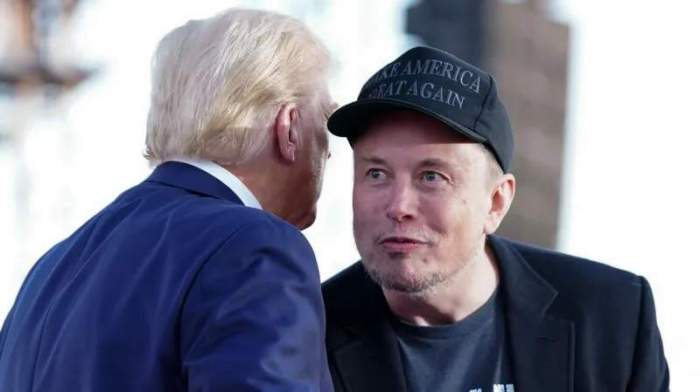
Billionaire Elon Musk has been tasked with leading incoming President Donald Trump's new Department of Government Efficiency (Doge), News.Az reports citing BBC. .
In a statement on social media, the US president-elect said Musk - along with former Republican presidential candidate Vivek Ramaswamy - would "dismantle government bureaucracy, slash excess regulations, cut wasteful expenditures, and restructure federal agencies".
It is a role that the tech entrepreneur has arguably prepared for through his business leadership, and one he has spent months arguing for.
But it is also one that is expected to garner him influence over government policy - and the regulatory environment his enterprises exist in.
Musk told a Trump rally in October that he believed the US government's budget could be cut by "at least" $2tn from around $6.5tn. He has also frequently suggested the number of government employees could be significantly reduced.
Ramaswamy, meanwhile, has put forward plans to scrap a number of federal departments including the Department of Education, the Nuclear Regulatory Commission, the Internal Revenue Service and the FBI.
From Twitter to pared-down X
The way Musk has run his own firms may hint at what Americans can expect he will do at Doge.
In October 2022, Musk took over social media platform Twitter - which he rebranded as X - in a $44bn (£38.1bn) deal, so he could remove its policies of moderating content and banning users who had deemed to have violated its rules on hate speech and disinformation.
Among the users he reinstated was Trump, who had been banned following the Capitol riot in January 2021 after continuing to claim the 2020 election had been rigged against him.
Musk's takeover saw radical changes to the company.
He reduced X's workforce from around 8,000 to 1,500. In April 2023, he told the BBC that his reasoning for doing so was that "if the whole ship sinks, then nobody's got a job".
"His idea of efficiency was to let a lot of people go," says Alex Waddan, a professor of US politics at the University of Leicester.
Facing an exodus of advertisers over his relaxation of the platform's speech policies, the entrepreneur also monetised elements of the site to raise revenue.
He turned blue ticks - which previously denoted that a high-profile account was bona fide - into a subscription model, and tied advertising payments to "verified" users to the number of interactions they receive.
But these changes had some unintended consequences.
Following outcry, X gave gold or silver ticks to brands and official accounts to avoid them being confused with fakes - effectively meaning blue ticks only signify that an account is paid-for.
Incentivising users with a share of advertising revenues also gave an avenue for so-called bot farms to make money by posting auto-generated content to gain more interactions. Musk has said his team has repeatedly purged bot accounts.
Critics argue his changes have given prominence to hate-speech and misinformation - though he has argued the site is politically neutral.
"As a serial entrepreneur, Musk has been relentless in trying to improve institutional efficiency at his own enterprises," says Thomas Gift, a political science professor and director of the Centre on US Politics at University College London.
He adds that though Musk's primary role will be "slashing through the thicket of red tape that is the US federal government", his position will also give him influence in the new administration.
"While his role in the Department of Government Efficiency will be a more informal one, there’s no doubt that he’s got Trump ear - at least for the moment."
In a statement on social media, the US president-elect said Musk - along with former Republican presidential candidate Vivek Ramaswamy - would "dismantle government bureaucracy, slash excess regulations, cut wasteful expenditures, and restructure federal agencies".
It is a role that the tech entrepreneur has arguably prepared for through his business leadership, and one he has spent months arguing for.
But it is also one that is expected to garner him influence over government policy - and the regulatory environment his enterprises exist in.
Musk told a Trump rally in October that he believed the US government's budget could be cut by "at least" $2tn from around $6.5tn. He has also frequently suggested the number of government employees could be significantly reduced.
Ramaswamy, meanwhile, has put forward plans to scrap a number of federal departments including the Department of Education, the Nuclear Regulatory Commission, the Internal Revenue Service and the FBI.
From Twitter to pared-down X
The way Musk has run his own firms may hint at what Americans can expect he will do at Doge.
In October 2022, Musk took over social media platform Twitter - which he rebranded as X - in a $44bn (£38.1bn) deal, so he could remove its policies of moderating content and banning users who had deemed to have violated its rules on hate speech and disinformation.
Among the users he reinstated was Trump, who had been banned following the Capitol riot in January 2021 after continuing to claim the 2020 election had been rigged against him.
Musk's takeover saw radical changes to the company.
He reduced X's workforce from around 8,000 to 1,500. In April 2023, he told the BBC that his reasoning for doing so was that "if the whole ship sinks, then nobody's got a job".
"His idea of efficiency was to let a lot of people go," says Alex Waddan, a professor of US politics at the University of Leicester.
Facing an exodus of advertisers over his relaxation of the platform's speech policies, the entrepreneur also monetised elements of the site to raise revenue.
He turned blue ticks - which previously denoted that a high-profile account was bona fide - into a subscription model, and tied advertising payments to "verified" users to the number of interactions they receive.
But these changes had some unintended consequences.
Following outcry, X gave gold or silver ticks to brands and official accounts to avoid them being confused with fakes - effectively meaning blue ticks only signify that an account is paid-for.
Incentivising users with a share of advertising revenues also gave an avenue for so-called bot farms to make money by posting auto-generated content to gain more interactions. Musk has said his team has repeatedly purged bot accounts.
Critics argue his changes have given prominence to hate-speech and misinformation - though he has argued the site is politically neutral.
"As a serial entrepreneur, Musk has been relentless in trying to improve institutional efficiency at his own enterprises," says Thomas Gift, a political science professor and director of the Centre on US Politics at University College London.
He adds that though Musk's primary role will be "slashing through the thicket of red tape that is the US federal government", his position will also give him influence in the new administration.
"While his role in the Department of Government Efficiency will be a more informal one, there’s no doubt that he’s got Trump ear - at least for the moment."


Similar news