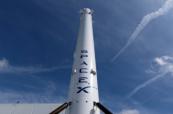
Why is SpaceX planning new “spaceports” around the world?


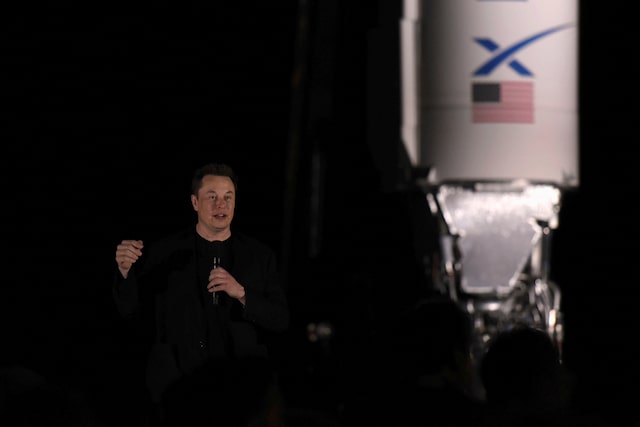
SpaceX is exploring potential locations in the United States and overseas to build new “spaceports” as the company prepares for a future in which its massive Starship rocket could launch thousands of times each year.
CEO Elon Musk said the company expects Starship operations to expand dramatically in the coming years, requiring many more launch sites than currently exist today.
RECOMMENDED STORIES
The plan reflects SpaceX’s broader ambition to transform space travel from a rare and expensive activity into a routine transportation system capable of operating at airline like frequency.
According to the company, achieving that goal would require rapid rocket reusability, fast turnaround times, and a global network of launch infrastructure.
What is Starship and why is it so important to SpaceX?
Starship is the largest and most powerful rocket system ever developed by SpaceX.
The fully reusable spacecraft and booster system is designed to carry:
-
More than 100 metric tons of cargo
-
Large numbers of satellites
-
Scientific equipment
-
Supplies for Moon and Mars missions
-
Potentially large groups of passengers in the future
Starship consists of two major components:
-
The Starship spacecraft itself
-
The Super Heavy booster rocket
Unlike traditional rockets that discard major sections after launch, Starship is designed to return, land, and fly again with minimal refurbishment.
SpaceX believes this reusability is the key to dramatically lowering launch costs and making frequent space travel economically viable.
Why does SpaceX want thousands of launches every year?
The company says large scale launch operations are essential for its long term goals.
These include:
-
Mars colonization
-
Massive satellite deployment
-
Space based internet expansion
-
Lunar missions
-
Commercial cargo transportation
-
Rapid global travel systems
Elon Musk has repeatedly argued that humanity must become a multiplanetary civilization to ensure long term survival.
To support that vision, SpaceX believes launch frequency must increase far beyond current industry levels.
Today, even the busiest space programs conduct relatively limited numbers of launches annually compared to aviation.
Musk’s vision would transform rockets into routinely operating transportation vehicles similar to airplanes.
What does Musk mean when he compares spaceports to airports?
Elon Musk previously suggested that future spaceports could operate similarly to modern airports.
Instead of rare launches separated by weeks or months, facilities could eventually handle:
-
Multiple launches daily
-
Rapid rocket turnaround
-
Frequent passenger and cargo movement
-
Continuous maintenance operations
-
High volume logistics systems
In this vision, rockets would land, refuel, undergo inspections, and relaunch within short periods.
Such operations would represent a major shift from the traditional space industry model, where launches are often expensive, highly specialized events involving long preparation times.
Why does SpaceX need more launch locations?
Launching thousands of rockets annually from only one or two facilities would likely be impossible due to:
-
Airspace restrictions
-
Environmental regulations
-
Weather conditions
-
Safety concerns
-
Infrastructure limitations
-
Growing commercial demand
SpaceX currently conducts Starship test flights primarily from its Starbase facility in Texas while also expanding infrastructure in Florida.
However, the company says future launch volumes would require many additional sites.
New locations could help:
-
Reduce scheduling bottlenecks
-
Increase operational flexibility
-
Support global missions
-
Improve geographic coverage
-
Reduce weather related delays
International spaceports may also help support future intercontinental transportation concepts.
What is Starbase?
Starbase is SpaceX’s main Starship development and launch site located in Texas near the Gulf Coast.
The facility became the center of the company’s next generation rocket program and includes:
-
Launch pads
-
Rocket production facilities
-
Testing infrastructure
-
Engineering operations
-
Recovery systems
Starbase has hosted multiple Starship test launches, some successful and others ending in explosions or technical failures during development phases.
Despite setbacks, SpaceX continues rapidly iterating and testing the system.
The company’s philosophy emphasizes repeated real world testing rather than slower traditional aerospace development methods.
Why is reusability such a major breakthrough?
Traditional rockets are extremely expensive partly because most components are discarded after a single flight.
SpaceX aims to change that model through full reusability.
The company believes reusable rockets can:
-
Reduce launch costs dramatically
-
Increase launch frequency
-
Improve economic efficiency
-
Expand access to space
-
Enable large scale missions
SpaceX already demonstrated partial reusability with its Falcon 9 rockets, whose boosters routinely land and fly again.
Starship aims to take the concept further by making both the booster and spacecraft reusable.
If successful, it could fundamentally change the economics of the global space industry.
How does Starship connect to Mars colonization?
Mars colonization remains one of Elon Musk’s most ambitious long term goals.
Musk argues that humanity should establish self sustaining settlements on other planets to reduce existential risks facing civilization on Earth.
Starship is central to that vision because it is designed to transport:
-
Large cargo volumes
-
Construction equipment
-
Scientific tools
-
Human crews
-
Life support systems
The rocket’s massive payload capacity and reusable design are intended to make large scale Mars missions financially possible.
Musk has repeatedly said he hopes future fleets of Starships could eventually carry thousands or even millions of people to Mars over time.
Could Starship also be used for Earth travel?
SpaceX has discussed using Starship for rapid point to point transportation on Earth.
In theory, the spacecraft could travel between distant cities in under an hour by briefly entering space before landing elsewhere on the planet.
Possible routes often discussed include:
-
New York to Tokyo
-
London to Sydney
-
Los Angeles to Singapore
Although the concept remains experimental and faces enormous regulatory and safety challenges, Musk has promoted the idea as a potential future transportation revolution.
Spaceports in different countries could theoretically support such operations if the technology becomes commercially practical.
Why is global launch demand increasing?
Commercial space activity has expanded rapidly in recent years.
Growth areas include:
-
Satellite internet systems
-
Earth observation satellites
-
Government defence programs
-
Scientific missions
-
Commercial space stations
-
Lunar exploration
-
Private astronaut missions
As more governments and companies enter the space sector, pressure on existing launch facilities has increased significantly.
SpaceX already dominates much of the commercial launch market through its Falcon rocket family, and Starship could expand that dominance further if it succeeds technically.
What is happening with SpaceX’s reported IPO plans?
Reports suggested SpaceX is targeting a major public market listing that could become one of the largest initial public offerings in history.
According to reports, the company could seek to raise as much as $75 billion at a valuation approaching $1.75 trillion.
If accurate, such figures would make SpaceX one of the world’s most valuable companies.
The enormous valuation reflects investor confidence in several areas:
-
Satellite internet through Starlink
-
Rocket launch services
-
Defence contracts
-
Lunar missions
-
Future space transportation
-
Long term Mars ambitions
However, SpaceX itself has not publicly confirmed all details surrounding the reported offering plans.
What will happen during Starship’s next test flight?
SpaceX said the twelfth Starship test flight could occur as soon as May 19.
The mission is expected to introduce next generation versions of the Starship spacecraft and Super Heavy booster.
Each test flight allows SpaceX engineers to gather massive amounts of data involving:
-
Engine performance
-
Heat shield durability
-
Flight stability
-
Reentry systems
-
Landing capabilities
-
Stage separation
The company’s development strategy relies heavily on continuous testing and rapid engineering modifications between launches.
Even failed launches often provide valuable information for future improvements.
What challenges does SpaceX still face?
Despite rapid progress, Starship still faces major technical, regulatory, and environmental challenges.
Key obstacles include:
-
Heat shield reliability
-
Safe reentry systems
-
Engine durability
-
Rapid reuse capability
-
Environmental approval processes
-
Launch safety regulations
-
Noise and ecological concerns
Large scale launch operations could also face opposition from communities near future spaceport locations.
Environmental groups have raised concerns about:
-
Wildlife impacts
-
Coastal ecosystem disruption
-
Noise pollution
-
Air pollution
-
Rocket debris risks
Regulators will likely play a major role in determining how quickly SpaceX can expand operations.
How could Starship change the global space industry?
If Starship becomes fully operational and reusable at scale, it could dramatically reshape the economics and accessibility of spaceflight.
Potential impacts include:
-
Lower launch costs
-
Increased satellite deployment
-
Faster scientific missions
-
Expanded commercial space industries
-
More frequent human space travel
-
Accelerated lunar and Mars exploration
Some analysts believe Starship could become as transformative for space transportation as commercial aviation was for global travel in the twentieth century.
Others caution that major technological hurdles remain before such visions become reality.
Still, SpaceX’s expansion plans suggest the company is preparing for a future in which space launches become vastly more common than they are today.
For Elon Musk, the construction of global spaceports represents another step toward turning spaceflight from a specialized industry into a routine part of human transportation and economic activity.
By Faig Mahmudov


Similar news