How is artificial intelligence transforming sports in China?


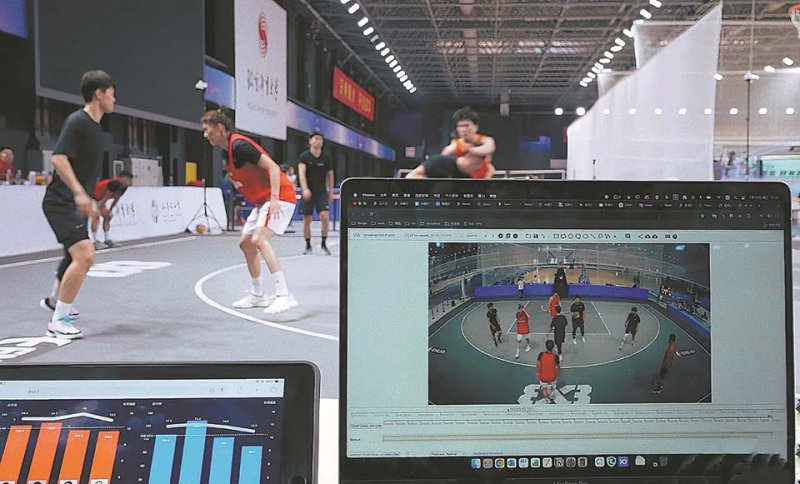
Artificial intelligence and digital technologies are rapidly changing the sports industry in China, influencing everything from elite athlete training and fan engagement to sportswear production and public fitness systems.
Chinese sports authorities, universities, technology companies, and sports brands are increasingly integrating AI driven systems into coaching, performance analysis, manufacturing, retail, and health management.
RECOMMENDED STORIES
The transformation reflects China’s broader national push toward digital modernization and technological leadership across multiple sectors.
Officials say the goal is to create a highly intelligent and interconnected sports ecosystem by 2030 that combines data, automation, and smart infrastructure to improve athletic performance and public fitness.
What did Chinese officials say about the future of digital sports?
According to Zhu Han, deputy director of sports information under the General Administration of Sport of China, the country aims to build a digital sports community that is intelligent, efficient, precise, secure, and widely accessible by 2030.
This vision includes:
-
AI powered training systems
-
Smart fitness infrastructure
-
Data driven coaching
-
Connected public fitness platforms
-
Digital health monitoring
-
Intelligent sports manufacturing
Chinese authorities believe advanced technology can help improve elite sports competitiveness while also encouraging healthier lifestyles among ordinary citizens.
The strategy also aligns with China’s wider ambitions in artificial intelligence, big data, and digital governance.
Why is AI becoming so important in global sports?
Artificial intelligence is increasingly viewed as one of the biggest technological revolutions in modern sports.
In April 2024, the International Olympic Committee launched the Olympic AI Agenda to encourage the global sports community to adopt AI technologies responsibly.
AI can process enormous amounts of data far faster than humans, helping coaches, athletes, teams, and organizations identify patterns that were previously difficult or impossible to detect.
Applications now include:
-
Tactical analysis
-
Injury prevention
-
Motion tracking
-
Fitness monitoring
-
Equipment optimization
-
Fan engagement
-
Broadcasting automation
-
Talent identification
The growing use of AI reflects a shift from intuition based decision making toward highly data driven sports systems.
How are Chinese swimmers using AI technology?
One of the most advanced examples comes from Beijing Sport University, where researchers developed an AI powered swimming analysis system.
The technology combines:
-
High speed underwater cameras
-
Above water motion tracking
-
AI based movement analysis
-
Automatic data reporting
-
Technical evaluation software
The system measures critical performance details such as:
-
Lap speed
-
Segment timing
-
Starting posture
-
Stroke efficiency
-
Body positioning
-
Technical consistency
Artificial intelligence algorithms analyze every movement and help coaches identify small adjustments that could improve performance.
The system can also automatically generate reports and video reviews, allowing athletes and trainers to study technical details with far greater precision than traditional observation methods.
Why are underwater cameras important in swimming analysis?
Swimming technique is extremely difficult to evaluate fully with the human eye because many important movements happen beneath the water’s surface.
Underwater cameras allow coaches and AI systems to monitor:
-
Arm angles
-
Kick timing
-
Hydrodynamics
-
Body rotation
-
Water resistance
-
Entry and exit efficiency
When combined with AI analysis, these systems can reconstruct movements frame by frame and identify inefficiencies that might otherwise go unnoticed.
This level of precision may help elite athletes improve performance margins measured in fractions of seconds.
How is AI being used in track and field events?
Researchers at Beijing Sport University say similar AI systems are also being used in long jump training.
The technology reconstructs every stage of an athlete’s movement, including:
-
Running speed
-
Takeoff angle
-
Body posture
-
Jump trajectory
-
Landing mechanics
By analyzing these details, coaches can make more accurate technical corrections.
Sports scientists believe this type of biomechanical analysis could become standard across many Olympic disciplines in the future.
How are Chinese sportswear companies using AI?
Major Chinese sportswear brands are integrating AI across product development, manufacturing, retail, and customer services.
Li-Ning has been using artificial intelligence to study elite athletes and improve sports products.
The company reportedly traveled to Kenya’s famous running hub of Iten to analyze the movement patterns of elite marathon runners using portable digital tracking systems.
Researchers gathered 3D running posture data to help optimize running shoe design for professional athletes and recreational runners alike.
The company now uses AI in areas including:
-
Design assistance
-
Virtual product sampling
-
Material recommendations
-
Trend forecasting
-
Production scheduling
-
Inventory management
-
Customer service
-
Virtual try on systems
Executives say these technologies are helping accelerate innovation while improving efficiency.
What is Anta’s AI365 strategy?
Anta Sports launched an initiative called “AI365” aimed at embedding artificial intelligence throughout its business operations.
The strategy focuses on:
-
Reducing operational costs
-
Increasing efficiency
-
Improving product development
-
Enhancing customer experiences
-
Supporting business growth
According to company executives, AI assisted systems significantly increased the number of creative proposals generated by designers.
The company is exploring AI applications across manufacturing, logistics, retail, and product customization.
This reflects a broader industry trend in which sportswear companies increasingly combine fashion, sports science, and advanced computing technologies.
How is AI reshaping the sports industry overall?
Experts say digital technology is now deeply integrated into nearly every part of the sports industry chain.
Artificial intelligence is influencing:
-
Athlete performance
-
Sports medicine
-
Equipment engineering
-
Broadcasting
-
Ticketing
-
Fan interaction
-
Retail systems
-
Marketing strategies
-
Manufacturing processes
Industry analysts believe sports are becoming one of the fastest growing areas for AI commercialization because performance data is highly measurable and competitive advantages can be extremely valuable.
The sports technology sector is expected to expand significantly worldwide over the coming decade.
How are wearable devices changing fitness?
Digital technology is also transforming everyday fitness habits for ordinary people.
Modern wearable devices can now track:
-
Heart rate
-
Oxygen intake
-
Calories burned
-
Sleep quality
-
Fatigue levels
-
Training intensity
-
Recovery status
Fitness applications convert this information into detailed health and performance data.
According to Chinese experts, these systems help people exercise more safely and scientifically by providing real time guidance and personalized recommendations.
AI powered fitness devices can instantly analyze user performance and generate customized health feedback.
What is China’s “fitness code” concept?
Chinese authorities are developing a national fitness information platform designed to connect public fitness resources into one integrated network.
The system aims to combine:
-
Gym access
-
Exercise guidance
-
Health monitoring
-
Fitness tracking
-
Public sports services
Officials also mentioned plans to introduce a “fitness code” and explore a point based system referred to as “sports banking.”
Although details remain limited, the concept appears designed to encourage regular physical activity through digital incentives and data integration.
The initiative is expected to expand during China’s 15th Five Year Plan period from 2026 to 2030.
Why are humanoid robots appearing in sports discussions?
The article also references humanoid robots completing half marathons, highlighting how robotics and AI are increasingly intersecting with sports science.
Humanoid robots are being developed to study:
-
Human movement
-
Biomechanics
-
Balance systems
-
Endurance mechanics
-
Artificial mobility
Researchers believe advances in sports science and robotics can benefit one another because both fields rely heavily on understanding movement efficiency and body mechanics.
Although robots are not replacing athletes, they are becoming valuable tools for research, testing, and engineering.
Could AI eventually replace human coaches?
Most experts believe AI will support rather than replace coaches.
Artificial intelligence excels at:
-
Data analysis
-
Pattern recognition
-
Technical monitoring
-
Performance prediction
However, human coaches still provide:
-
Motivation
-
Leadership
-
Emotional understanding
-
Tactical flexibility
-
Psychological support
-
Team management
Many specialists view AI as an “invisible coach” that assists trainers by providing deeper insights and more accurate information.
The relationship between technology and coaching is increasingly collaborative rather than competitive.
What risks and concerns exist around AI in sports?
Despite the excitement surrounding sports technology, several concerns remain.
Potential issues include:
-
Data privacy
-
Athlete surveillance
-
Over reliance on algorithms
-
Unequal access to technology
-
High implementation costs
-
Ethical questions around performance enhancement
Some critics also worry that excessive dependence on data could reduce creativity and instinct in sports.
Others warn that wealthier teams and countries may gain disproportionate advantages if advanced AI systems become too expensive for smaller organizations.
Balancing innovation with fairness will likely become an important challenge in the future.
Why is China investing so heavily in sports technology?
China sees sports technology as part of a broader national strategy involving:
-
Artificial intelligence leadership
-
Digital transformation
-
Public health improvement
-
Economic modernization
-
International sports competitiveness
The government has invested heavily in technology sectors ranging from robotics and AI to smart infrastructure and data systems.
Sports provide a highly visible area where technological innovation can demonstrate practical and commercial value.
Chinese companies and institutions also hope to become global leaders in sports science, wearable technology, digital fitness, and AI powered athletic performance systems.
What could the future of AI in sports look like?
Experts believe artificial intelligence will continue expanding rapidly across global sports over the next decade.
Future developments may include:
-
Fully personalized training systems
-
Real time injury prediction
-
AI generated tactics
-
Automated officiating systems
-
Hyper realistic virtual coaching
-
Smart stadium infrastructure
-
Advanced biometric monitoring
-
AI enhanced broadcasting experiences
For athletes, AI could help optimize nearly every aspect of performance and recovery.
For fans, sports may become more interactive and data rich than ever before.
And for governments and businesses, sports technology is increasingly viewed not only as entertainment or competition but also as a major technological and economic frontier.
By Faig Mahmudov


Similar news