Will the U.S. strike Iran? what Washington’s early planning really signals


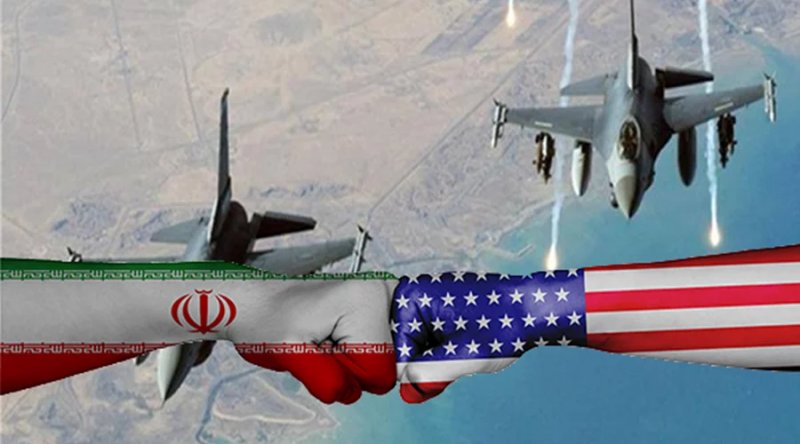
Speculation about a possible U.S. military strike on Iran has intensified after new reporting suggested that the issue is being discussed inside the Trump administration, albeit at a preliminary level. U.S. officials have held early-stage discussions on the possibility of striking Iran “if necessary.” At the same time, the same sources stress that these talks are routine planning exercises, not an indication of an imminent decision to use force.
This dual message – contingency planning alongside explicit denials of immediate action – captures the essence of the current moment. The risk of escalation is higher, but it remains conditional, shaped by political signaling, internal Iranian dynamics, and unresolved strategic disputes rather than by a fixed military timetable.
What the reported discussions really mean
The Wall Street Journal’s reporting is careful in its framing. The discussions within the administration are described as preliminary and standard, part of the normal planning process in a volatile security environment. Crucially, sources cited in the report emphasize three restraining facts: Iran is not facing an imminent attack, there is no agreed U.S. course of action, and there has been no deployment of troops or military equipment in preparation for a strike.
From an analytical standpoint, this suggests that Washington is not moving toward execution, but toward preparedness. Major powers routinely review military options during periods of heightened tension, particularly when internal instability, regional security concerns, and political messaging intersect. The existence of such discussions, therefore, signals caution as much as pressure.
However, the disclosure itself is significant. Allowing reports of contingency planning to circulate can serve as a form of strategic signaling. It reminds Tehran that military options remain on the table without committing Washington to a specific path. In this sense, the leak or confirmation of discussions may be part of deterrence rather than a prelude to action.
The role of political messaging and rhetoric
Political rhetoric has played a major role in amplifying perceptions of risk. A recent statement posted on Truth Social by the White House chief declared: “Iran is looking at FREEDOM, perhaps like never before. The USA stands ready to help!!!”
Such language is striking for its emphasis on internal Iranian dynamics rather than external threats alone. It frames the U.S. position not only in security terms but also in ideological and political ones, linking Washington’s stance to the protests and unrest inside Iran.
From an analytical perspective, this type of rhetoric serves multiple audiences. Domestically, it reinforces an image of strength and moral clarity. Internationally, it signals support for Iranian protesters and applies psychological pressure on Tehran’s leadership. For Iran, however, such statements can be interpreted as interference, reinforcing long-standing narratives that domestic unrest is encouraged or exploited by external powers.
This dynamic increases tension without necessarily increasing the likelihood of immediate military action. Words can raise stakes, harden positions, and reduce diplomatic flexibility, even when no operational steps follow.
Iran’s internal unrest as a strategic variable
The backdrop to all current discussions is the wave of protests and social pressure inside Iran. Internal instability alters the strategic calculations of both sides.
For Washington, unrest creates uncertainty but also opportunity. It weakens Iran’s regional confidence and may increase leverage without the use of force. At the same time, it raises the risk that any U.S. military action could be framed by Tehran as an existential threat, potentially unifying domestic opinion behind the leadership.
For Iran’s authorities, internal pressure tends to produce a more securitized worldview. Leadership may become more sensitive to external signals and more inclined to interpret planning discussions or rhetorical threats as preparation for regime-targeting actions, even if Washington does not intend them that way.
This interaction makes miscalculation more likely, even in the absence of concrete military preparations.
Why a strike remains unlikely in the near term
Despite elevated rhetoric and reported planning discussions, several factors argue strongly against an imminent U.S. strike.
First, there is no operational movement. According to the same reporting, no forces or equipment have been deployed in preparation for an attack. In modern military operations, such deployments are difficult to conceal and usually precede action by weeks, if not months.
Second, there is no unified policy decision. Sources indicate that the U.S. course of action toward Iran has not been agreed upon. This implies ongoing debate within the administration, where diplomatic, economic, and military tools are still being weighed.
Third, the costs of escalation remain high. Any strike on Iran risks retaliation across the region, including against U.S. forces, allies, and energy infrastructure. At a time of global economic sensitivity, particularly in energy markets, Washington has strong incentives to avoid triggering a broader conflict unless absolutely necessary.
Fourth, alternative tools remain available. Sanctions, political pressure, cyber operations, and diplomatic signaling allow the U.S. to exert pressure without crossing the threshold into open military conflict.
What could change the calculus
While a strike is not imminent, it cannot be ruled out under all circumstances. Certain developments would significantly alter the risk assessment.
A direct attack on U.S. personnel or assets, clearly attributed to Iran, would sharply increase the likelihood of a limited retaliatory strike. Similarly, a dramatic shift in assessments of Iran’s nuclear activities could push Washington toward preventive action, though this would likely require strong intelligence consensus and political justification.
Another risk factor is escalation driven by misinterpretation. In a climate of unrest and sharp rhetoric, even defensive moves or routine planning can be read as offensive preparation, prompting preemptive or disproportionate responses.
Conclusion
The current moment is defined less by imminent military action and more by strategic signaling under pressure. Reports that the Trump administration has discussed striking Iran “if necessary” reflect standard contingency planning rather than a decision to go to war. At the same time, strong political statements about freedom and U.S. readiness to help underscore a tougher rhetorical posture that raises tensions.
In analytical terms, the situation is best understood as a high-risk equilibrium. Washington is signaling resolve and keeping options open, while Tehran is managing internal unrest and external pressure simultaneously. A U.S. strike on Iran remains possible, but it is conditional, not inevitable. The decisive factor will not be rhetoric or planning discussions alone, but concrete trigger events that force policymakers to move from preparedness to action.


Similar news