After returning from Baku, Putin orders scientists to save the Caspian Sea


By Tural Heybatov
The controversy over the Caspian Sea's shrinking is heating up. Scientists from coastal nations are crunching the numbers, and most of the forecasts aren’t promising. But it’s clear that science alone can’t solve this issue. It’s not just about being powerless against natural laws—dealing with problems of this scale requires government action and the personal commitment of leaders. While bringing the Caspian back to its former level might be impossible, coastal countries can work together and use scientific insights to slow the process and lessen its environmental impact.The current decline in the Caspian Sea isn’t just due to natural cycles; it’s also a result of reckless human activity. While we can’t control nature, humans certainly have the ability to negatively influence these processes. Experts say that along with intensive oil and gas exploration, Caspian countries face several geo-environmental threats: fluctuations in sea levels, geological risks from seabed deformation, and pollution-related issues.
A significant development in the region recently was Russian President Vladimir Putin’s directive to conduct scientific research to prevent further decline of the Caspian Sea. This topic was discussed during his talks with Azerbaijani President Ilham Aliyev in Baku. Russian media reports that Putin has called for a thorough scientific analysis of the Volga region and the Caspian Sea situation. During a meeting with Astrakhan Region Governor Igor Babushkin, Putin gave specific orders to address the issue.
Of course, Russia was aware of the Caspian's shrinking issue before the meeting in Baku. However, it was Aliyev who made Putin take the problem more seriously.
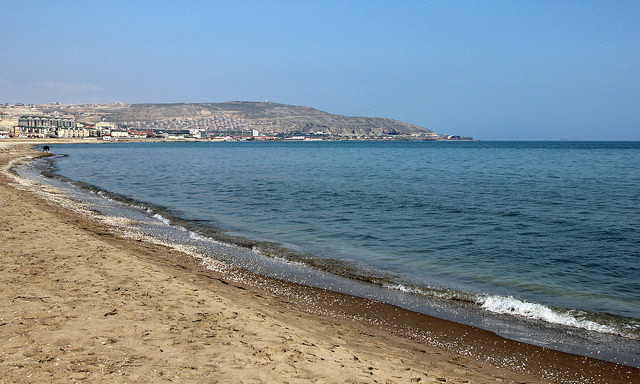
“I showed Vladimir from the window of our meeting room the rocks that were underwater just two years ago and are now a meter above the surface. This phenomenon is visible along the entire Absheron Peninsula coast—and not just there, but along all of Azerbaijan's coastline. We agreed to analyze the situation together and plan actions both bilaterally and with all five Caspian countries to prevent a potential environmental disaster. We can already see this ecological disaster unfolding with the naked eye,” Ilham Aliyev said in a press statement after the meeting with Putin.
It’s likely that they also discussed some specific details of the problem. While we won’t blame Russia entirely for the current environmental crisis, it’s known that almost 90% of the water in the Caspian comes from the Volga River. Experts suggest that the Caspian’s level hasn’t returned to its previous state after each drop, largely due to nine reservoirs built on the Volga during Soviet times. These reservoirs, including some of the world’s largest like the Kuibyshev, Saratov, and Volgograd reservoirs, take water from the river for irrigation, and in recent decades, this has noticeably impacted the Caspian’s level.
Russian scientists are raising alarms, noting that over the past 20 years, the water surface area has shrunk by more than 23,000 square kilometers. The Water Problems Institute of the Russian Academy of Sciences warns that if things continue as they are, the Northern Caspian could disappear. Kazakhstan’s Ministry of Ecology reports that half of these losses are in Kazakhstan’s portion of the sea. Environmentalists believe the shrinking is tied to the poor state of the two main rivers feeding the sea—the Ural and the Volga. Since the Soviet Union collapsed, numerous dams have been built on these rivers, and water is diverted for agricultural needs. Cities along the rivers also draw from the Ural and Volga.
Earlier, a comprehensive study of the Caspian Sea level was conducted by a team of German scientists from the University of Bremen, led by Matthias Prange.
Clearly, there’s no shortage of scientific approaches. Still, major solutions are expected from Russian scientists, especially in light of Putin's recent directives. Time is of the essence, and the Caspian is running out of it too.
According to Sergei Shipulin, Deputy Head of the Volga-Caspian Branch of the Russian State Scientific Center for the All-Russian Research Institute of Fisheries and Oceanography, the Caspian Sea level could drop another meter in the next 10 years. Shipulin believes the sea's decline is due to changes in water balance, river flow alterations, and shifts in precipitation and evaporation rates over the sea and its river basins. He suggests that science has limited power to influence these changes. Instead, efforts should focus on modeling the situation and developing measures to prevent the risks and threats from the Caspian level fluctuations.
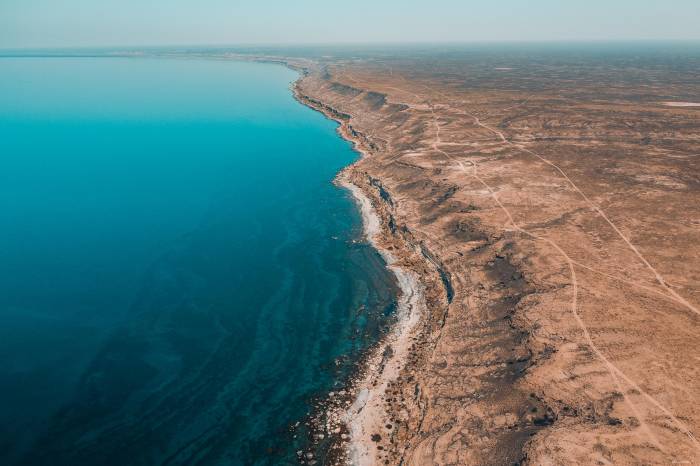
In late August, an international conference on Caspian Sea level changes was held in Baku. Speaking at the conference, Fakhraddin Gadirov, Director General of the Oil and Gas Institute of the National Academy of Sciences of Azerbaijan (ANAS), highlighted that the Caspian region has repeatedly experienced active geodynamic processes due to lithospheric plate interactions throughout its geological history. Since 2005, the sea level has been dropping by 10 centimeters per year. If this trend continues for another 25-30 years, the northeastern Caspian could face the same fate as the Aral Sea.
To avoid such a scenario, countries in the region must exchange scientific information and engage in joint discussions. Gadirov believes the first step should be a coordinated international scientific program on key Caspian Sea research areas among the region's countries. A relevant working group should be formed to explore new, more effective forms of cooperation.
In Azerbaijan, there are already plans to create an International Center for the Caspian Sea Issues. President Aliyev signed the order back in 2011, and today, such an initiative is more critical than ever. It would enable various agencies and scientific institutions in Azerbaijan and its Caspian neighbors to collaborate more effectively.
The fact that the Russian President is now personally overseeing the scientific "attack" on the Caspian’s decline is crucial. The issue has reached a tipping point, and it’s no longer feasible to hope it will resolve itself, as it has throughout the six million years of this sea’s existence.


Similar news